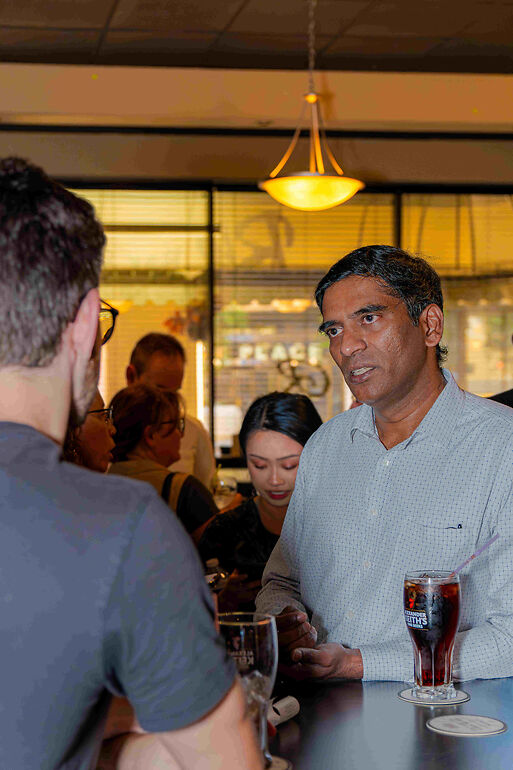
100+ Employees, Different Departments
People default to whoever they already know.
Get 100 or more employees together in one room and watch what happens. Within a minute or two, people find their usual desk neighbors and plant themselves there for the rest of the event.

Finance clusters with finance. Product clusters with product. Customer support finds its own corner. It is not that people are unfriendly, it is just that nobody wants to be the one standing alone trying to strike up a conversation with a stranger.
If cross-department connection is the goal, that goal needs a nudge. Left alone, a room of 100+ people organizes itself right back into the org chart.
Why bother mixing departments at all?
Familiarity is what makes cross-team work easier later.
Once someone has actually met a person from another department, even briefly, reaching out to them later feels completely different. A Slack message to a name and face you recognize is a lot less intimidating than one to a stranger.
That's the real payoff of a cross-department icebreaker. It is not just filling 15 minutes of an agenda. It is quietly building the kind of familiarity that makes cross-functional projects, quick questions, and casual collaboration happen more naturally.
What should a game like this actually do?
Remove the awkward first move.
Almost nobody wants to walk up to a stranger and introduce themselves with no reason at all. That is the actual barrier, not shyness, just the lack of an obvious opening.

A good icebreaker game hands people that opening. It gives them a prompt or a small task that makes approaching someone new feel like part of the game, not a personal risk.
What works once you're past 100 people?
It needs to scale without a facilitator chasing everyone down.
Icebreakers that work fine for a team of 12 tend to break down once the group hits 100 or more. You cannot run a name-tag matching game across a full floor of employees with one person holding a clipboard.
At this size, you need something that runs itself: no printed handouts for 100+ people, no long explanation before people can start, and nobody standing at the front managing the whole thing.
That's exactly the gap that phone-based interactive networking tools fill. People jump in on their own devices, at their own pace, without waiting on anyone.
What does this look like in practice?
Jam Bingo
- JamBingo: Get people having meaningful conversations instead of surface-level networking.
Looking for a simple way to get 100+ employees mixing across departments instead of clumping by team? See how JamBingo works!
Employees scan a QR code, get a conversation prompt on their phone, and go find someone in the room who matches it. Prompts can be built directly around your departments, like find someone from a team you've never worked with, or find someone who joined this year.
How do you actually run this at your event?
Give it a dedicated 15 to 20 minute window.
Don't try to squeeze this in between agenda items. Give it its own slot, ideally right when people are arriving or during the mingling period before the main program starts.
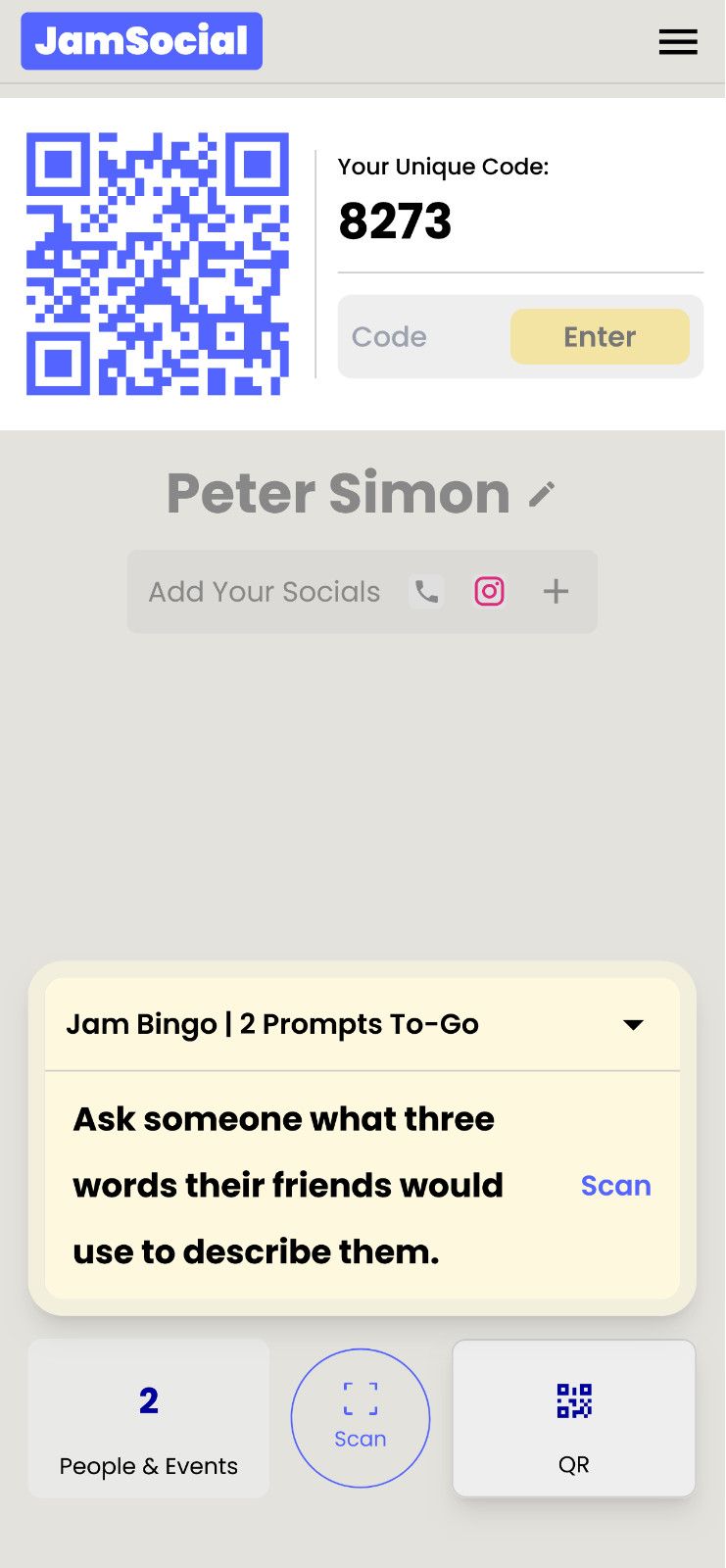
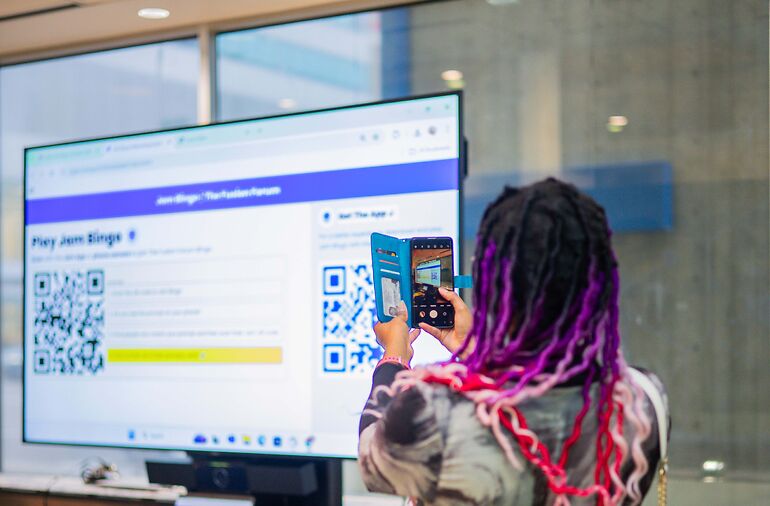
Display the QR code somewhere obvious, on a screen up front, on signage near the entrance, so people can jump straight in without waiting for someone to explain the rules.
With 100+ people, expect it to take a few minutes for everyone to get moving. That's fine. The point isn't speed, it's getting people talking to someone new before they settle into their usual seat.
What prompts actually get departments mixing?
Company-specific beats generic every time.
Jam Bingo: A prompt like find someone who likes coffee doesn't push anyone out of their comfort zone. Prompts tied to your actual teams and structure do.
- Find someone from a department you've never worked with.
- Find someone who's been at the company longer than you.
- Find someone who joined in the last six months.
- Find someone working on a project outside your team.
- Find someone based in a different office or timezone.
Prompts like these push people toward someone unfamiliar without it feeling forced. It just feels like a game.
Does it stick after the event is over?
Yes, if the interaction leaves something memorable behind.
The real measure isn't whether people talked for those 15 minutes. It's whether they still remember each other weeks later.
That's why department-specific prompts matter more than generic ones. Find someone from a department you've never worked with sticks a lot better than find someone wearing a striped shirt.

People leave with a name, a face, and one small detail to anchor it to, which is usually enough to make the next cross-team message feel a little less cold.
So what's the actual next step?
Start with one interactive activity at your next company event.
You don't need to rebuild your entire event to fix department clustering. You just need one structured window where people are nudged to talk to someone outside their usual team.