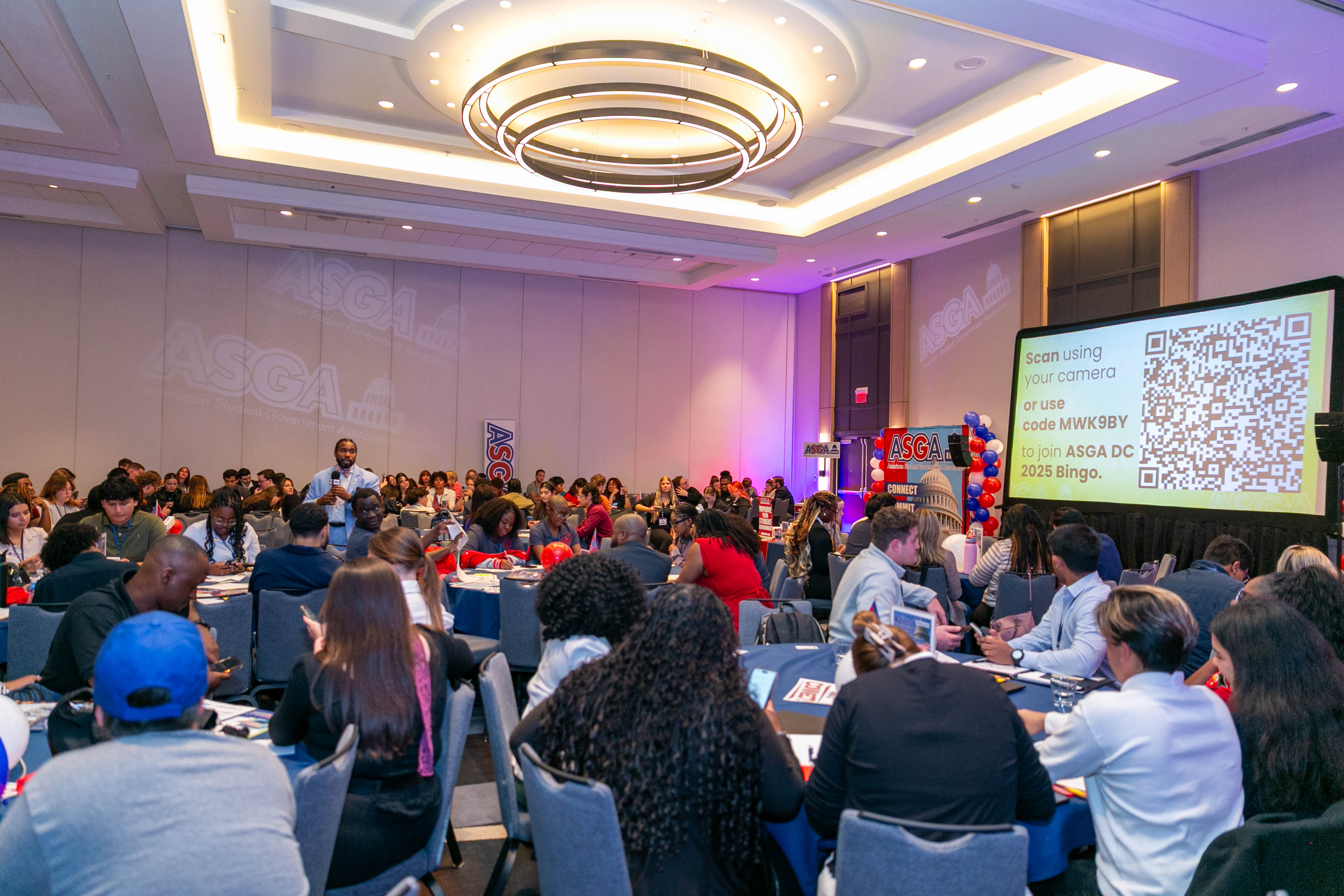
Very Large Group Icebreaker for 100+ Students
How to get a huge cohort of students actually talking, in person, without losing control of the room.
Put 100+ students in one room and something predictable happens: a wall of noise near the entrance where friend groups already know each other, and a much quieter half of the room standing near the walls, waiting for something to happen.
Most icebreakers weren't built for this scale. A name game or a paper worksheet works fine for 15 people. At 100+, that same activity either takes an hour to explain or just quietly falls apart.

Left without a structure built for a crowd this size, students default to standing with whoever they arrived with, and the rest of the room stays exactly as unfamiliar as when they walked in.
Why does a large-group icebreaker need to be different?
Scale breaks the things that work in small groups.
In a group of 15, one person can facilitate. Everyone can hear instructions, and it's easy to notice who's been left out. None of that holds at 100+.
With that many people, a single facilitator physically can't reach everyone, printed materials run out or get lost in the shuffle, and any activity requiring long verbal instructions loses half the room before it even starts.
What does a 100+ student icebreaker actually need?
Self-guided, instant, and something everyone already has.
The activity has to run without a staff member managing each interaction. That means no waiting in line for instructions, no handouts to distribute to a crowd this size, and no need for students to remember rules explained once from a stage.

The one thing almost every student in that room already has is a phone. An activity that starts the moment they scan a code removes the biggest bottleneck at this scale: getting instructions to everyone at once.
What does this look like in practice?
Jam Bingo
- JamBingo: Get 100+ students to get to know each other without it being awkward or weird.
Looking for a way to get a very large group of students talking in person instead of clustering with people they already know? See how JamBingo works!
Students scan a QR code and get a prompt on their own phone, then physically walk over to find someone in the room who matches it. Because every student starts and moves at their own pace, the activity scales to a packed auditorium just as easily as it does to a small classroom.
Prompts built for a group this size matter even more.
With 15 people, almost any prompt works because everyone eventually talks to everyone. With 100+, students will only reach a fraction of the room, so each prompt needs to do real work pulling them toward someone they wouldn't have approached on their own.
- Find someone from a different hometown or state.
- Find someone majoring in something you've never studied.
- Find someone living in a different dorm or building.
- Find someone who traveled the farthest to get here.
- Find someone who doesn't know anyone else in the room yet.
That last one matters most in a group this size. It's specifically built to find the students standing alone and give someone else a reason to walk straight over to them.
How do you know it actually worked with a group this big?
Look at movement, not just noise.
A loud room doesn't mean much on its own, since friend groups are loud too. The real signal is whether students who arrived alone ended up crossing the room to talk to someone they'd never met.

In a group of 100+, that's the real win: dozens of small, in-person conversations happening in parallel across the room, instead of one loud cluster near the door and a quiet crowd around the edges.
So what's the actual next step?
Start with one structured, phone-based activity at your next large event.
You don't need extra staff or a longer schedule. You need one activity that every student can join instantly from their own phone, with prompts built around your actual campus so the connections stick past the first ten minutes.