
10 Networking Games for Chamber of Commerce New Member Orientation
New member orientations can be painfully awkward. Here are 10 unexpectedly fun icebreakers that help business owners actually connect — so they leave with real relationships, not just a nametag.
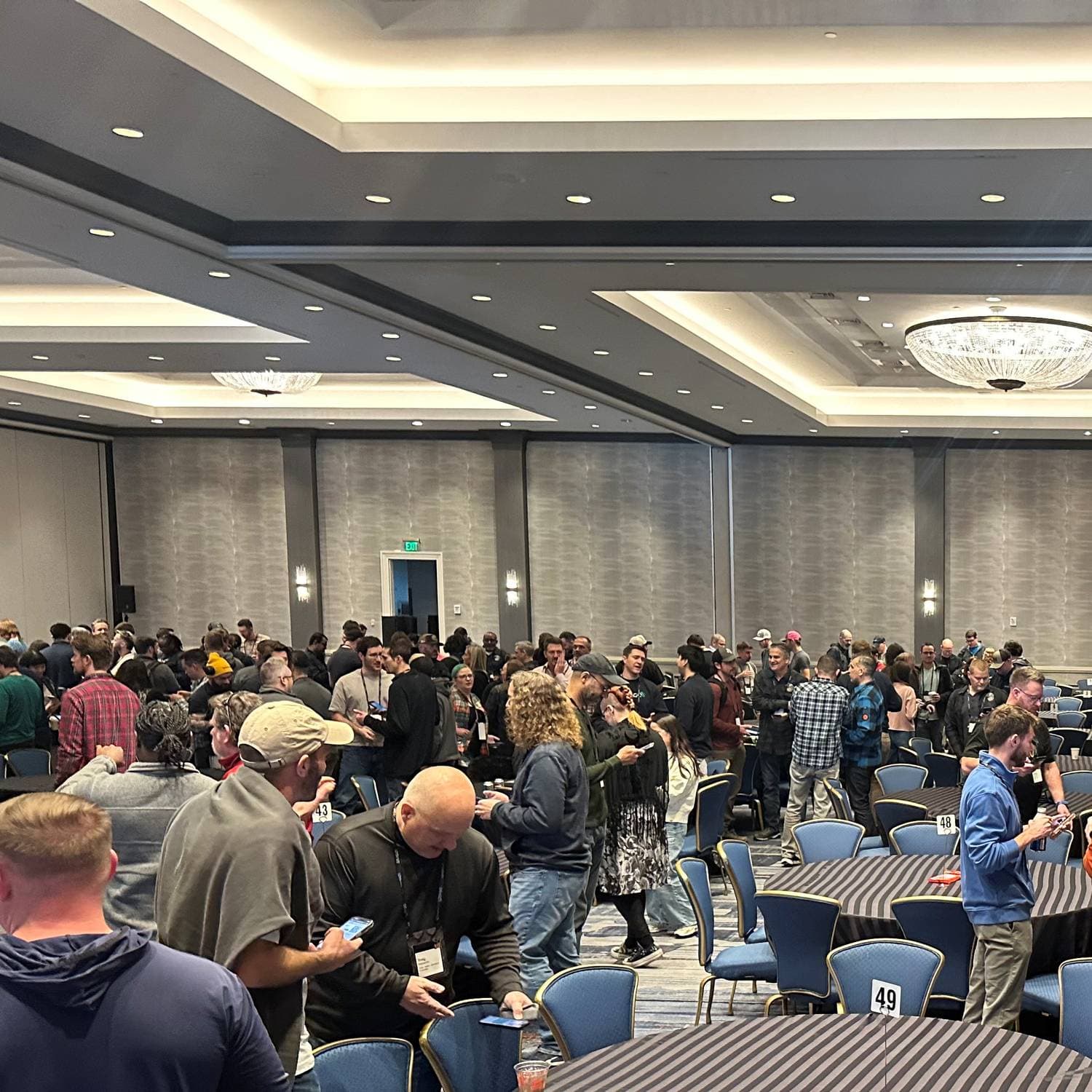
10 Networking Games for Your Chamber of Commerce New Member Orientation
Duration
Group size
Showing 10 of 10 games
Elevator Pitch Speed Round
How to play
- 1
Split the group into two lines facing each other. Each person has exactly 60 seconds to deliver their elevator pitch to the person across from them.
- 2
When the timer dings, the person on the left line shifts one person to the right. Now everyone has a new partner and 60 seconds again.
- 3
After 5 rotations, switch it up: now each person has only 30 seconds to describe what kind of referral partner they're looking for. 'I need someone who works with construction companies' or 'Send me anyone who just moved to town.'
- 4
After 5 more rotations, everyone gathers in a circle. The facilitator asks: 'Who heard a business they want to learn more about?' People raise hands and shout out the business name and the person's name.
- 5
The person who gets mentioned the most wins a prize.
The 60-second limit keeps things moving and prevents rambling. The referral-partner round is where the real magic happens — new members leave knowing exactly who to call for a lead. This works because business owners love talking about their business, they just need permission and a timer.
Person who gets mentioned the most times during the shout-out round.
A 'Pitch Master' trophy (a cheap gavel works perfectly), a $25 coffee shop gift card, or their business featured on the Chamber social media page.
Quiet members can jot down notes during the pitches and just listen during the shout-out round. Or pair them with someone extroverted who can help amplify their pitch. The structured timer means no one talks for too long — which is a relief for introverts.
Business Card Bingo
How to play
- 1
Before the event, create bingo cards with categories like 'Has been in business less than 1 year,' 'Has more than 20 employees,' 'Offers a service you personally need right now,' 'Has a logo you love,' 'Is the only person here in their industry.'
- 2
Give each new member a bingo card and a pen as they walk in. Their mission: find a different person for each square and write that person's business name and name in the square.
- 3
No repeating people. Every square must be a different new member.
- 4
First person to fill a row (horizontal, vertical, or diagonal) shouts 'Bingo!' and reads aloud the businesses they connected with.
- 5
Keep playing until 3–5 people have bingo'd. Then collect all the cards in a bowl and draw one at random. That person wins a small prize too — so everyone keeps playing even after the first bingo.
- 6
Before the event, customize the bingo card with categories that actually matter to your Chamber — industries you want to grow, gaps in your referral network, or fun facts about your city.
This is a classic for a reason. The categories force real conversations, not just 'hi, nice to meet you.' The 'service you personally need right now' square is gold — someone always needs an accountant or a web designer and finds one in the room. The random drawing at the end keeps everyone engaged even after the competitive folks have bingo'd.
First person to complete a full row wins the grand prize. Random drawing from all completed cards wins a second prize.
Grand prize: A $50 local restaurant gift card. Random drawing: A Chamber swag bag (mug, pen, notebook, stickers).
This game gives introverts a clear mission and a script: 'Hi, I'm working on my bingo card — do you mind if I ask what industry you're in?' The one-on-one conversations are low-pressure, and they can move at their own pace.
Jam Bingo - 100 Person Ice Breaker Activity
How to play
- 1
Help new members build real relationships and find referral partners, so they get value from their membership from day one.
- 2
At the orientation, display the QR code on the welcome screen, print it on the agenda, or put it on every table. Ask everyone to scan with their phone camera as they grab their nametag.
- 3
Each new member receives a series of conversation challenges and prompts tailored to Chamber orientation — things like 'Find someone who has been a Chamber member for less than 3 months,' 'Find someone whose business serves other businesses (not consumers),' or 'Find someone who can introduce you to three people in this room you haven't met yet.'
- 4
Attendees walk around the room, approach people they haven't met, and have a real conversation to complete each challenge. Completing a challenge unlocks the next prompt.
- 5
The app guides the whole thing — no paper cards, no manual tracking. Everyone just scans, talks, and connects.
- 6
The first person to complete all their challenges wins a prize. But the real goal is to make sure by the end of 30 minutes, every new member has talked to at least 10 other people and has a list of potential referral partners.
- 7
Before the orientation, set up your Chamber New Member Orientation Icebreaker Bingo game. Mix professional prompts ('Find someone who serves the same target customer as you but a different service') with personal ones ('Find someone who grew up in this town') and fun ones ('Find someone who can recommend a great lunch spot near their office').
- 1
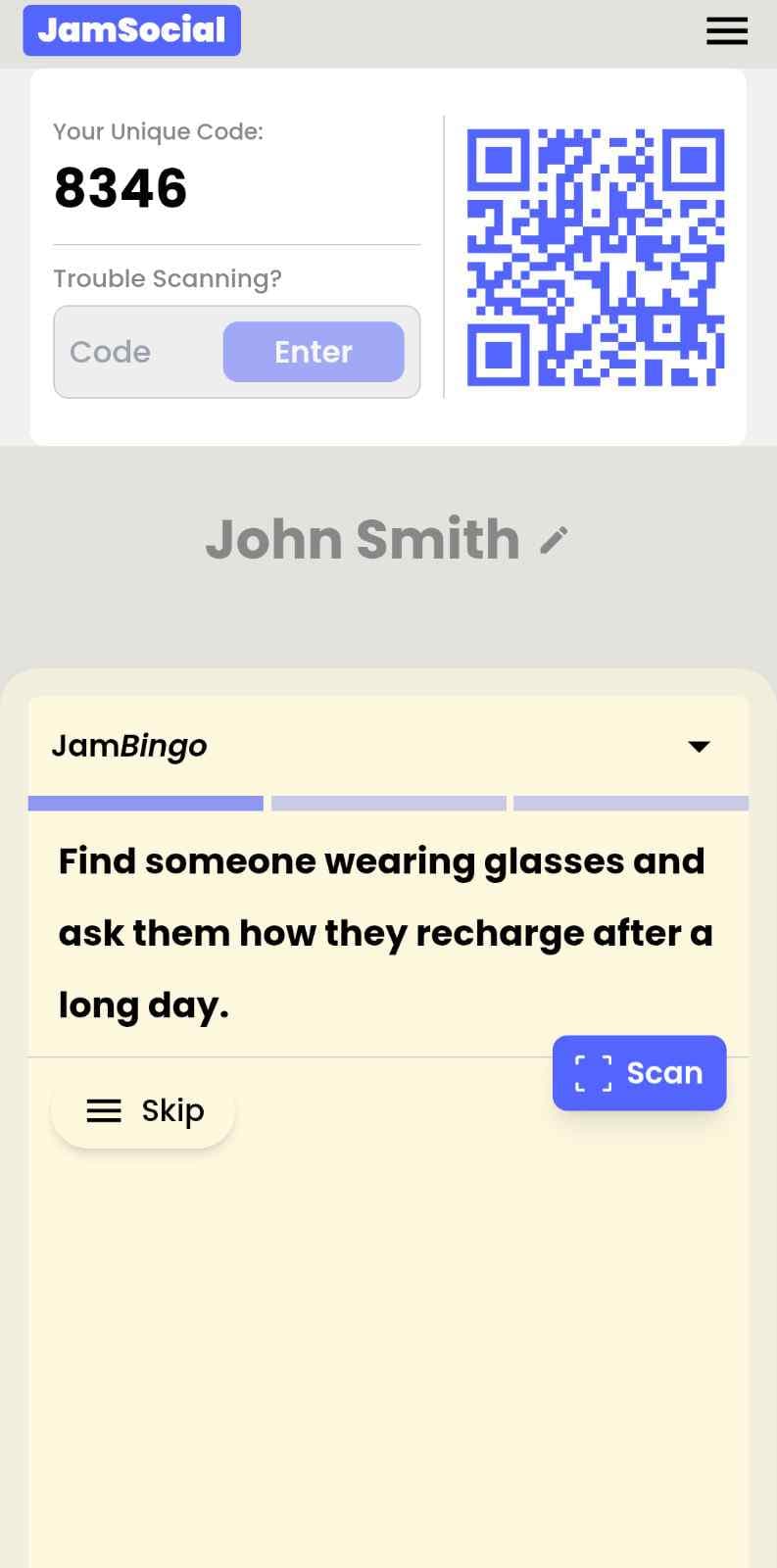
How is Jam Bingo Played?
Attendees scan the event’s Jam Bingo QR code (or enter the game code). It runs in the phone’s browser—there is no app to download.
- 2
Conversation Starter
Each person receives a conversation prompt on their phone, like a question to ask someone new.
- 3
Find someone and talk
They find someone who fits the prompt, have the conversation, then scan that person’s QR code (or enter their code) to unlock the next prompt.
- 4
Repeat and connect
Every connection is saved, and the leaderboard shows who met the most new people—perfect for prizes.
The magic is in the prompts — avoid boring ones like 'find someone who likes pizza.' Instead use prompts that build real business relationships: 'Find someone who has a customer you also want as a customer.' 'Find someone who has been in business longer than you and ask them one piece of advice.' The app handles everything else — you just provide the QR code and watch connections happen. This is the ultimate 100 person ice breaker activity because it scales effortlessly and gives everyone a reason to talk to strangers.
Everyone who completes all their challenges. First to finish gets a prize, but celebrate every completion.
Grand prize: A free year of Chamber membership (or a discount) or a $100 local business gift card. Everyone who finishes: A 'Connector' digital badge and a shoutout in the Chamber newsletter.
The app gives introverts a perfect script: 'Hey, I have this challenge — could you help me out?' It removes the 'what do I even say?' paralysis completely. Plus, they can move at their own pace without any whole-room spotlight. They just have one-on-one conversations, one challenge at a time.
Two Truths, One Lie — Business Edition
How to play
- 1
Everyone sits in a circle. Each person thinks of two true statements about their business and one false statement — but the false one has to be believable. Examples: 'We've been in business for 12 years' (true), 'We once delivered an order by bicycle in a snowstorm' (true), 'Our office has a ping pong table' (lie — they wish).
- 2
One person shares their three statements without revealing which is the lie.
- 3
Everyone else votes by raising their hand for statement #1, #2, or #3. On the count of three, everyone points with one finger toward the number they think is the lie.
- 4
The person reveals the lie. Whoever guessed correctly gets a point. Track points on a phone or notepad.
- 5
Rotate around the circle. After everyone has gone, the person with the most points wins.
- 6
Optional twist: after each round, the person who guessed correctly has to ask one follow-up question about the truth they found most interesting.
The business focus keeps things relevant for a Chamber orientation — people actually learn what each business does, not just random personal facts. The competitive element is light but engaging. The follow-up question twist extends the conversation beyond the game. Best played after people have had their first coffee.
Person with the most correct guesses after everyone has shared.
A 'Human Lie Detector' certificate, a $10 coffee card, or a small plant for their office.
Quiet folks can go early when the group is still fresh. The game requires very little talking — just three short statements. And listening carefully is actually how you win, so quiet people often excel at this one without realizing it.
Referral Chain
How to play
- 1
Everyone stands in a large circle. The facilitator holds the end of a ball of yarn and starts: 'I'm [Name] from [Business]. I'm looking for a referral partner who works with [type of client].'
- 2
The facilitator tosses the yarn ball to someone across the circle who fits that description (or knows someone who does). That person catches it, holds the string, and says: 'I'm [Name] from [Business]. I can help with that — or I know someone who can. I'm looking for a referral partner who [their own referral need].'
- 3
They toss the yarn ball to someone else. The web grows.
- 4
After everyone has caught the ball at least once, the facilitator asks: 'Who sees a connection they didn't know existed?' People point to the web — 'Oh, you're connected to her? I need to talk to both of you.'
- 5
The group holds the web taut for 10 seconds — a physical symbol of the referral network they just built.
- 6
Take a photo of the web. Send it to everyone the next day with the caption 'This is your network now. Use it.'
This is a visual, tactile way to show new members what the Chamber is supposed to be — a web of connections, not a list of names. The physical act of building the web changes how people think about networking. The photo is a powerful follow-up tool. Keep the referral needs specific, not 'I need more customers' — instead 'I need someone who works with wedding planners' or 'I need a commercial real estate agent.'
No winner — the web itself is the win. Optionally, the person who makes the most unexpected connection (voted by the group) gets a prize.
A 'Web Weaver' trophy, a Chamber-branded coffee mug, or a $25 local business gift card.
Quiet folks can be the 'web photographer' — a crucial role without performance pressure. Or they can simply say their referral need in one sentence and toss the ball quickly. Short is fine. The web visual includes everyone equally.
Member Matchmaker
How to play
- 1
Give everyone two slips of paper. On the first slip, they write one thing their business NEEDS from another Chamber member (a service, a referral source, a collaboration). On the second slip, they write one thing their business OFFERS that could help another Chamber member.
- 2
Fold the slips and drop the NEEDS slips into Bowl A, and the OFFERS slips into Bowl B.
- 3
The facilitator draws one NEEDS slip from Bowl A and reads it aloud. Then draws three OFFERS slips from Bowl B and reads those aloud.
- 4
The person who wrote the NEED stands up. The three people who wrote the OFFERS stand up. They have 60 seconds to talk and see if they can make a match.
- 5
If a match is made, all four people (the NEED person + three OFFER people) get a point. If no match, the NEED person draws again — but only from the remaining OFFERS.
- 6
Continue until all NEEDS have been matched or time runs out. The person with the most successful matches wins.
This game is essentially speed-dating for business referrals. The dual-bowl system ensures that needs and offers are matched randomly, which surfaces connections people wouldn't have found on their own. The 60-second timer keeps things moving. The collective cheering when a match happens is surprisingly loud and fun.
Person who participates in the most successful matches (either as NEED or OFFER) wins.
A 'Matchmaker' trophy, a bottle of local wine or sparkling cider, or their business featured in the Chamber's 'Member Spotlight' email.
The written slips mean quiet folks articulate their needs and offers without speaking first. The 60-second conversation is one-on-one or small group, not whole-room. And if they don't want to stand up, they can ask the facilitator to read their slip anonymously.
Chamber Timeline (Walk the History)
How to play
- 1
Before the event, create a long paper timeline on the floor (or draw a chalk line) marking the decades your Chamber has existed — from founding year to present.
- 2
Give each new member 2 sticky notes. On the first, they write the year THEIR business was founded. On the second, they write a hope for the Chamber in the next year.
- 3
Everyone walks the timeline and places their 'founding year' sticky note on the correct spot.
- 4
Once all notes are placed, everyone walks the timeline in small groups of 3–4. At each cluster of founding years, someone says: 'What was happening in our city this year?' (If no one knows, they guess — the wrong guesses are hilarious and educational.)
- 5
Then everyone places their 'hope for the Chamber' sticky notes at the far end of the timeline (future zone).
- 6
The facilitator reads 5–6 hopes aloud. The group applauds for each one. The person whose hope gets the loudest applause wins a prize.
This puts new members in context — they're not just joining an organization, they're joining a history. The founding-year cluster reveals patterns (lots of businesses started during certain economic periods). The hopes collection gives the Chamber director instant feedback on what new members actually want. The applause voting is lighthearted and fun.
Person whose hope for the Chamber gets the loudest applause wins.
A 'Future Builder' ribbon, a free ticket to the next Chamber event, or a coffee meeting with the Chamber director.
The sticky notes are silent and anonymous. The small-group walkthrough is low-pressure — they can just listen. The applause voting requires no talking, just clapping. This whole game asks very little of quiet folks while including them completely.
Committee Signup Speed Dating
How to play
- 1
Before the event, post large sheets of paper on the walls around the room. Each sheet represents a Chamber committee: 'Ambassador Committee,' 'Events Committee,' 'Government Affairs,' 'Membership Committee,' 'Young Professionals,' etc.
- 2
Give each new member a marker. Announce: 'You have 15 minutes to visit at least 3 committees. At each one, write your name AND one question you have about that committee's work.'
- 3
Current committee chairs stand by their sheets. When a new member approaches, the chair spends 2 minutes answering their question and pitching the committee.
- 4
When the timer dings, the facilitator shouts 'Switch!' and everyone moves to a new committee sheet.
- 5
After 3 rounds, everyone gathers in the center. The facilitator asks: 'Who found a committee they want to join?' People raise hands. The committee chairs rush over to collect names.
- 6
The committee that recruits the most new members that day wins a prize.
This solves the eternal Chamber problem: 'How do we get new members involved in committees?' By making signup a game instead of a pitch. The 'one question' rule ensures new members engage meaningfully instead of just writing their name and walking away. The competitive element between committees is fun and effective.
Committee that recruits the most new members during the game wins.
A traveling 'Recruitment Champions' trophy for the committee to display, a pizza party for the committee meeting, or public recognition in the Chamber newsletter.
The one-question format gives quiet folks a clear, low-stakes script. They can write their question in advance. The one-on-one conversation with a committee chair is private, not public. And they can choose to just write their name without asking a question if they prefer.
My Why (One Sentence, One Listen)
How to play
- 1
Everyone sits in a large circle. The facilitator starts: 'In one sentence — why did you join the Chamber? Go around the circle. No commenting, no follow-ups. Just listen.'
- 2
Each person shares their one sentence. Examples: 'I need to meet other business owners.' 'I want to advocate for Main Street.' 'Honestly, my competitor is a member and I wanted to see what I was missing.' 'My lender told me I should.'
- 3
No one comments, applauds, or reacts. Just listening.
- 4
After everyone has shared, the facilitator says: 'Now turn to the person on your left. Nod once.' Everyone nods to the left.
- 5
Then: 'Turn to the person on your right. Nod once.' Everyone nods to the right.
- 6
Facilitator: 'Now stand up. You're all here for different reasons, and that's exactly right. Welcome.'
This is the most vulnerable game on the list, and also the most powerful. The 'no commenting' rule is essential — it prevents advice-giving, fixing, or one-upping. The nodding sequence is unexpectedly moving. New members leave feeling heard, not pitched to. Do this at the very beginning or the very end, not in the middle.
No winner. The win is hearing that you're not alone, whatever your 'why' is.
No prize needed. But the facilitator saying 'That was the most honest set of whys I've heard' as people stand up goes a long way.
One sentence is nothing. Even the quietest person can do one sentence. And they don't have to react to anyone else's sentence — just listen. The nods require no words. This game asks almost nothing and gives a lot.
Closing Circle (One Word, One Connection)
How to play
- 1
At the very end of the orientation, gather everyone in a large circle.
- 2
The facilitator says: 'One word for how you're feeling about the Chamber right now. Everyone at the same time, out loud. Ready? Go.'
- 3
Everyone shouts their one word simultaneously. 'Hopeful!' 'Overwhelmed!' 'Excited!' 'Hungry!' 'Connected!'
- 4
Then the facilitator says: 'Now find one person you didn't talk to today. Walk to them. Shake their hand. Say your name and your business. That's it.'
- 5
Give everyone 2 minutes to do this. The room becomes a swarm of handshakes and name exchanges.
- 6
Facilitator raises their hand: 'To new members.' Everyone raises their hand or their drink. 'Welcome.' Then everyone disperses.
This is the perfect ending to any new member orientation. The simultaneous shouting removes all pressure — no one can hear you anyway. The handshake scramble is chaotic but effective — everyone leaves having made at least one new connection in the final minutes. It takes 5 minutes, costs nothing, and leaves people feeling energized rather than drained.
No winner. The win is the person who manages to shake the most hands in 2 minutes — but no one is counting, so everyone wins.
None. The handshake with a stranger is the prize.
The simultaneous shouting is ideal — they can say their word quietly or just mouth it. No one can tell. The handshake requires no small talk — just name and business, then move on. That's actually easier for quiet folks than extended conversation. This game asks almost nothing and gives a genuine human moment.
How to Run a New Member Orientation That Actually Creates Relationships (Not Just Handshakes)
- 01
Start with the Icebreaker Bingo App — before anyone even gets coffee
Put the QR code on the sign-in table, on the agenda, and on every table. As people arrive and grab their nametag, they scan and start. The app gives them a reason to talk to strangers immediately — before they have time to find the one person they already know and cling to them. Run it for exactly 20 minutes, then transition to the formal portion. You'll have already done the hard work of breaking the ice.
- 02
Run 'My Why' either first thing or dead last — never in the middle
The vulnerability of 'My Why' needs context. If you run it first, it sets a tone of honesty and levels the playing field between the CEO and the solo freelancer. If you run it last, it becomes a powerful closing ritual that makes people feel seen. Either works. But in the middle, it feels abrupt and disconnected from everything else. Choose first or last and commit.
- 03
Create stations, not a single facilitator bottleneck
For an orientation with more than 20 people, set up 3–4 stations around the room: Business Card Bingo at one table, Referral Chain in the open area, Committee Signup sheets on the walls, Member Matchmaker in a corner. Let people rotate every 15 minutes. Forcing 50 people into one game creates chaos and disengagement. Choice is a feature, not a bug.
- 04
Assign current members as 'Orientation Buddies' for each station
Recruit 2–3 enthusiastic current Chamber members to be game captains. Have them learn one game deeply — rules, timing, how to include quiet folks. On orientation day, they run that station. This does two things: it prevents you (the Chamber director) from being the only person talking, and it gives new members a friendly familiar face to approach later when they have questions.
- 05
Follow the 'two-round' structure for Business Card Bingo or the app
Run the Icebreaker Bingo App for 20 minutes right when people arrive. Then break for the formal presentations (welcome, benefits, etc.). Then run Business Card Bingo for another 20 minutes after the presentations. Two short bursts work better than one long session — people get tired and information-saturated halfway through an orientation. The second round gives them something to do after sitting through slides.
- 06
End on a high-note, low-pressure game, not a Q&A
Close with 'My Why' or the Closing Circle (One Word, One Handshake). Both leave people feeling connected and energized. Do NOT end with 'Any final questions?' — that either gets crickets or someone asking a hyper-specific question about their membership dues that should have been an email. End with a game, not a Q&A. The Q&A can happen before the last game, not after.
- 07
Post a visible 'Orientation Flow' sign at the entrance
Print a simple agenda with times and game names: '5:30 — Icebreaker Bingo (scan QR on your way in), 5:50 — Welcome & Presentations, 6:20 — Business Card Bingo, 6:40 — Committee Signup Speed Dating, 7:00 — My Why (closing circle), 7:15 — Networking & Drinks.' This removes anxiety for new members who want to know what's coming next and helps introverts mentally prepare for each activity.
Frequently Asked Questions
How many icebreakers should we run at a 90-minute new member orientation?
Run 3 icebreakers total, plus the Icebreaker Bingo App at the start. A good rhythm: Icebreaker Bingo App (20 min arrival), Formal welcome & presentations (20 min), Business Card Bingo (20 min), Committee Signup Speed Dating (15 min), My Why or Closing Circle (10 min). That's 85 minutes including the presentations. The icebreakers don't add time — they replace dead air and awkward silences with structured connection.
What if our new member orientation has both brand-new members and people who joined 6 months ago but never came to anything?
This is every Chamber's reality. Call the whole group 'new members' and don't make a distinction. The 6-month person still needs relationships. If you want to be thoughtful, assign the 6-month folks as 'Orientation Buddies' at each station — they help run the games, which gives them purpose and a reason to talk to people. Everyone wins.
How do we handle orientations with 100+ new members?
The 100 Person Ice Breaker Activity (the app) is your best friend — it scales effortlessly to any size. Also use Business Card Bingo (print larger cards with more squares). Use the Closing Circle (One Word, One Handshake) but organize people into concentric circles instead of one giant circle. Break the large group into smaller pods of 20–30 for games like Two Truths, One Business and Member Matchmaker. Rotate pods every 15 minutes. One facilitator cannot manage 100 people alone — you need 4–5 game captains.
What if our Chamber has a wide range of industries and business sizes?
That's the strength, not the problem. Lean into it. In Business Card Bingo, include squares like 'Has 1–5 employees,' 'Has 50+ employees,' 'Is a nonprofit,' 'Is a retailer,' 'Is a home-based business.' In Member Matchmaker, encourage specific needs: 'I need a graphic designer for a one-time project' not 'I need marketing.' The diversity is what makes the Chamber valuable — the icebreakers should highlight it, not hide it.
What if someone really doesn't want to participate?
Respect it completely. Never force. Instead, give them a visible 'opt-out' role: photographer, snack table attendant, nametag helper, or timekeeper. For the Icebreaker Bingo App, they can just answer challenges from their seat without walking around. For Business Card Bingo, they can just collect cards without trying to win. Some of the best long-term members started as the person who sat in the corner at their first orientation. Forcing them into a game would have driven them away.
Do we need to buy special equipment for these games?
Almost nothing. You need sticky notes, markers, pens, nametags, and a printer for the Icebreaker Bingo QR code. For Business Card Bingo, you need printed bingo cards. For Referral Chain, you need a ball of yarn ($3 at any craft store). For Committee Signup, you need large paper (flip chart size). That's it. The most expensive item is the $5 ball of yarn. A Chamber orientation should feel thrown-together and welcoming, not over-produced and corporate.
More Networking Game Collections
10 Unique Networking Games for New Student Engagement
New Student Orientation & Welcome Events · 10 games
10 Easy & No-Prep Interactive Networking Games for Professionals
Professional Networking Event · 10 games
11 First-Time Coming Together Networking Games for Corporate Events
First-Time Coming Together Corporate Event · 11 games
20 Networking Games for a Company Annual Partner Showcase
Company Partner Showcase · 20 games
25 Icebreakers for an Association AGM & Tradeshow Mixer
Association AGM & Tradeshow Mixer · 25 games
10 Team Ice Breaker Activities for Your Company Picnic
Company Picnic · 10 games