Interactive Networking Game
Looking for a fun interactive networking game?
Give people a simple, structured reason to start conversations with someone new — short conversation prompts they complete by meeting and talking to different people — instead of leaving it to open mingling. JamBingo changes the dynamic entirely. In practice: pick your conversation prompts, set up your game, share the QR code, and watch the room mingle.
Key takeaways
- ✓The main obstacles are awkward first approaches, stiff, forced conversations, and sticking to known groups.
- ✓What works: instant icebreaking, no paper, no hassle, and drives deep engagement.
- ✓Run it once everyone has arrived and before the meal, during open networking time — not during talks.
- ✓Plan about 3–5 minutes per conversation: roughly 25–35 minutes for five conversations each.
- ✓Mix easy, observable prompts with a few questions and challenges, and write two to three times as many prompts as conversations.
- ✓Works well for interactive events, corporate conferences, community mixers, and networking interactive sessions.
Traditional networking events are often stiff and awkward. Most people struggle to approach strangers, leading to cliquey groups and surface-level conversations that do not build real relationships.
You are leading the networking session.
You're looking for a simple and organic way to incentivize people to interact with each other.
Not too structured, easy to set up, easy to understand, and simple for large groups to participate in.
The attendees don't all know each other and you want them to get out of their bubbles.
Your attendees may come from different departments, locations, chapters, schools, organizations, or are complete strangers.
The goal is to help them connect.
How to Run It: Interactive Networking Game
Everything you need to run it: when to run it, how long it takes, how to write good prompts, and what guests will ask.
- 01
Jam Bingo is a simple, interactive networking activity that helps people meet and have conversations with others they may not know.
- 1
Scan to join
Attendees scan the event’s Jam Bingo QR code (or enter the game code). It runs in the phone’s browser—nothing to download. - 2
Get a conversation prompt
Each person receives a conversation prompt on their phone, like a question to ask someone new. - 3
Find someone and talk
They find someone who fits the prompt, have the conversation, then scan that person’s QR code (or enter their code) to unlock the next prompt. - 4
Repeat and connect
Every connection is saved, and the leaderboard shows who met the most new people—perfect for prizes.
- 02
When to run it
Once everyone has arrived
Start 15–30 minutes into the networking block. If networking begins at 10:00 AM, kick off at 10:30 AM — latecomers have arrived and people haven't settled into their usual groups yet.
Before the meal, not after
Run it before people eat. Eating speeds vary, and running it after a meal makes slower eaters feel rushed or left out. If it has to be after, announce clear timings in advance.
After drinks are in hand
Let guests grab a drink when they arrive, then gather everyone's attention right before you start.
Not during talks
Keep it to open networking time. People can't mingle while they're expected to listen to a speaker.
How long to run it
Plan about 3–5 minutes per conversation. Each prompt is one conversation, so the length of the game depends on how many people you want each guest to meet.
For 5 people each
Kick-off
5 min
Playing (5 prompts)
15–25 min
Wrap-up
5 min
Total
25–35 min
Kick-off Playing Wrap-upFor your group size (50—500 attendees): give everyone 1–2 minutes to scan in. Put the QR code on the main screen and at the registration table.
- 03
Prompts are what make the game work. A good prompt gives someone a reason to walk up to a stranger — and something to talk about once they do. Mix a few different types for event organizers & community leaders:
Types of prompts
Questions
The easiest way in. The player asks one question and listens.
“Ask someone what three words their friends would use to describe them.”
Find someone who…
Sends people across the room looking for a match — great for mixing groups.
“Find someone who has lived in more than two cities.”
Observation prompts
Zero pressure: the player can spot the right person before saying a word.
“Find someone wearing something blue and ask about their favorite weekend activity.”
Challenges
Quick, playful actions that get laughs and lift the energy in the room.
“Challenge someone to a quick game of rock, paper, scissors.”
Deeper questions
Lead to real stories — use a few once people have warmed up.
“Ask someone about a decision that changed the direction of their career.”
Event-specific prompts
Tie the game to why people are there, so the conversations are actually useful.
“Find someone from a different team and ask what they're working on this month.”
A good mix
Aim for roughly 40% easy prompts (observation and “find someone who…”), 40% questions, and 20% challenges and deeper prompts. Easy prompts get people moving; the deeper ones lead to the conversations people remember.
How many prompts to write
Each guest gets one prompt per person they meet — 5 in your plan. Write 10–15 prompts in total: every player gets them in a different, shuffled order, so a bigger list means more variety and fewer people looking for the same conversation at once.
Do
- ✓Start with easy, observable prompts, then build up to deeper ones.
- ✓Make every prompt about another person, so it always leads to a conversation.
- ✓Keep prompts short enough to read at a glance on a phone.
- ✓Write prompts almost everyone can complete — no one should feel left out.
Don't
- ✕Avoid yes/no prompts that end the conversation in one word.
- ✕Avoid inside jokes that only one group will understand.
Need a starting point? Browse ready-made prompt templates for different kinds of events and adapt them to your group.
- 04
Before the event: checklist
- ✓Create your Jam Bingo and add your prompts.
- ✓Set how many people each guest should meet.
- ✓Download the QR code and add it to your slides, table tents, or printed signs.
- ✓Test scanning the QR code from the back of the room.
- ✓Check the room has phone signal or Wi-Fi.
- ✓Brief your emcee or helpers on the announcement and timing.
- ✓Decide on prizes (and who will hand them out).
Where to display the QR code
Put the QR code on the main screen and at the registration table. The more places people see it, the faster everyone joins. If your event has name badges, printing the QR code on the badge or agenda works well too.
✂️ Instructions for printouts or slides - 1.Scan the QR code (or enter the game code) to open the game.
- 2.Prompts appear directly on each guest's phone screen.
- 3.Guests walk around and find someone who can answer their prompt.
- 4.Scan their QR code to unlock the next prompt.
- 5.Repeat, mingle, and have fun!
- 05
Run of show (about 35 minutes)
- 1
Minute 0 — Get everyone's attention
Read the announcement below (or have your emcee read it), with the QR code already on screen. - 2
Minutes 1–5 — Everyone scans in
Guests scan the QR code and type their name. For your group size, allow 1–2 minutes. - 3
First prompts — People start moving
Walk the room and nudge anyone standing still: “What's your prompt? Let's find someone for it.” - 4
Around minute 18 — Halfway update
Give a quick time check and remind people to meet someone they haven't talked to yet. - 5
Minute 30 — Final call
Let everyone know they have five minutes left to unlock their last prompt. - 6
Minute 35 — Wrap up
Share the leaderboard, hand out prizes, and thank everyone for playing.
📣 What to say when you start “We're about to start Jam Bingo, a networking activity designed to help you meet and get to know each other. Scan the QR code on the screen to join. You'll receive a prompt on your phone, and your goal is to find someone who can answer it. Once you've had a conversation, scan their QR code to unlock your next prompt. Keep moving around, meet new people, and have fun!”
While it's running
- ✓Join in yourself — guests follow the host's energy.
- ✓Look for people standing alone and introduce them to someone.
- ✓If someone's camera won't scan, show them how to type in the other person's code instead.
- ✓If someone is stuck on a prompt, remind them a Skip button appears after about a minute.
- 06
- 1
Give a final call
Five minutes before the end, let everyone know it's their last chance to unlock a prompt. - 2
Share the leaderboard
Your dashboard shows who met the most new people. Put it on the screen and read out the top few. - 3
Hand out prizes at the very end
Wait until everyone has finished, so no one stops mingling early. Swag, gift cards, or a small gift all work well. - 4
Encourage follow-up
Remind everyone that each connection is saved on their phone, and that they can share their socials with the people they met.
- 07
Do guests need to download an app?
No. Guests scan the QR code with their phone camera and it opens in the browser. They type their name and start playing.
What if someone's camera won't scan a QR code?
Every player has a short code. Guests can type in the other person's code instead of scanning it.
What if a guest gets a prompt they can't complete?
After about a minute on a prompt, a Skip button appears so they can move on to a different one.
Does everyone get the same prompts?
No. Each player gets the prompts in a different, shuffled order, so people are looking for different conversations at the same time.
What if someone doesn't have a phone?
Pair them with a friend or a colleague to play as a team. They'll still meet everyone their partner meets.
How do I know who won?
Your dashboard has a leaderboard showing who met the most new people. Share it at the end and reward the top connectors.
What happens to the connections afterwards?
Each player keeps a list of the people they met and the prompts they talked about, and can share their socials with them.
What should people do if they finish early?
Encourage them to keep mingling and help others complete their prompts — early finishers are great at pulling quieter guests into conversations.
- 08
Is Jam Bingo right for you?
Each person will meet and talk with 5 different people.
Starting atFreeJam Bingo is a simple, non-structured networking activity designed to get people talking organically. Rather than forced icebreakers, it delivers gamified prompts to participants' phones that encourage lighthearted interactions across large groups without feeling awkward or artificial.
Getting approval from your event organizers & community leaders
- ✓Run the Jam Bingo Demo with your team so they see it first-hand.
- ✓Share the pricing and the plan from this guide.
- ✓Once approved, create a Jam Bingo and customize it with your own prompts.
The simple way to get people talking!
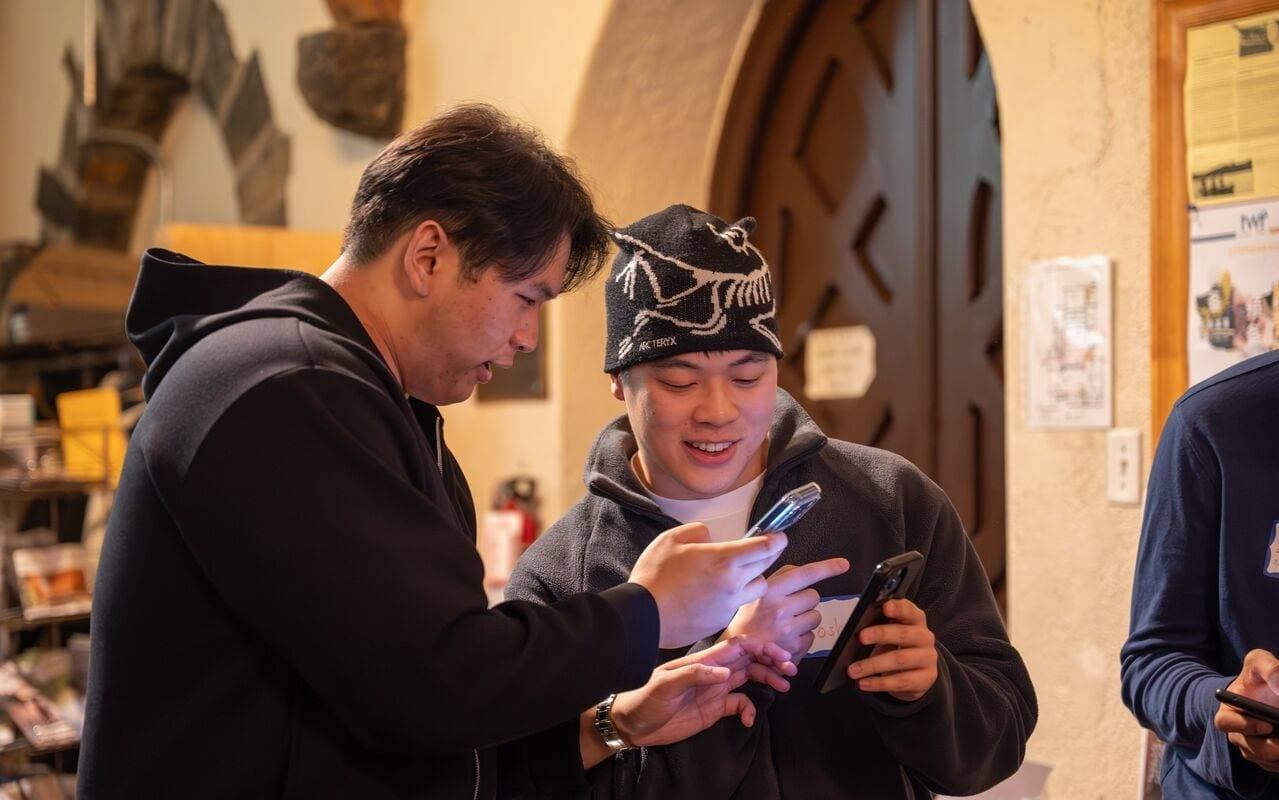
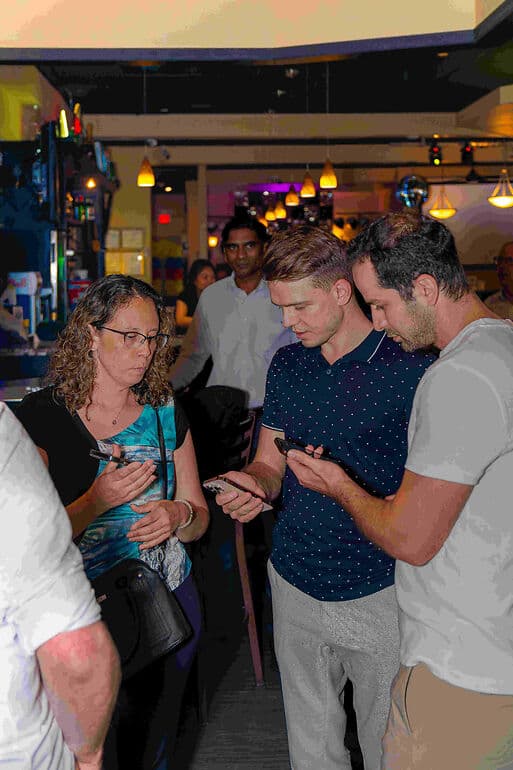
Jam Bingo gets people having meaningful conversations and meeting as many new people as possible.

The Challenge with Traditional Mixers
We have all been to those interactive events where people just stand around the food table, waiting for someone else to make the first move. Traditional networking games often feel forced or childish. People need a natural reason to talk. JamBingo provides that spark by giving everyone a simple, digital way to start a conversation without the usual pressure.
Awkward First Approaches
Walking up to a stranger is intimidating. Without a clear icebreaker, people stay in their comfort zones and avoid mixing.
Stiff, Forced Conversations
Standard small talk quickly runs dry. People end up talking about the weather or job titles instead of building real connections.
Sticking to Known Groups
Attendees often gravitate toward people they already know, defeating the purpose of a community-wide networking activity.
Why use JamBingo as your go-to interactive networking game?
JamBingo changes the dynamic entirely. It is an innovative choice among interactive networking apps because it keeps things moving. Attendees simply scan a QR code to receive a unique conversation challenge. Once they complete it with someone new, they unlock the next prompt. There are no paper cards to drop and no squares to fill out, just pure, active connection.
Where this works best: interactive events, corporate conferences, community mixers, and networking interactive sessions.
Instant Icebreaking
The app handles the hard part of starting a conversation. A simple prompt gives attendees an immediate, fun reason to talk to someone new.
No Paper, No Hassle
This is not an old-school bingo card with squares. Attendees do not fill anything out on paper. Everything happens smoothly on their phones.
Drives Deep Engagement
It transforms a standard room into a truly interactive networking experience, making it easy for introverts and extroverts alike to mingle.
How to Launch Your Interactive Networking Game With JamBingo
- 1
Pick your conversation prompts
Choose fun, tailor-made prompts or select from our pre-built templates designed for interactive events.
- 2
Set up your game
Load your custom prompts into the JamBingo platform to create your digital experience in minutes.
- 3
Share the QR code
Print the QR code or display it on screens around your venue so attendees can join in easily.
- 4
Watch the room mingle
Attendees scan the code, get their first prompt, connect with another person, and unlock the next challenge to keep the momentum going.
Ways to Get People Talking, Compared
There's more than one way to solve this for interactive events, corporate conferences, community mixers, and networking interactive sessions. Here's how the common approaches compare.
| Approach | Setup effort | Group size | Gets people mixing | How it feels for guests | Watch out for |
|---|---|---|---|---|---|
| Open mingling (no structure)Put people in a room with food and drinks and let conversations happen. | None | Any size | Low — most people stay with who they already know | Easy for outgoing people, hard for quieter guests | Cliques form within minutes, and newcomers end up on the edges. |
| “Ask me about” name tagsGuests write one topic on their name tag as a ready-made conversation starter. | Low — markers and name tags | Any size | Medium — gives people an opener, but no reason to move around | Natural and low-pressure | Easy to ignore; it only works if people read badges and act on them. |
| Paper human bingoA printed grid of “find someone who…” squares that guests fill in with names. | Medium — design, print, and hand out cards and pens | Best up to about 100 people | Medium to high — people have to approach others | Fun, but can turn into a quick signature hunt | People rush to fill squares instead of talking, and printing takes time. |
| Speed networkingTimed one-on-one conversations; people rotate to a new partner every few minutes. | Medium to high — seating plan, timer, and someone running it | Best up to about 60 per round | High — everyone is guaranteed several new conversations | Can feel forced or interview-like | Rigid and needs strong facilitation; feels out of place at relaxed social events. |
| Table topics / roundtablesEach table gets a discussion topic, and people join the one that interests them. | Low to medium — topic cards or table signs | Any size (in tables of 6–10) | Medium — great conversations within a table, little across tables unless you rotate | Natural, especially for professional audiences | People settle at one table for the whole session. |
| Jam BingoPhone-based conversation prompts (e.g. Jam Bingo)Guests scan a QR code and get conversation prompts on their phone; meeting someone unlocks the next prompt. | Low — write prompts and display a QR code | Any group size | High — each prompt sends people to someone new | Natural — the prompt gives everyone a reason to start talking | Needs guests to have a phone and signal (pair anyone without one with a buddy). |
Open mingling (no structure)
Put people in a room with food and drinks and let conversations happen.
- Setup effort
- None
- Group size
- Any size
- Gets people mixing
- Low — most people stay with who they already know
- How it feels for guests
- Easy for outgoing people, hard for quieter guests
- Watch out for
- Cliques form within minutes, and newcomers end up on the edges.
“Ask me about” name tags
Guests write one topic on their name tag as a ready-made conversation starter.
- Setup effort
- Low — markers and name tags
- Group size
- Any size
- Gets people mixing
- Medium — gives people an opener, but no reason to move around
- How it feels for guests
- Natural and low-pressure
- Watch out for
- Easy to ignore; it only works if people read badges and act on them.
Paper human bingo
A printed grid of “find someone who…” squares that guests fill in with names.
- Setup effort
- Medium — design, print, and hand out cards and pens
- Group size
- Best up to about 100 people
- Gets people mixing
- Medium to high — people have to approach others
- How it feels for guests
- Fun, but can turn into a quick signature hunt
- Watch out for
- People rush to fill squares instead of talking, and printing takes time.
Speed networking
Timed one-on-one conversations; people rotate to a new partner every few minutes.
- Setup effort
- Medium to high — seating plan, timer, and someone running it
- Group size
- Best up to about 60 per round
- Gets people mixing
- High — everyone is guaranteed several new conversations
- How it feels for guests
- Can feel forced or interview-like
- Watch out for
- Rigid and needs strong facilitation; feels out of place at relaxed social events.
Table topics / roundtables
Each table gets a discussion topic, and people join the one that interests them.
- Setup effort
- Low to medium — topic cards or table signs
- Group size
- Any size (in tables of 6–10)
- Gets people mixing
- Medium — great conversations within a table, little across tables unless you rotate
- How it feels for guests
- Natural, especially for professional audiences
- Watch out for
- People settle at one table for the whole session.
Phone-based conversation prompts (e.g. Jam Bingo)
Guests scan a QR code and get conversation prompts on their phone; meeting someone unlocks the next prompt.
- Setup effort
- Low — write prompts and display a QR code
- Group size
- Any group size
- Gets people mixing
- High — each prompt sends people to someone new
- How it feels for guests
- Natural — the prompt gives everyone a reason to start talking
- Watch out for
- Needs guests to have a phone and signal (pair anyone without one with a buddy).
Related Solutions
Interactive human bingo for internal team networking
Perfect for:
HR Professionals, Team Leaders, and People Ops
Networking Scavenger Icebreaker Activity
Perfect for:
Event Organizers & Community Leaders
200 Person Ice Breaker
Perfect for:
Event Organizers & Corporate Planners
Cross-department icebreaker game for 100+ employees
Perfect for:
HR Professionals & Corporate Event Planners
Easy Large Group Networking Activity for Accounting Professionals Mixer
Perfect for:
Accounting Professionals & Finance Leaders
Unique Networking Ice Breaker Game for Banking Professionals
Perfect for:
Banking Professionals & Finance Executives