
Best Networking Games and Activities for a Department Summit
Large Group Networking Activities for Company Events
Department summits are supposed to bring people together — but with 400, 500, or more attendees flying in from different offices, that doesn't happen automatically.
Most people default to standing with the two or three coworkers they already know.
If one of your goals is to help colleagues from different locations and teams actually meet each other.
This guide covers the networking games that work best for large, multi-day department gatherings — how to pick one, how long to run it, and where it fits best in a packed agenda that already includes seminars, breakout sessions, and evening events.
What Makes a Networking Activity Work at Summit Scale
A game that's fun for 20 people in a conference room can fall apart with 400+ people in a ballroom. Before picking an activity for your summit, screen it against a few criteria:
- Scales without extra facilitators — the mechanics should work whether you have 50 people or 500, without needing a small army to run it.
- Forces movement and mixing — attendees should be prompted to talk to people outside their usual team or table, not just their neighbors.
- Low setup, low learning curve — with a packed agenda, you don't have time for a 15-minute rules explanation.
- Fits the format of the slot you're using it in — a loud happy hour needs a different kind of game than a quiet morning icebreaker.
- Has a natural stopping point — large groups need a clear end so the event can move on to what's next.
Top Networking Games and Activities for a Department Summit
1. Jam Bingo
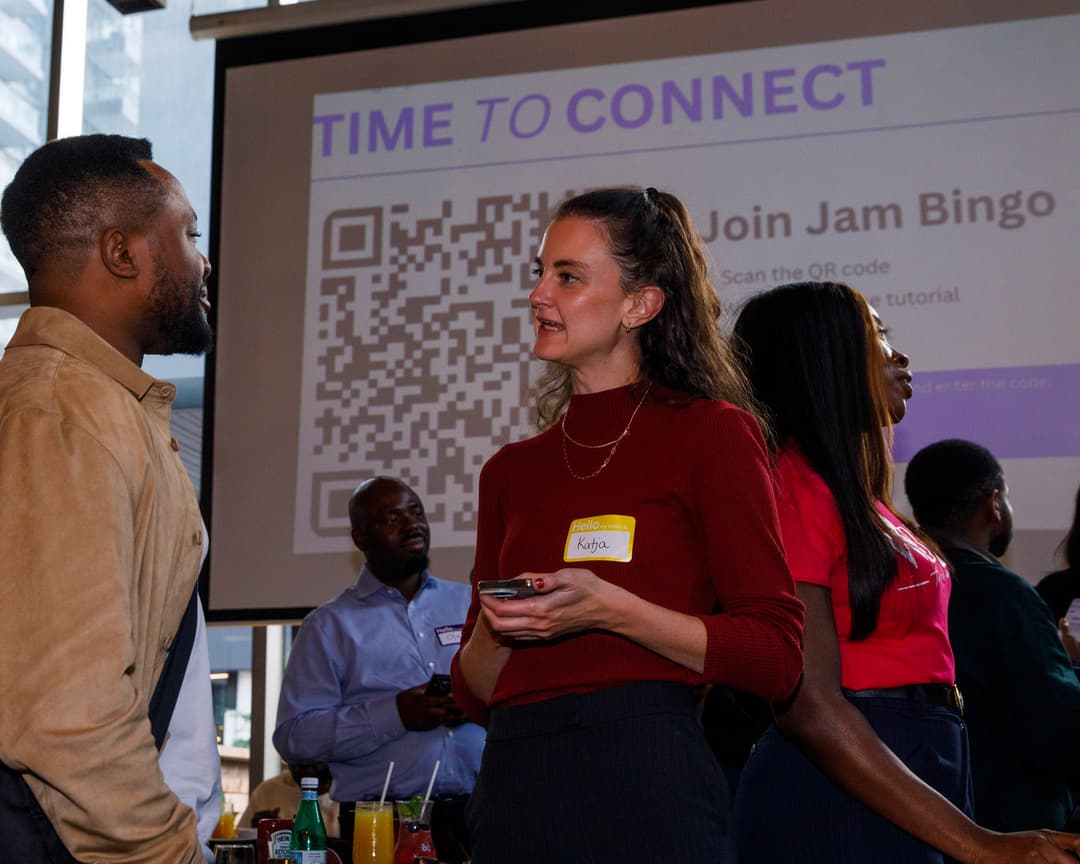
Jam Bingo is perfect for pre-event mixers because it is no-prep, soft structure to what can feel like chaotic networking.
Attendees receive conversation prompts on their phones, giving them an incentive to approach someone new in the room.
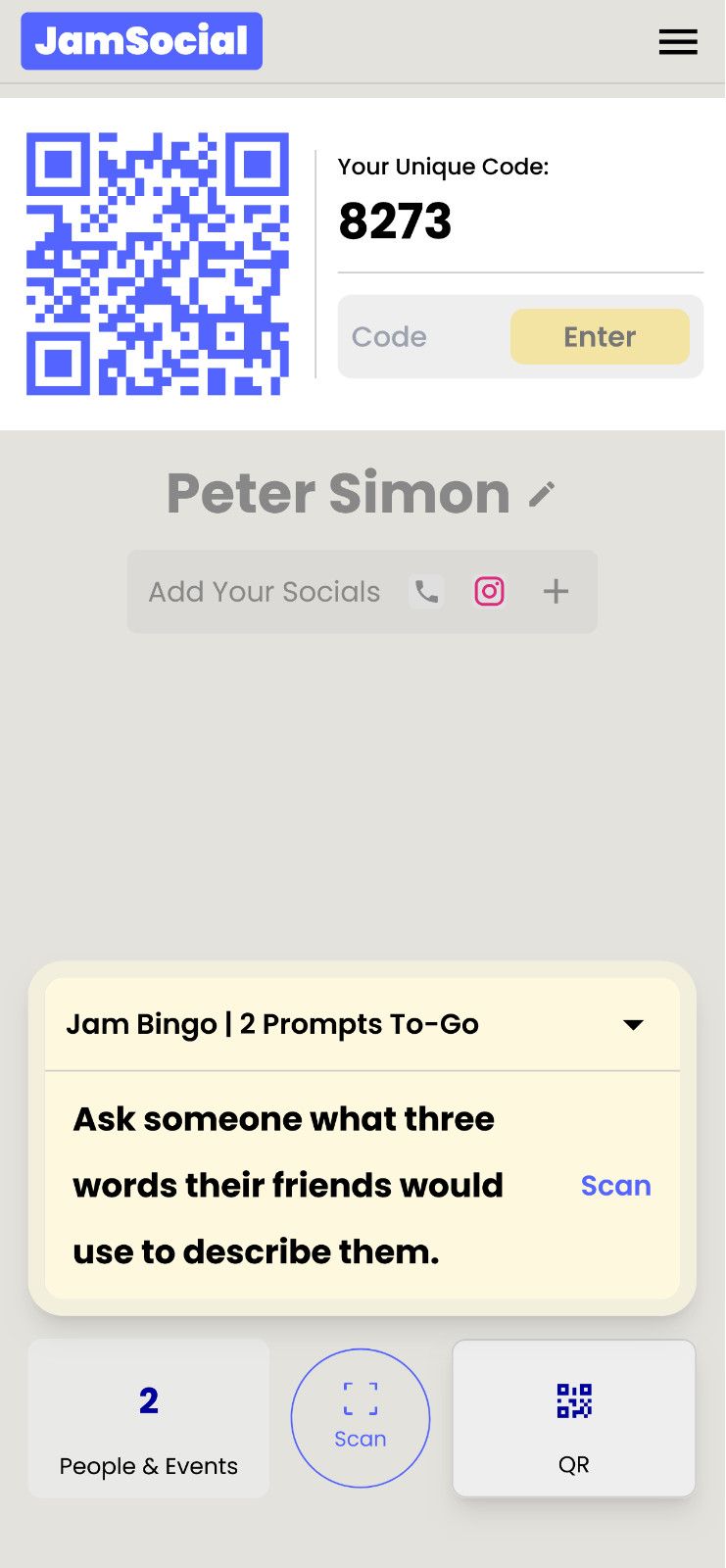
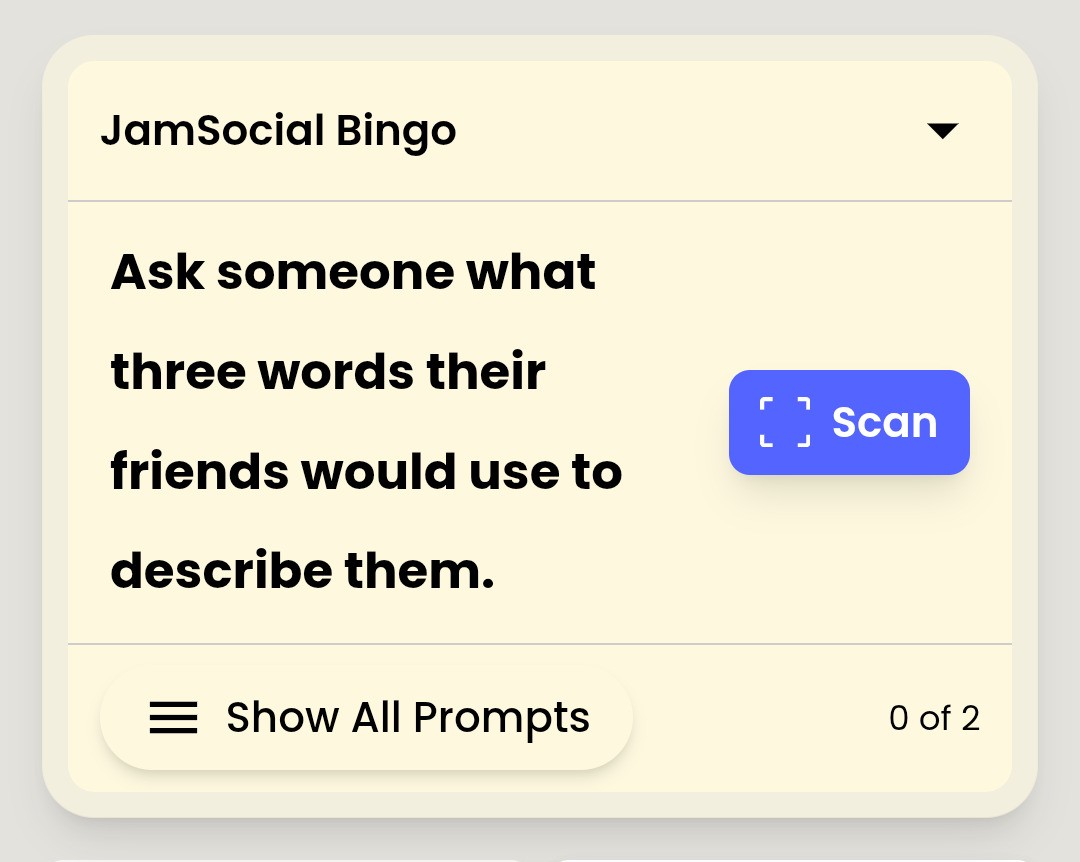
Sample prompts for pre-event mixers:
- Find someone who traveled from a different city for this event
- Ask someone what they're most looking forward to in the main program
- Challenge someone to share one professional goal for this event
For events where people are coming in from different departments, locations, chapters, schools, organizations, or are complete strangers, Jam Bingo is an ideal fit. See how Jam Bingo works!
2. Speed Networking Rounds
Attendees rotate through short, timed one-on-one conversations (typically 3-5 minutes) prompted by a question card. It guarantees everyone has a set number of new conversations, which is useful for smaller breakout groups but harder to manage cleanly at 400+ people without a lot of facilitators and a bell system.
3. Human Bingo / People Bingo
A grid of prompts like "find someone from a different office" or "find someone who's attended five summits" gets attendees moving around and starting conversations with people they wouldn't normally approach. It's easy to run at scale, but on its own it can feel a little dated compared to a game with a built-in entertainment hook, like music.
4. Team Trivia with Mixed Tables
Assigning trivia teams by drawing rather than by department is a simple way to force mixing. It works well for a seated dinner or a lower-energy portion of the agenda, but it's more passive than a game like Jam Bingo — fewer attendees are actively talking to new people at any given moment.
5. Scavenger Hunt with Networking Prompts
A scavenger hunt that requires collecting signatures, photos, or facts from people in different roles or offices encourages attendees to seek out unfamiliar faces across the whole venue. It's great for a multi-hour block or across a full conference day, but it takes more setup and is harder to contain within a tight two-hour window.
How Long Should You Run a Networking Game Like Jam Bingo at a Summit Happy Hour?
For a two-hour happy hour built around networking, most organizers run Jam Bingo for roughly 45 minutes to an hour of active gameplay, nested inside the broader two-hour window. That leaves room for people to arrive, get a drink, and settle in before the game starts, and it leaves the back half of the event open for organic conversation once the game has done its job of breaking the ice.
- First 20-30 minutes: arrival, drinks, informal mingling as people trickle in from travel or sessions.
- Next 45-60 minutes: run the game itself, often in two or three shorter rounds rather than one long stretch, which keeps energy up and gives latecomers a chance to jump in.
- Final 20-30 minutes: let the game wind down and let the connections it sparked continue as free-flowing conversation.
Tips for Running Networking Games at a Multi-Day Summit
- Put your biggest networking push on day one. People are most open to meeting strangers before they've settled into their existing groups for the rest of the week.
- Announce the goal, not just the game. Telling attendees the point is to meet people from other locations gives the activity purpose beyond "fun icebreaker."
- Mix locations and teams deliberately where you can, such as by seating or card assignment, rather than leaving it entirely to chance.
- Keep the rules explanation under two minutes. With hundreds of people, a long walkthrough kills momentum before it starts.
- Follow up the next day. A quick shoutout to memorable moments from the happy hour game reinforces the connections people made and gives them a reason to keep talking through the rest of the summit.
The Bottom Line
For a large department summit where the goal is genuine cross-team and cross-location networking, you want an activity that scales without heavy facilitation, gets people moving, and fits naturally into a happy hour setting. Jam Bingo checks all three boxes, and running it for roughly 45-60 minutes inside a two-hour happy hour hits the sweet spot: long enough to spark real connections, short enough to leave time for the conversations it starts to keep going on their own.
Did this blog help?
Were you instead looking for:
Ice breaker for a large group (100+ people)
Human bingo app (human bingo for 100+ people)
Easy Ice breaker for a Company Kick Off (200+ people)