What Is Informal Networking?
Networking without the agenda
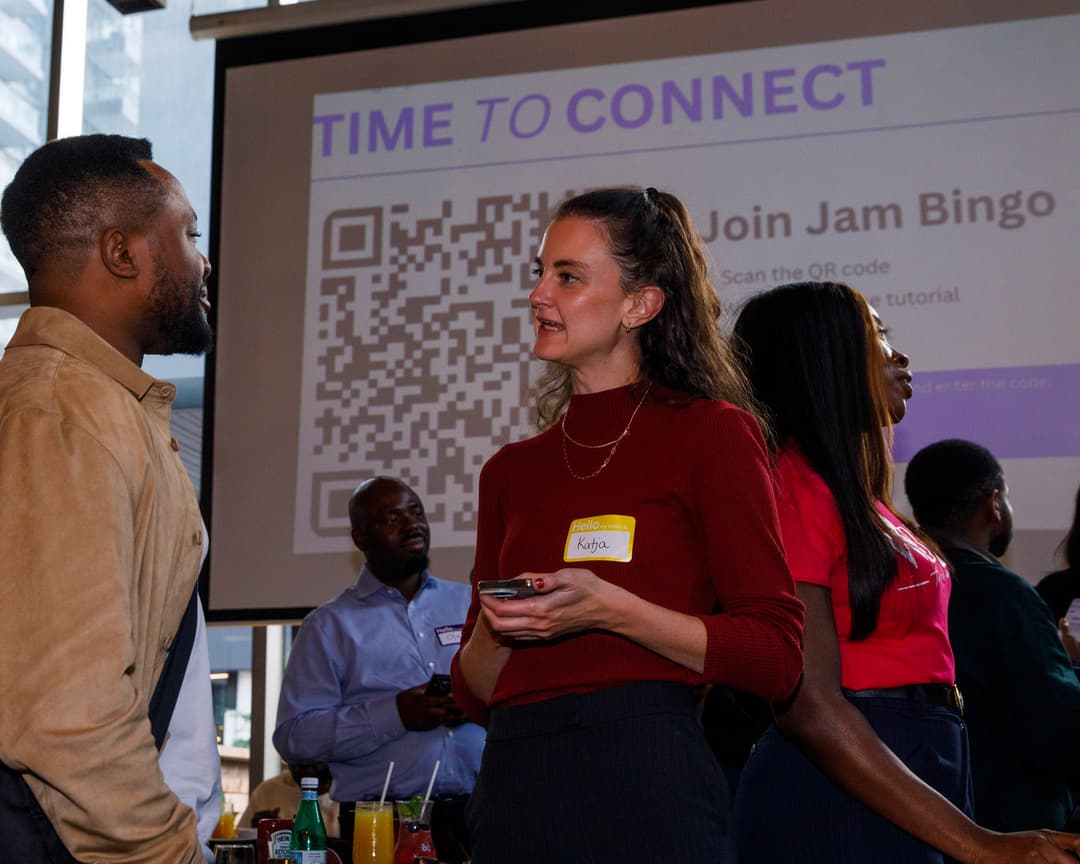
Informal networking is building relationships in relaxed settings, without a set agenda.
Think cocktail receptions, coffee breaks, dinners, and the hallway between sessions.
No speed rounds. No pitch on a stage. Just people talking.

Formal vs Informal Networking
Structure vs freedom
Formal networking has a set structure.
- Formal: speed networking rounds, scheduled 1:1 meetings, matchmaking tables.
- Informal: receptions, dinners, coffee breaks, after-parties.
- Formal: you're told who to meet and when.
- Informal: you pick who to talk to, and for how long.
Both have their place. Most events need a bit of each.
Why Informal Networking Matters
Where trust actually builds
Relaxed conversations are where people let their guard down.
That's where referrals, friendships, and partnerships usually start.
Ask anyone about their best event connection. It probably happened over a drink, not in a breakout session.
The Problem With Big Groups
Freedom turns into cliques
Here's the catch. At 100+ people, "go network" often means nothing happens.
- People stick with who they already know.
- Newcomers stand alone by the bar.
- The same few people do all the talking.
Total freedom, with no nudge, usually means total comfort zone.
Informal Networking With Games
A light nudge, still relaxed
The fix isn't more structure. It's a tiny nudge.
A game gives everyone a reason to walk over, without turning the room into a schedule.
- Connection bingo on phones
- Color-coded badges
- "Ask me about" stickers
- A seat swap between dinner courses
Here are 9 interactive networking ideas for large groups if you want more.


How Jam Bingo Helps
One prompt at a time
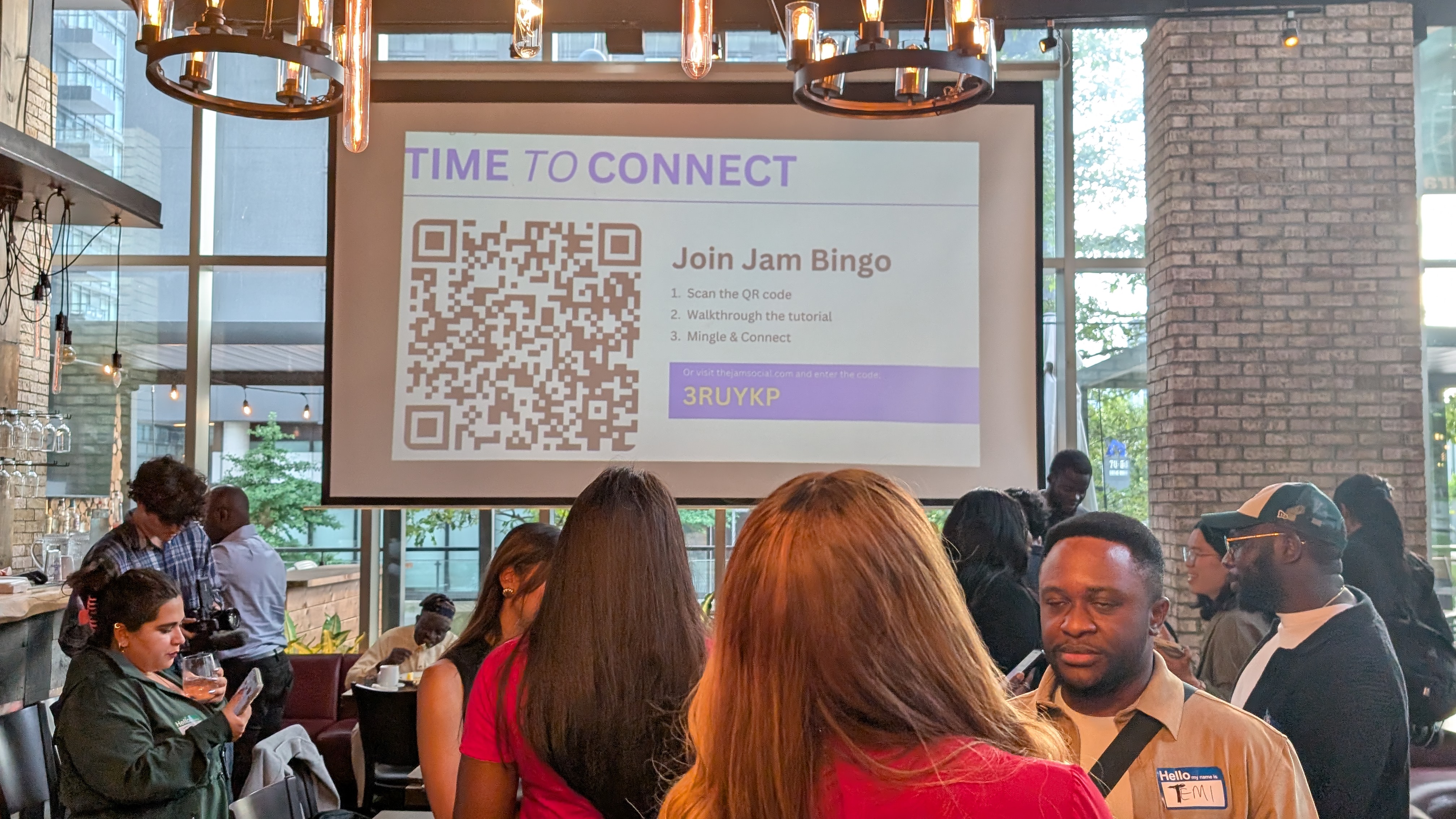
Jam Bingo adds that tiny nudge to informal networking.
- Guests scan one QR code. No app to download.
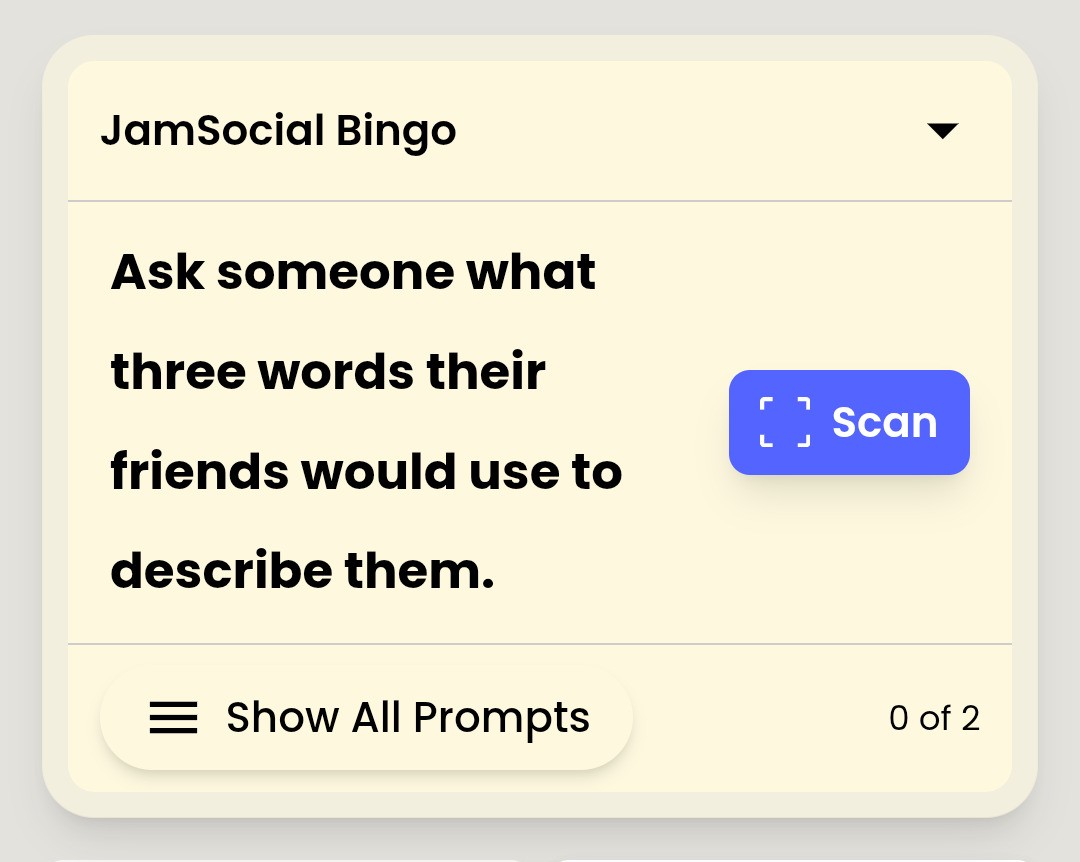
- They get one prompt on their phone, like "Find someone who works in a field you know nothing about."
- They find a match and talk.
- They scan that person's code to unlock the next prompt.
It still feels informal. People choose who to approach and how long to stay.
And every scan saves the connection, so nobody forgets who they met.
Informal Networking Tips
For hosts
- Give people a reason to talk, not just a room to talk in.
- Put the bar and food in different spots so people move.
- Keep music low enough for conversation.
- Ask leaders to greet first-timers.
For guests
- Join groups of three, not pairs. It's easier to step in.
- Ask about their work, not just their title.
- Introduce two people who should meet.
- Follow up within a week.
Hosting a Large Event?
Keep it informal, make it work
Create a Jam Bingo and give every guest an easy reason to meet someone new.
Want to see what guests will see first? Try the demo.
Frequently Asked Questions
What is informal networking?
Informal networking is building professional relationships in relaxed settings without a set agenda, like cocktail receptions, coffee breaks, dinners, and hallway chats between sessions.
What's the difference between formal and informal networking?
Formal networking has a structure, like speed rounds or scheduled one-on-one meetings. Informal networking is open: people choose who to talk to and for how long.
Why is informal networking hard in large groups?
With no nudge, people stick with who they already know. Newcomers stand alone, and the same few people do most of the talking.
How do you make informal networking work for 100+ people?
Add a light nudge, not a schedule. A game like connection bingo gives everyone a reason to walk over to someone new, while they still choose who to approach and how long to talk.
What are examples of informal networking games?
Phone-based connection bingo, color-coded badges, "Ask me about" stickers, and course seat swaps at dinner are all easy, informal options.