Best Icebreakers for a Large Corporate Event
My honest picks for 100-300 people
So you asked me what icebreakers actually work for a corporate event with 100 to 300 people.
Honestly? Most of the ones you'll find online don't.
Not because they're bad. They were just built for a team of 12 in a meeting room, not a ballroom full of people from six different departments.
I've helped run icebreakers at 100+ events, so here's what I'd tell you if we were grabbing coffee.

Why Big Corporate Events Stall
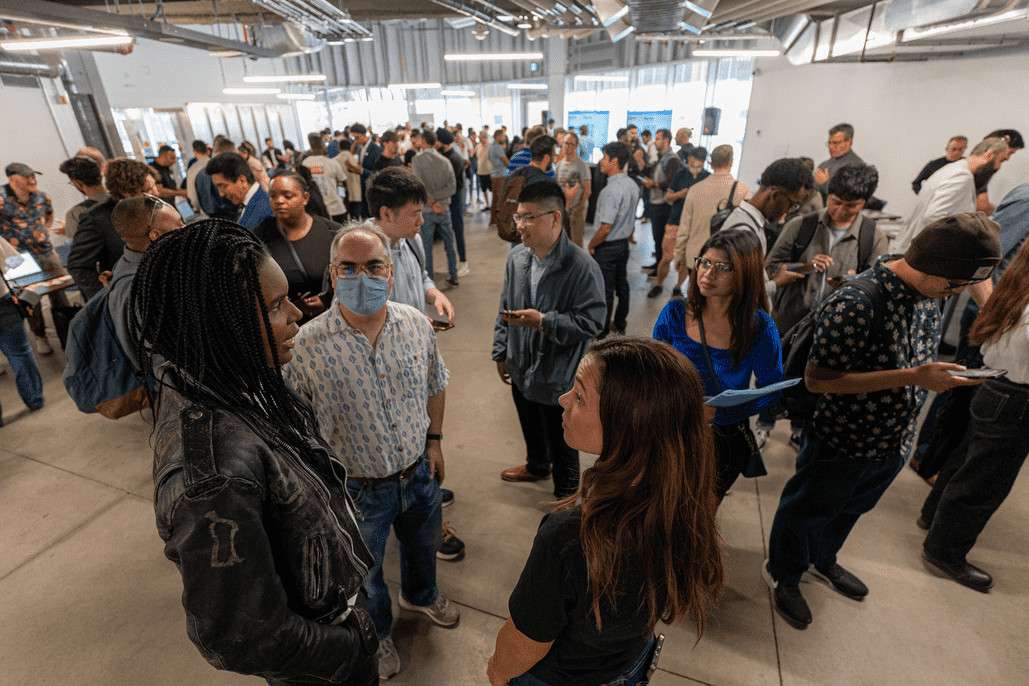
Same tables, same teams
Here's what usually happens.
- People walk in and find their team.
- Sales sits with sales. Engineering sits with engineering.
- New hires stand near the coffee, pretending to check their email.
- Someone on stage says "turn to the person next to you," and that person is their desk neighbor.
At this size, you can't walk around introducing everyone. There are too many people and only one of you.
So whatever you pick has to run itself.
What a Large Group Icebreaker Needs
My 4-point checklist
- One-sentence rules. If it needs a slide of instructions, half the room tunes out.
- No printing. 300 paper cards means 300 pens and a lot of cards left on tables.
- Everyone plays at once. Nobody should be waiting for their turn while 200 people watch.
- It gets people moving. Seated icebreakers keep people with their own table.
If an icebreaker misses any of these, I'd skip it for a group this big.
1. Phone-Based Networking Bingo
Best overall for 100-300 people
This is the one I'd pick. Yes, I'm biased, because I built Jam Bingo.
But I built it because nothing else checked all four boxes.
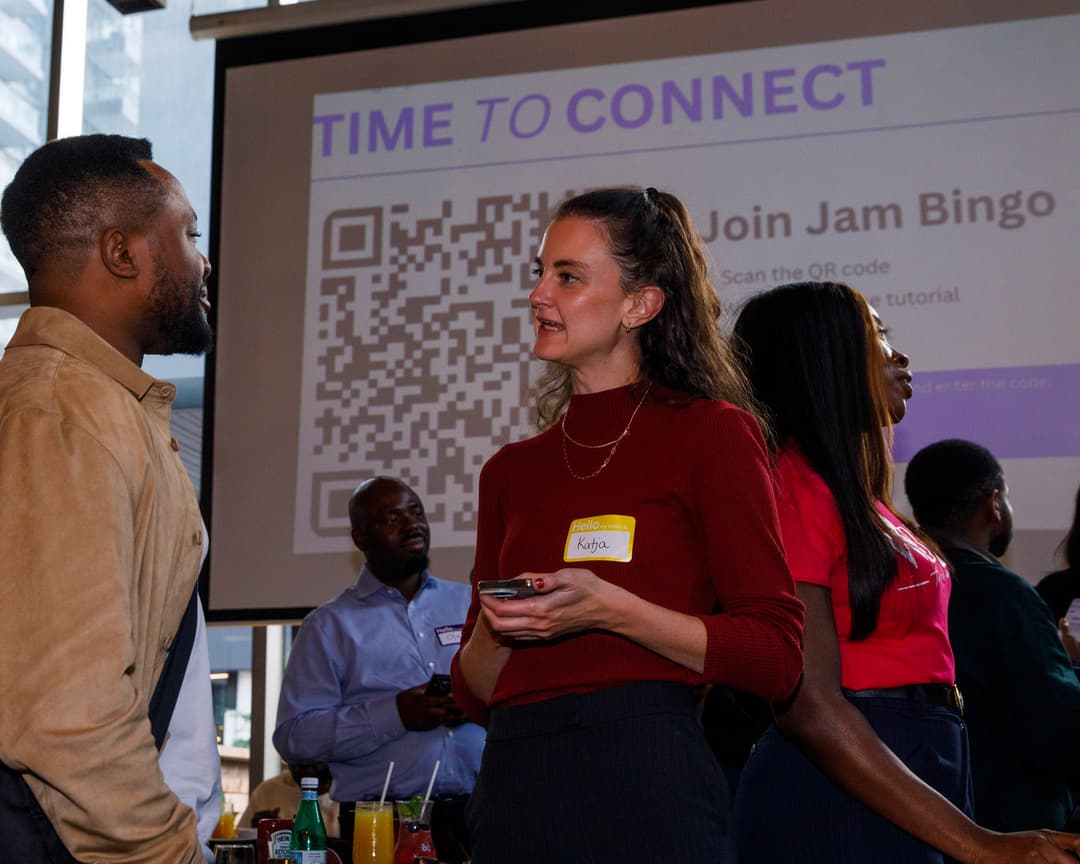
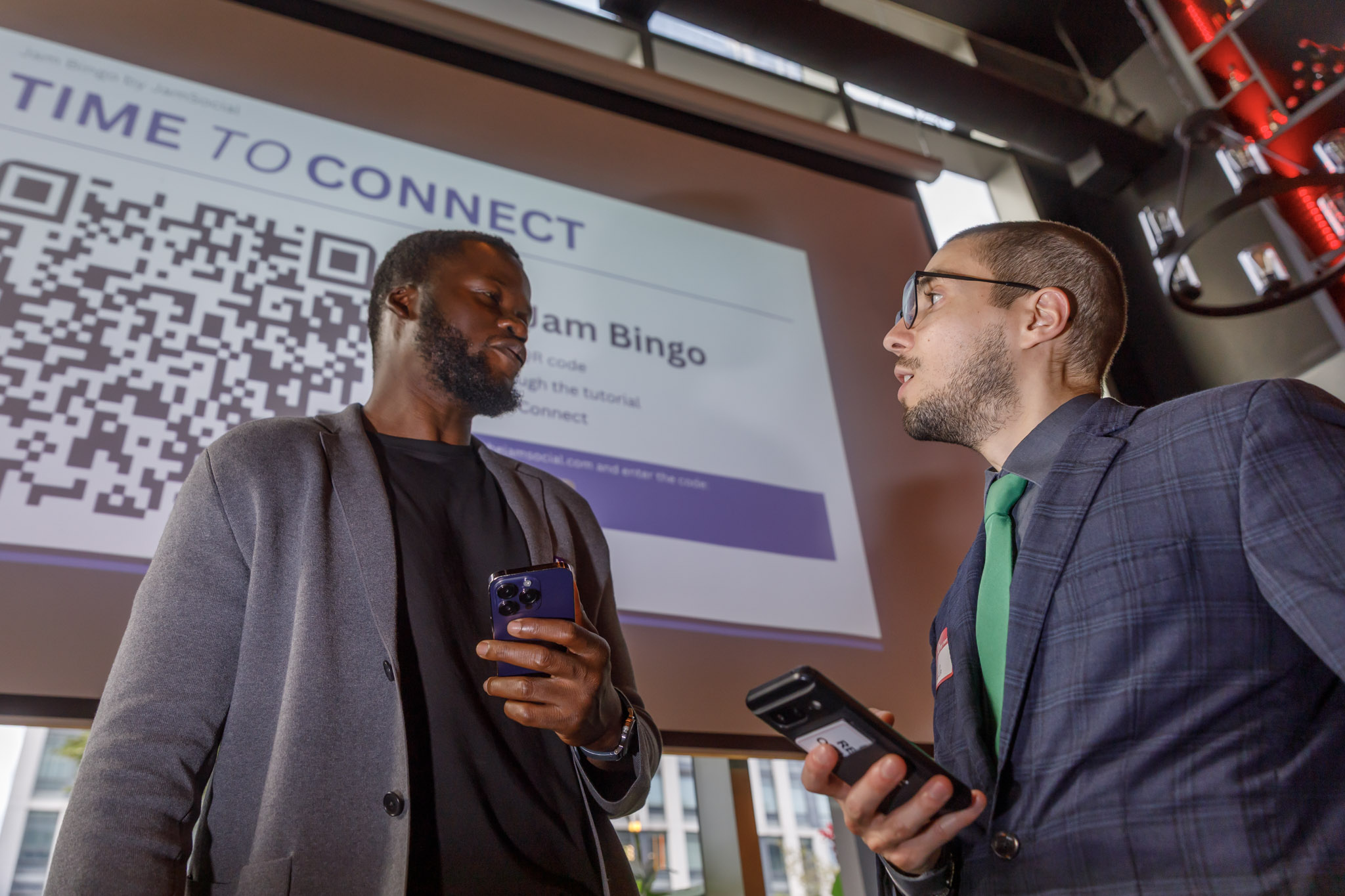
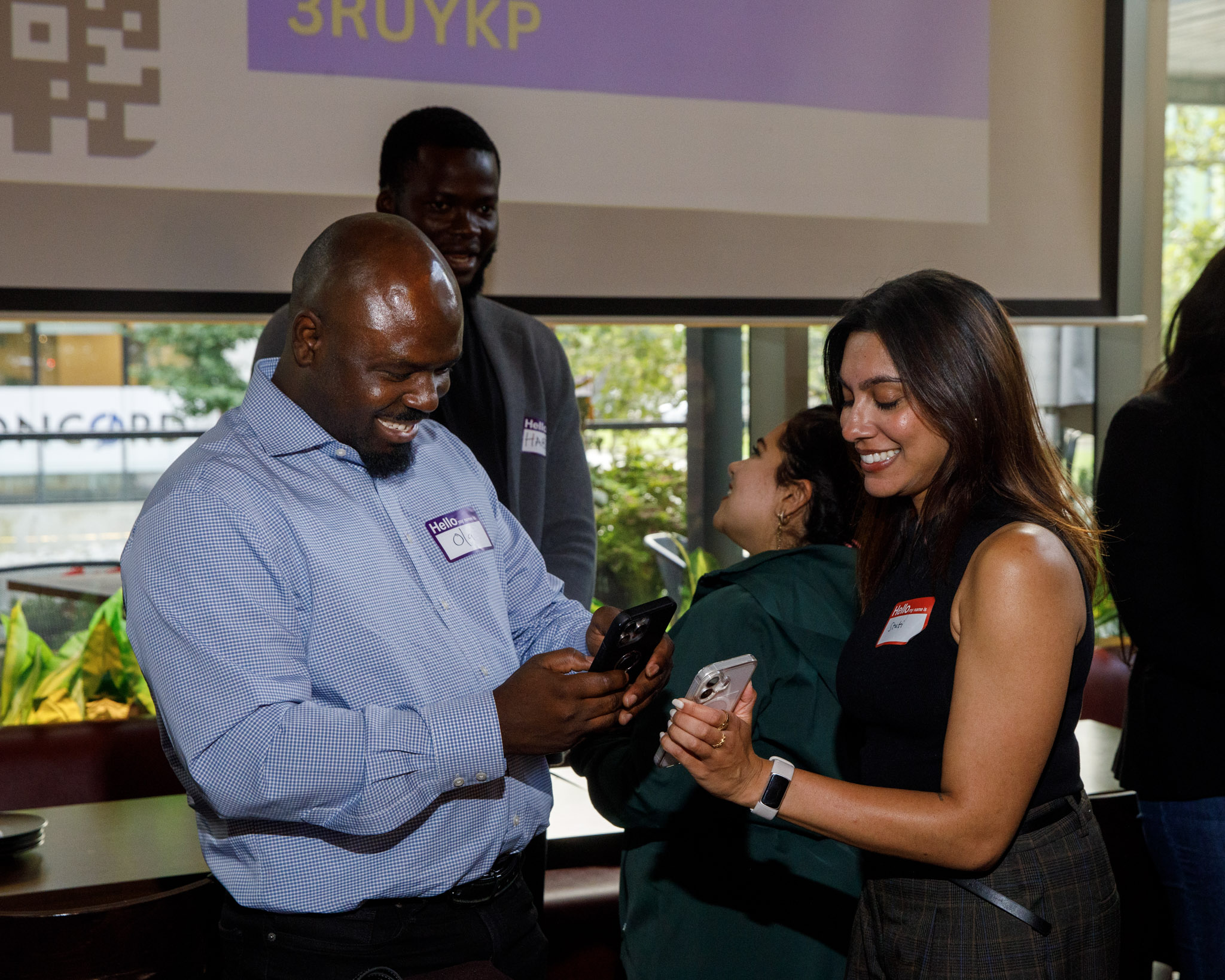
Everyone scans one QR code and gets one prompt at a time on their phone, like "Find someone from a department you've never worked with."
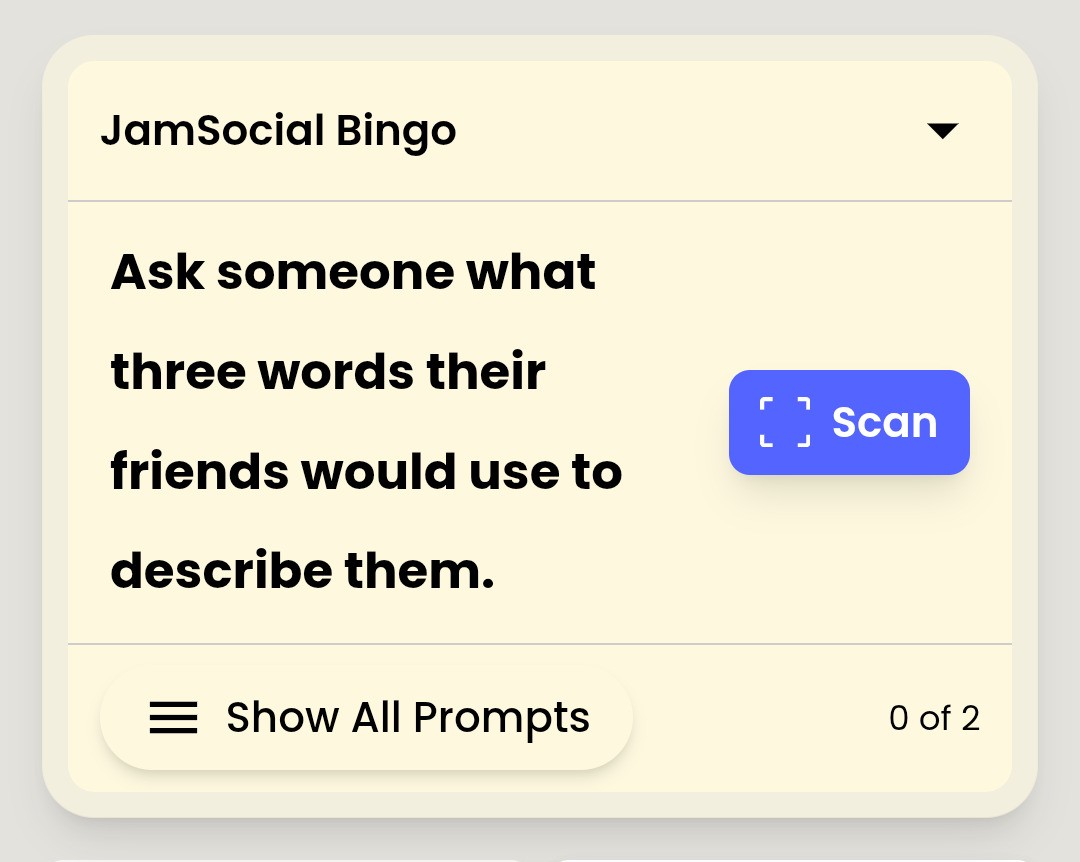
They find someone who matches, talk, and scan that person's QR code to unlock their next prompt.
No app to download, no paper, and every connection is saved, so people actually remember who they met.
Time: 20-45 minutes.
2. Speed Networking Rounds
Good for tight agendas
Two lines face each other. Each pair gets 2-3 minutes and a prompt on screen. A chime goes off, and one line shifts down.
It works. It just needs a lot of floor space and someone running the clock. At 300 people, the rotating lines get messy fast.
Time: 20-30 minutes.
3. Mixed-Team Trivia
Good for seated dinners
Seat one person from each department at every table, then run a few rounds of trivia about the company.
Great if people are sitting for dinner anyway. The catch? You're building a seating chart for 300 people.
Time: 20-30 minutes.
4. Color-Coded Mingling
Good for open receptions
Hand out colored stickers or lanyards at check-in, one color per department or office.
The rule: go talk to someone wearing a different color.
Super low effort. It just doesn't give people much to talk about once they get there.
Icebreakers I'd Skip at This Size
Built for small groups
- Two Truths and a Lie. Great in a circle of eight. Not with 200.
- Going around the room for intros. At 300 people, that's your whole morning.
- Paper human bingo. It works, but people rush for signatures and the cards end up on the floor.
Corporate Icebreaker Prompts
Get departments mixing
Whatever you choose, the prompts do the heavy lifting.
Here are a few I like for a corporate crowd:
- Find someone from a department you've never worked with.
- Find someone who works in a different office or city.
- Find someone who started this year.
- Find someone who has been here longer than you.
- Find someone whose job you couldn't explain in one sentence.
- Find someone you've emailed but never met in person.
That last one is always a hit. Every company has people who've traded 100 emails and never shaken hands.
Want more? Browse our networking bingo questions.
How I'd Run It
Timing and setup tips
- Start during arrivals or right after the first break. People are standing around anyway.
- Ask a few leaders to play first. When the VP is scanning codes, everyone else joins in.
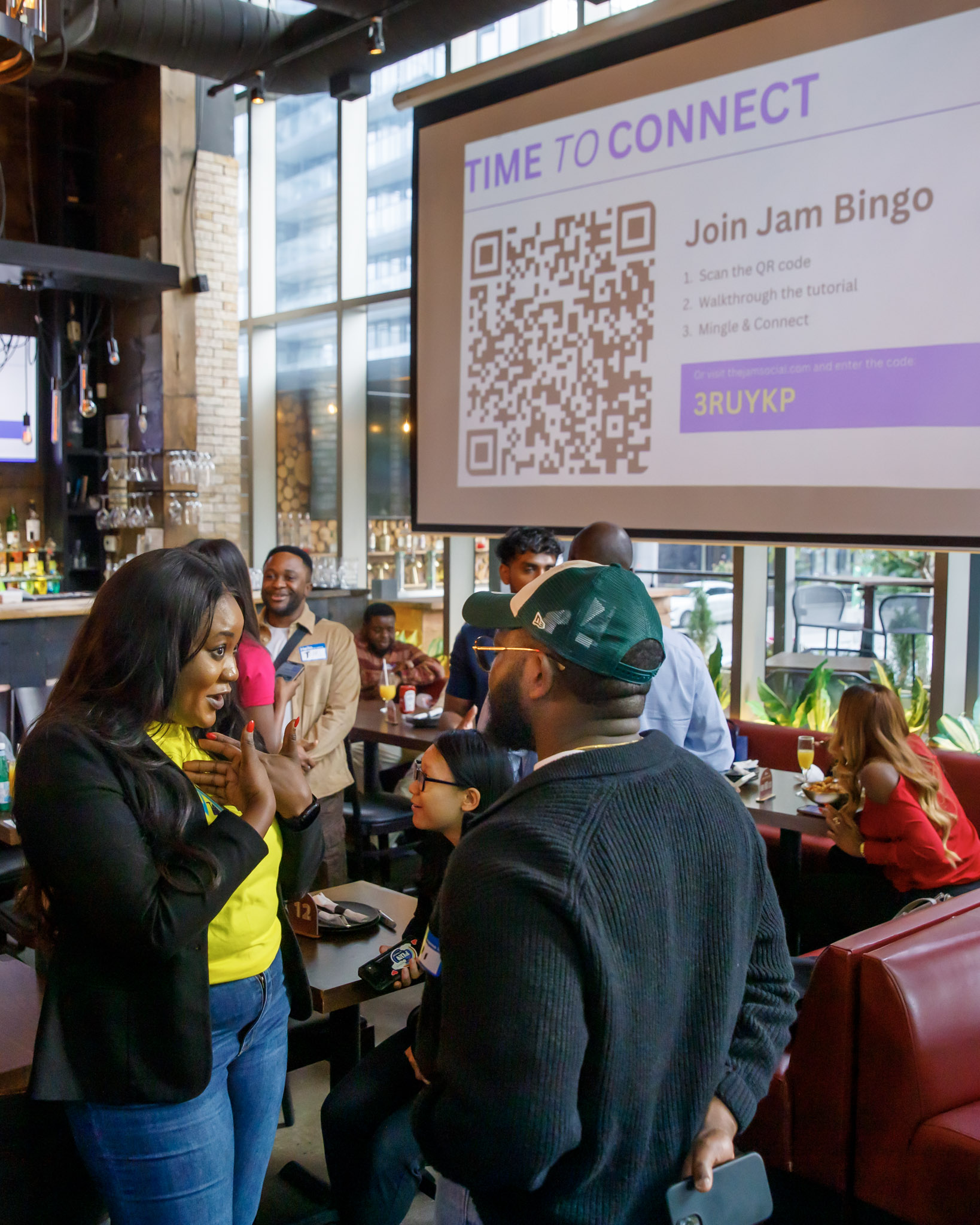
- Put the QR code on the main screen and on a few table cards.
- Explain it once, in one sentence, then let it run.
- Wrap up before the keynote and shout out whoever met the most people.

My Bottom Line
Pick something that runs itself
If you remember one thing: at 100-300 people, the best icebreaker is the one you don't have to manage.
Want to see what your attendees would see? Try the demo in under a minute.
Frequently Asked Questions
What is the best icebreaker for a large corporate event?
For 100 to 300 people, pick something self-running that everyone can join at once from their phone. Digital networking bingo like Jam Bingo works well because each person gets one prompt at a time, finds someone who matches, and unlocks their next prompt without a host managing the room.
How long should an icebreaker last at a corporate event?
Plan for 20 to 45 minutes. Shorter than that and people only get one or two real conversations. Start it during arrivals or right after the first break, and end it before the main program.
How do I get different departments to mix?
Use prompts that point people outside their team, like "Find someone from a department you've never worked with" or "Find someone who works in a different office." The prompt gives people a reason to walk over to a stranger.
Do corporate icebreakers work for introverts?
Yes, a structured one helps introverts most. The prompt tells them who to look for and what to talk about, so they don't have to come up with an opener on their own.
Do attendees need to download an app?
Not with Jam Bingo. It runs in the phone's browser. Attendees scan a QR code with their camera and they're playing. If a camera won't cooperate, they can type in a short code instead.
Which icebreakers should I avoid for 100+ people?
Skip anything built for a small circle, like Two Truths and a Lie or going around the room for introductions. At 100 to 300 people, they either take forever or quietly fall apart.