How Does Interactive Networking Work?
And how to make yours interactive
You've probably been to a networking session that looked like this: name tags on, drinks in hand, and everyone standing next to the same two people they walked in with.
Nobody planned for it to go that way. It just happens when people are told to "go network" without anything to help them start.
Interactive networking fixes that.
In this blog, we'll break down how interactive networking actually works, what's happening in the room when it works, and how you can make your own networking session interactive.
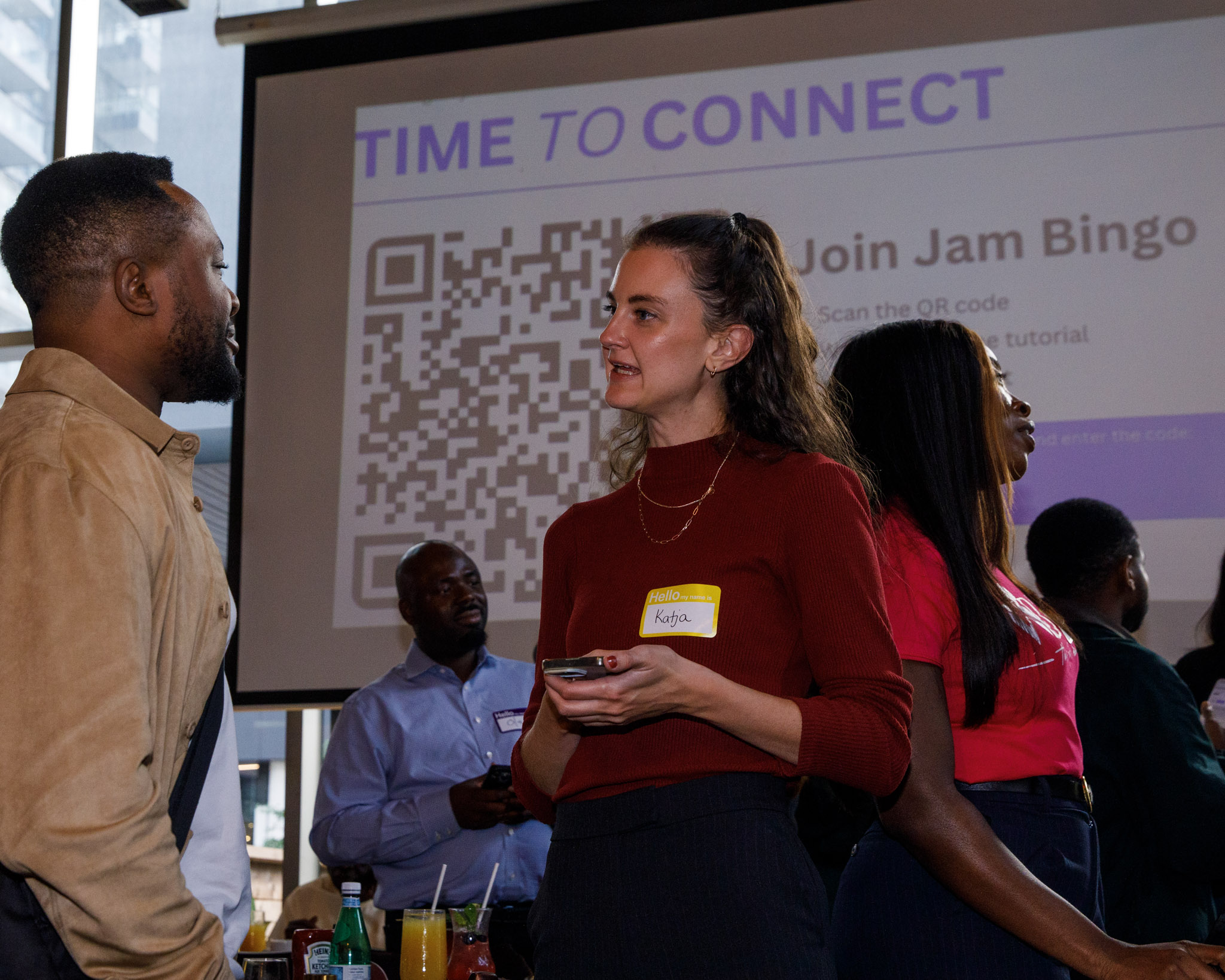

What Is Interactive Networking?
The activity does the heavy lifting
Interactive networking is networking with a structure.
Instead of asking attendees to walk up to strangers on their own, you give them an activity that tells them who to talk to, what to talk about, and why they're talking.
In traditional networking, the attendee does all the work. In interactive networking, the activity does most of it.
- Traditional networking: "Here's a room full of people. Go mingle."
- Interactive networking: "Find someone who has lived in another country, and ask them what they miss most about it."
The second one is much easier to act on, and that's the whole idea.
Why "Go Mingle" Doesn't Work
Three questions stop people before they start
When people walk into a room of strangers, three questions run through their head:
- Who do I approach? Everyone already looks busy in a conversation.
- What do I say? "So, what do you do?" feels flat, and they know it.
- Why would they want to talk to me? Walking up to a stranger feels like asking for a favour.
If an attendee can't answer those three questions quickly, they hold back.
They stay with people they already know, check their phone, or head to the snack table.
The bigger the group, the harder it gets
In a group of 15, a host can introduce people to each other. In a group of 100 to 500, that's impossible.
The room naturally splits into small circles of people who already know each other, and those circles rarely mix.
That's why networking games for large groups matter so much more as your event grows.
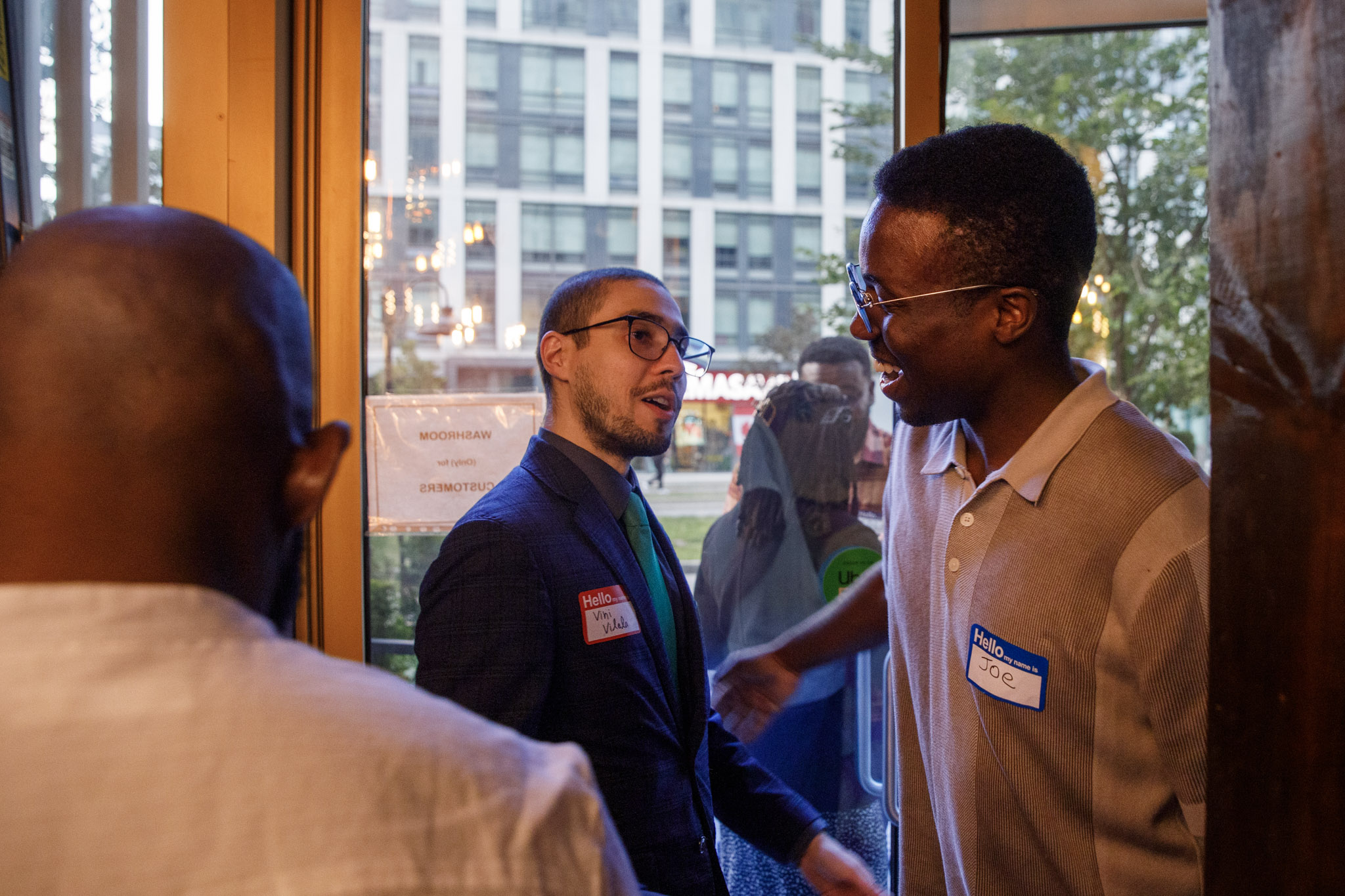

How Interactive Networking Works
It answers the three questions for the attendee
Every good interactive networking activity, no matter the format, works by building four things into the room.
1. A reason to approach
The activity gives everyone a task, so walking up to a stranger stops feeling random.
The ask changes from "Will you talk to me?" to "Can you help me with this?" People are happy to help, so the first step feels low-risk.
2. Something to say
Conversation prompts replace small talk.
A prompt like "Find someone who started a new hobby this year" gives both people something real to talk about from the very first sentence.
3. A goal that keeps people moving
Once a conversation ends, the activity points attendees to the next person: another prompt to complete, another match to find.
Instead of one long conversation with someone they already know, attendees meet several new people.
4. A light layer of play
A little bit of game (points, a bingo line, a small prize) gives the room energy.
It shifts the attendee's focus from "I have to network" to "I'm playing a game." That takes a lot of the pressure off, especially for introverts.
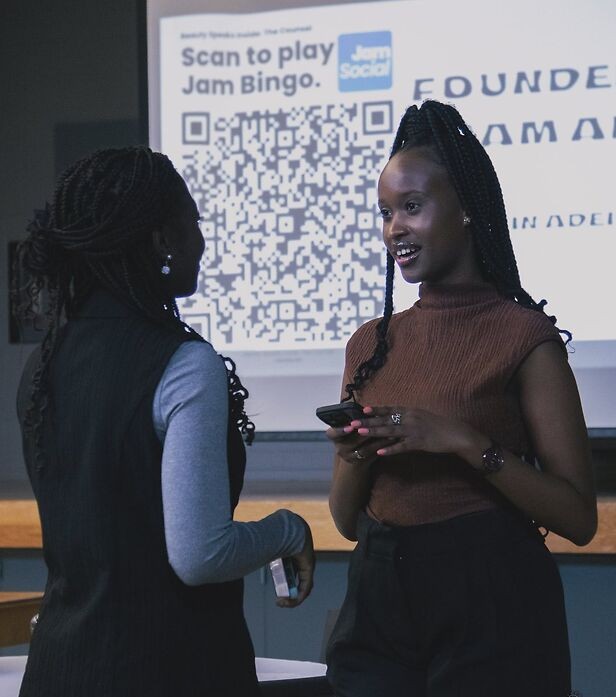

The interactive networking loop
Put those four together and you get a simple loop that repeats over and over during the session:
Every time the loop repeats, an attendee meets someone new.
Over a 30-minute session, that adds up to far more new connections than most people would make on their own.
Interactive Networking Activities
Different formats, same loop
Most popular formats are just different ways of running that same loop:
- Speed networking: the reason to approach is the timer. Everyone rotates partners every few minutes. Great for quick intros, but it needs a strong host to keep time.
- Networking bingo: the reason to approach is the bingo prompt. Attendees find people who match each prompt. Digital networking bingo runs on phones, so there's nothing to print.
- Human scavenger hunts: attendees work through a list of people or traits to find. A digital human scavenger hunt works well for teams who already know each other a bit.
- Structured roundtables: each table gets a discussion question, and people switch tables between rounds. Best for seated events.
Want to go digital? Try digital networking bingo or a digital human scavenger hunt.
If you'd like more ideas, we put together 12 of them in How to Make Networking Interactive and Fun.
Watch: Interactive Networking Icebreaker
See it in action
In this video, we walk through an icebreaker activity that gets people interacting at a networking event:
How to Make Networking Interactive
Six steps to turn "go mingle" into real conversations
Step 1: Give networking its own time slot
Networking shouldn't happen while people are balancing a plate.
Block a dedicated 20 to 45 minutes in your agenda, and start it 15 to 30 minutes into the event, once most people have arrived.
If there's food, run it before or after people eat, not during.
Step 2: Replace small talk with prompts
Write prompts that are easy to answer and lead somewhere interesting:
- Instead of "What do you do?" try "Find someone who changed careers."
- Instead of "Where are you from?" try "Find someone who grew up in a different province or country."
- Instead of "Having a good time?" try "Find someone who can recommend a great local restaurant."
Step 3: Add a light game
Pick a networking game that gives people a goal to work toward, like completing a bingo line or a scavenger hunt list.
Keep the rules simple enough to explain in under a minute.
Step 4: Make it easy to join
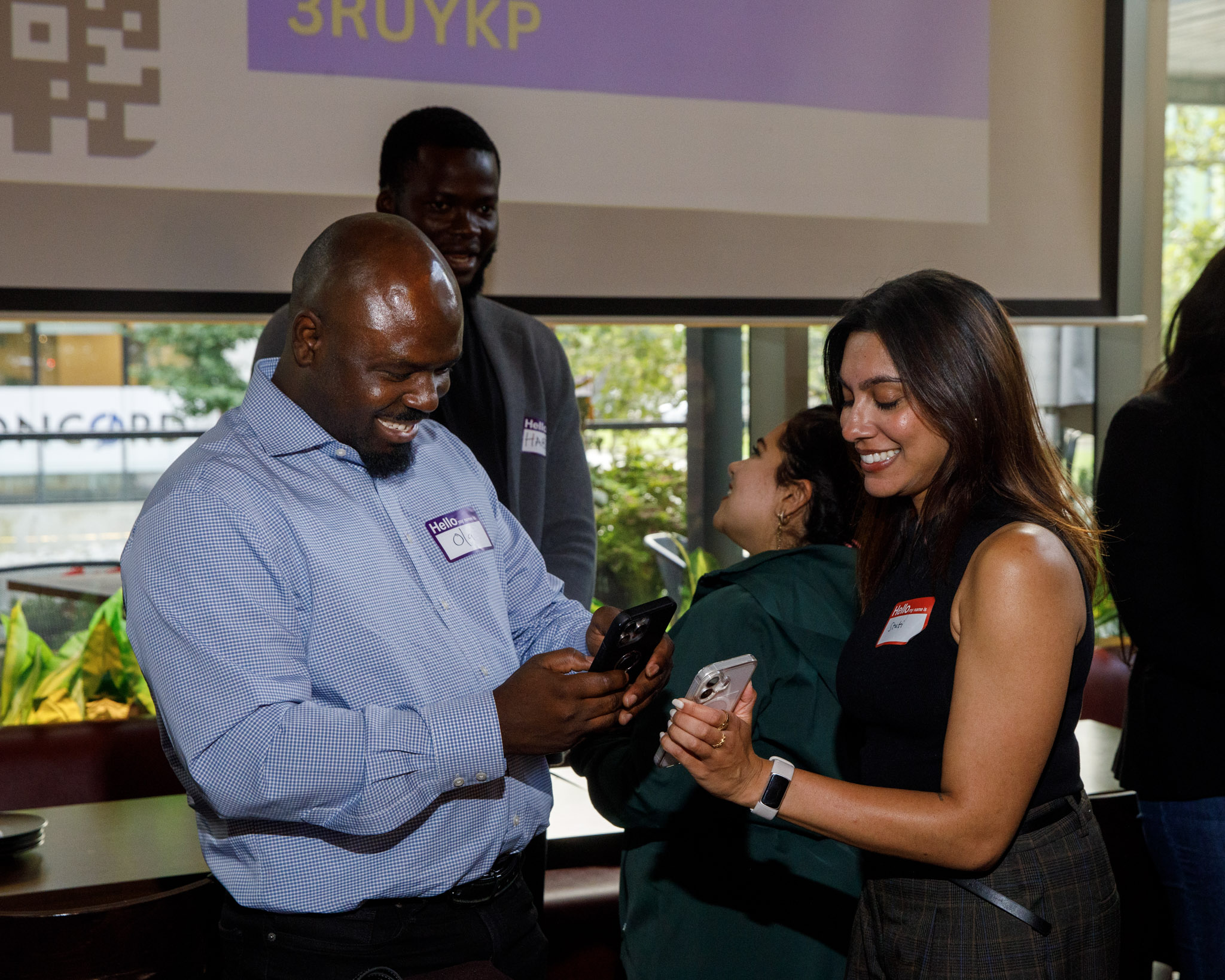
The more steps it takes to get started, the fewer people will play. Avoid app downloads and paper handouts if you can.
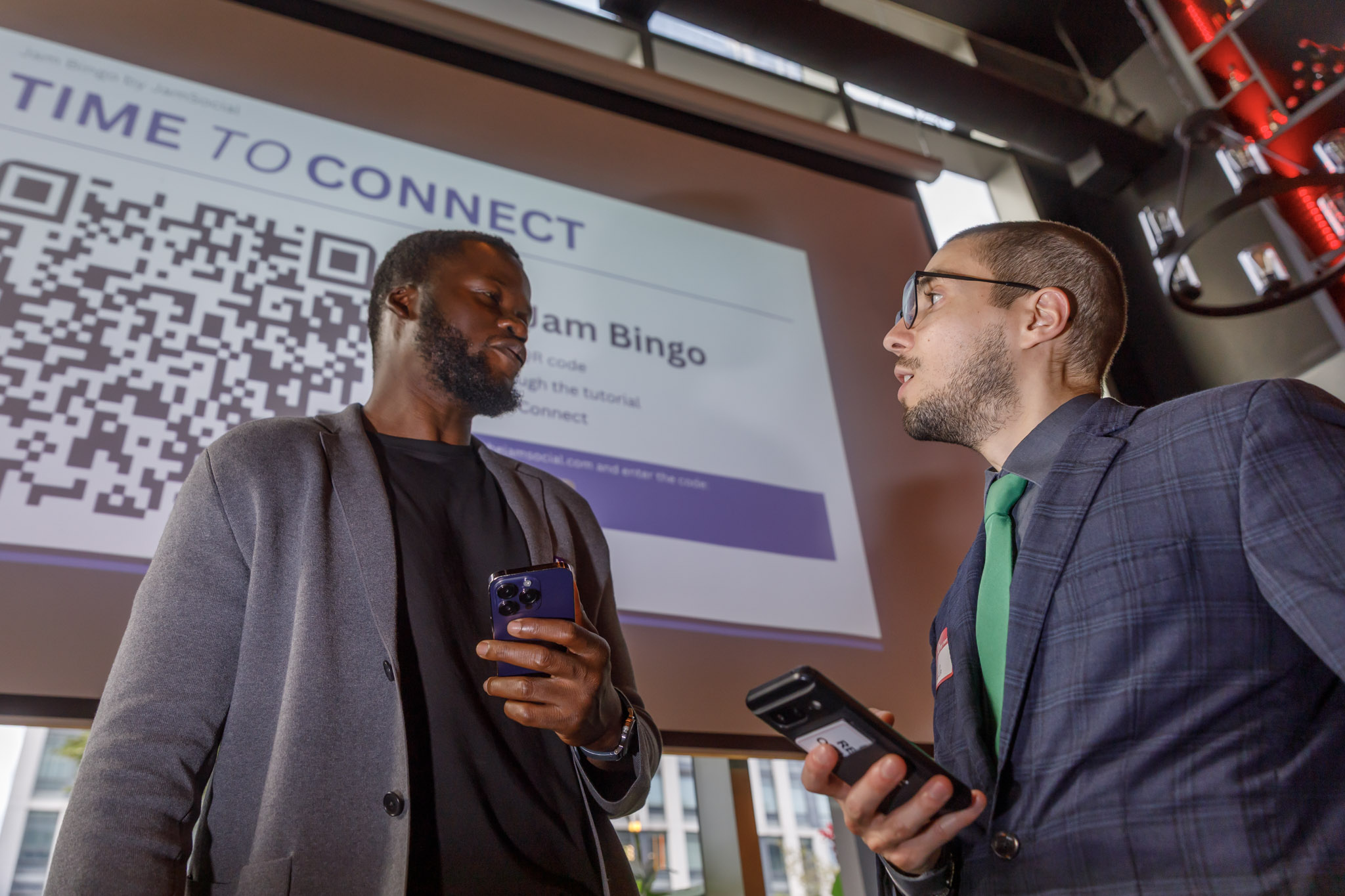
QR code icebreaker games work well here: put one QR code on the screen and everyone joins from their phone in seconds.
Step 5: Keep people moving
Add a simple rule like "one prompt per person" so attendees don't match every prompt with the same friend.
This one rule does a lot to get people out of their usual circles.
Step 6: Close the loop
End with a quick shout-out to a few winners, then give people time to keep talking.
Afterward, ask attendees how many new people they met. The best sign it worked? People come back to your next event.
Example: Jam Bingo
The interactive networking loop, built in
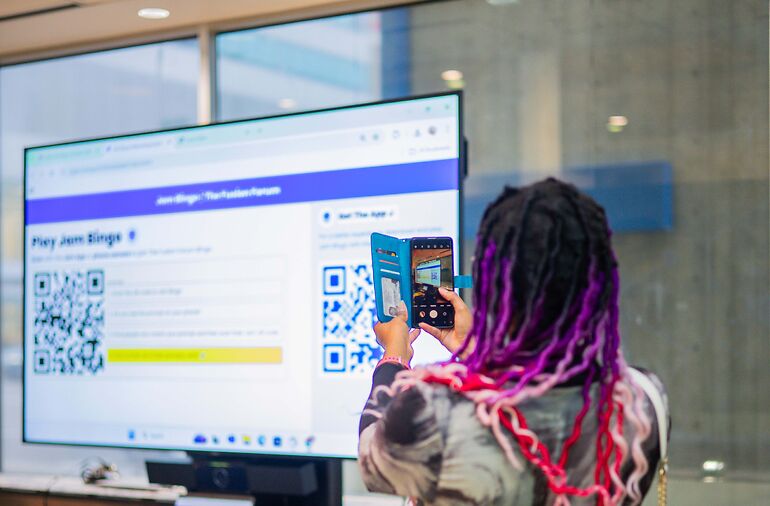
- The Display: the host puts the Jam Bingo QR code on the screen.
- The Scan: attendees scan it with their phones. No app download and no printing.
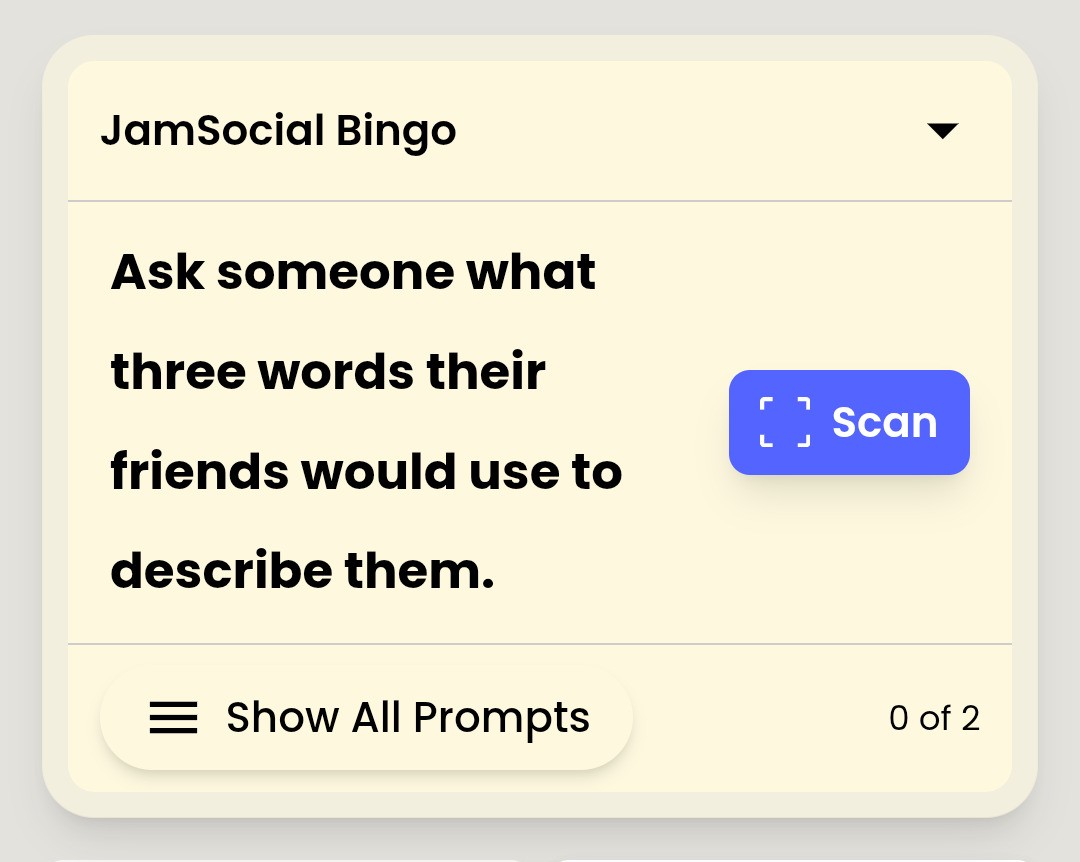
- The Prompts: each attendee gets one conversation prompt at a time, which you can customize for your event.
- The Mingle: attendees find someone who matches, talk, and scan each other's codes. The next prompt unlocks, and their new connection is saved automatically.
For a full walkthrough, see How Digital Human Bingo Works.
Or learn more about digital human bingo and why it works as a human bingo app for large groups.
In Summary
Answer who, what, and why
Interactive networking works by giving attendees a reason to approach someone, something to say, and a goal that keeps them moving.
When the activity answers "who," "what," and "why" for your attendees, they stop holding back and start connecting.
Frequently Asked Questions
What is interactive networking?
Interactive networking is networking with a structure. Instead of telling attendees to "go mingle," you give them an activity that tells them who to talk to, what to talk about, and why they're talking.
How does interactive networking work?
It gives attendees four things: a reason to approach someone, something to say, a goal that keeps them moving to the next person, and a light layer of play. Together they create a loop: get a prompt, find someone who matches, have a real conversation, then move on to the next prompt.
How do you make a networking session interactive?
Give networking its own time slot, replace small talk with prompts, add a light game, make it easy to join (ideally with one QR code and no app download), add a rule that keeps people moving, and close with a quick shout-out to a few winners.
What are some interactive networking activities?
Popular formats include speed networking, networking bingo, human scavenger hunts, and structured roundtables. They all run the same loop, just with a different reason to approach someone.
Does interactive networking help introverts?
Yes. Introverts often hold back because they don't know who to approach or what to say. A game answers both questions for them, and it turns "I have to network" into "I'm playing a game," which takes a lot of the pressure off.
How long should an interactive networking session be?
Block 20 to 45 minutes, and start it 15 to 30 minutes into the event, once most people have arrived. If there's food, run it before or after people eat, not during.
Does interactive networking work for large groups?
It works best for large groups. With 100 to 500 people, a host can't introduce everyone, so the room splits into small circles. A self-running activity like Jam Bingo keeps everyone moving without a facilitator at every table.