
11 Interactive Ice Breakers for Networking
The exact activities to use when you need a room full of strangers to actually talk to each other.
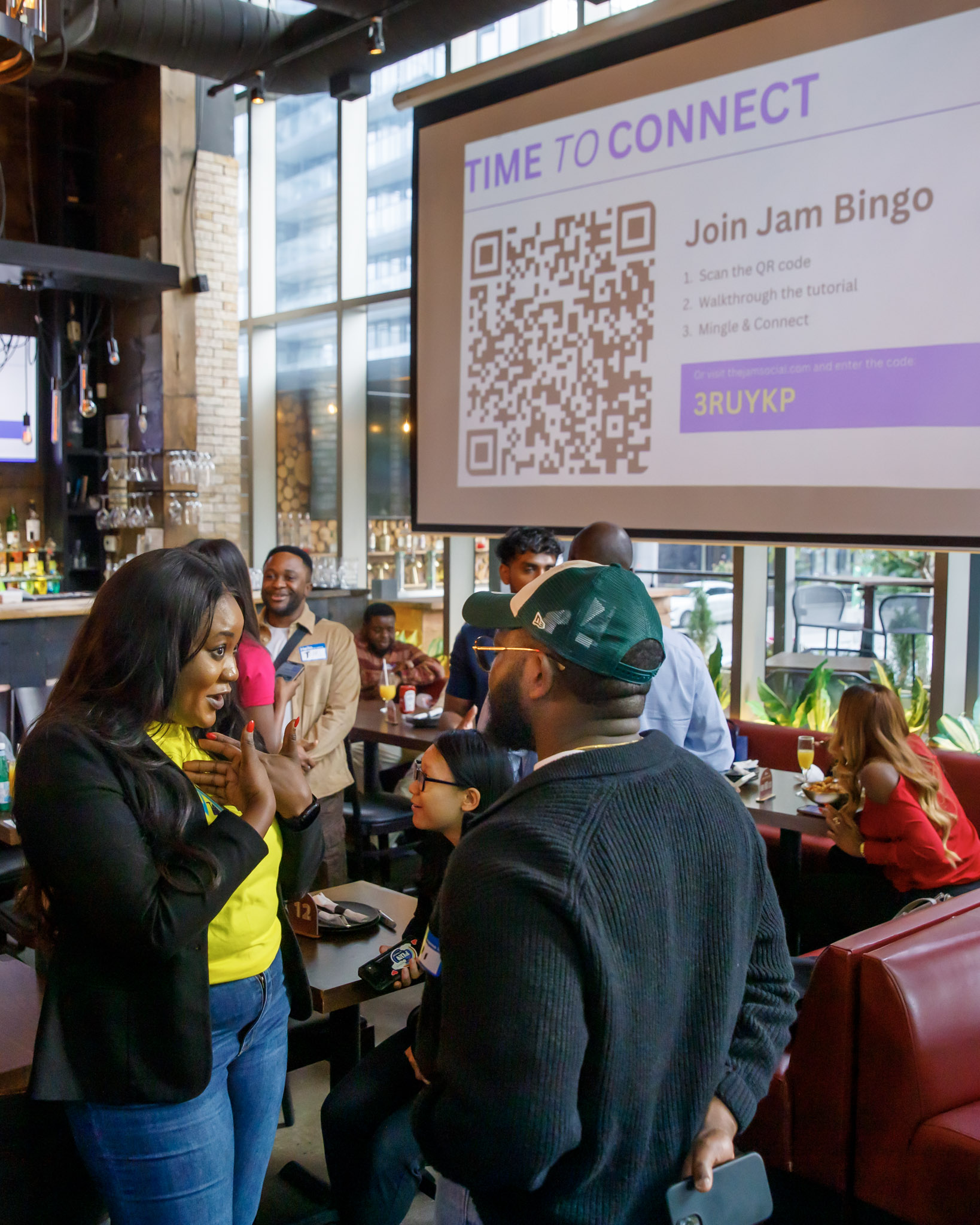
You've been to that networking event. Everyone clusters near the snack table with the two or three people they already know, and nobody wants to be the one to walk up to a stranger first.
An interactive ice breaker fixes that by giving people a reason to approach someone new. It's not about being clever or forcing fun. It's about removing the awkward first step so people can get to the actual conversation faster.
Below are 11 ice breakers you can run at your next networking event, from quick five minute warm ups to activities that carry an entire mixer.
1. Two Truths and a Business Lie
— for 10 to 40 people
Time: 10-15 min. Materials: none.
Each person shares three statements about their career or company, two true and one false. The group guesses which one is the lie. It's a classic for a reason: people naturally lean in when they're trying to catch someone out.
Tip: ask people to make their statements specific to work. It turns a party game into something that actually surfaces useful information about who's in the room.
2. The Common Ground Challenge
— for 20 to 100 people
Time: 10 min. Materials: none.
Pair people up and give them 90 seconds to find three things they have in common that have nothing to do with work. Not the same industry, not the same job title. Think hobbies, hometowns, favorite shows.
Tip: this one works so well because it takes the pressure off pitching yourself. People remember the person who shares their weird taste in podcasts a lot longer than they remember a job title.
3. Business Card Roulette
— for 30 to 150 people
Time: 15-20 min. Materials: a bowl or box to collect cards (or a digital sign-in list).
Everyone drops a business card into a bowl at check in. Throughout the event, attendees draw a random card and have to track that person down and introduce themselves. It's a built-in excuse to approach someone you'd never have picked out of a crowd on your own.
Tip: if half your attendees don't carry physical cards anymore, run the same idea with a digital raffle instead of a bowl.
4. Would You Rather: Networking Edition
— for 15 to 60 people
Time: 10-15 min. Materials: a list of prompts, displayed on screen or read aloud.
- Would you rather give a speech with no prep or attend a meeting with no agenda?
- Would you rather have unlimited PTO or a four day work week?
- Would you rather present to the CEO or negotiate with a difficult client?
- Would you rather work remote forever or never work remote again?
Attendees find a partner, pick a side, and defend it for two minutes. The debate format gets people talking fast because there's no blank page problem. The prompt does the work.
5. The One Word Check-In
— for any size group
Time: 5 min. Materials: none.
Ask everyone to share one word that describes how their week is going, then find someone in the room who picked a similar word and ask why. It sounds small, but a single word is a much lower bar to clear than 'tell me about yourself,' and it still gives people something real to react to.
6. The Skill Swap
— for 20 to 80 people
Time: 15 min. Materials: none.
Attendees pair up and each shares one professional skill they're confident in and one they're actively trying to improve. It naturally leads into advice sharing, and it works well at events where people are at very different career stages, since a skill swap doesn't care how many years you've been in the industry.
7. Object Show and Tell
— for 10 to 40 people
Time: 15-20 min. Materials: whatever attendees are already carrying.
Ask attendees to pull out one object from their bag or pocket and explain why it matters to them. Wallets, notebooks, phone cases, whatever they've got. People end up sharing stories they wouldn't have volunteered if you'd just asked them to introduce themselves.
8. The Elevator Pitch Remix
— for 20 to 60 people
Time: 15 min. Materials: a timer.
Instead of pitching themselves normally, attendees have 30 seconds to pitch the person standing next to them, using only what they learned in the last two minutes of conversation. It forces active listening, and it's genuinely funny watching people try to sell a stranger they just met.
9. Mystery Connections
— for 100+ people
Time: 45-60 min. Materials: none besides a screen or signage with a QR code.
At this size, printed handouts and a single facilitator can't keep up. Attendees scan a QR code and get a networking prompt sent straight to their phone, then walk the room to find someone who matches it.
Tip: this is the one to reach for when you have a big, unpredictable crowd and no time to design your own game from scratch. It scales from 100 people to a full ballroom without any extra setup.
10. The Interview Swap
— for 30 to 100 people
Time: 15 min. Materials: none.
Pair attendees up and give each person 90 seconds to interview their partner using one prompt: 'what's something you're working on that you're excited about.' Then everyone introduces their partner to the wider group instead of introducing themselves. It's a small shift that gets people talking each other up instead of talking themselves up.
11. The Table Hop
— for 40 to 200 people
Time: 20-30 min. Materials: numbered tables or stations.
Split the room across several small tables, each with a different discussion topic. Attendees spend five minutes at a table, then hop to a new one when the timer goes off. By the end, everyone's had several short conversations instead of getting stuck at one table for the whole event.
Tip: keep the topics loose and easy to jump into, like 'best career advice you've gotten' or 'a tool you can't work without.' Specific enough to spark conversation, open enough that anyone can answer.
How do you pick the right one?
Match the ice breaker to your group size and your timeline.
Under 50 people, almost anything on this list works, since a facilitator can keep an eye on the whole room. Past 100 people, lean toward the ones that don't need a facilitator managing every interaction, like Mystery Connections or the Table Hop.
If you're short on prep time, skip anything that needs printed materials or custom trivia questions. A phone-based activity that starts the moment someone scans a code is the fastest way to get a large, unpredictable crowd moving.
Frequently Asked Questions
How many ice breakers should I run at one event?
One or two is usually enough. A short five minute warm up at the start, then one longer activity that carries the middle of the event, works better than stacking several back to back.
What if attendees don't want to participate?
Keep it optional and low pressure. The activities that work best are the ones people can opt into gradually, like walking over to scan a code, rather than being called on in front of a crowd.
Do these work for virtual networking events?
Most of them adapt well to breakout rooms. Two Truths and a Business Lie, the Common Ground Challenge, and Would You Rather all translate directly since they don't depend on a physical room.