
Why Look Beyond Speed Networking?
Speed networking is one of the most common ways to fill a 45-minute networking slot.
Two rows of chairs, a few minutes per chat, a bell, and everyone moves one seat down.
It's popular for good reasons. It also has real limits.
Here's what it does well, who it's best for, where it falls short, and what to use instead (or alongside it).

What Speed Networking Does Well
1. Everyone Meets Someone
Nobody is left standing by the wall. If you run 8 rounds, every guest meets 8 people.
That's a promise you can put on the event page, and guests like knowing what they'll get.
2. No One Has to Make the First Move
The format does the approaching for you. You sit down, and someone is already across from you.
For shy or first-time guests, that takes away the hardest part of networking.
3. Equal Airtime
Each person gets the same few minutes. The loudest person in the room can't take over.
4. Clear Start and End
The bell gives everyone a polite exit. Nobody gets stuck in a 20-minute conversation they can't leave.
5. Great for Matching Two Sides
Mentors and mentees. Founders and investors. Buyers and suppliers.
When one row is one group and the other row is the other, every chat is a useful one.
Who Speed Networking Is Good For
- Groups of about 16 to 50 people, where rotations stay quick.
- Seated events where everyone arrives on time.
- Two-sided events, like mentoring, hiring or buyer-seller meetups.
- Groups with lots of first-timers or introverts who won't approach strangers.
- Events where 'you'll meet 10 people' is the main promise.
Where Speed Networking Falls Short
1. Rotations Eat Your 45 Minutes
Every rotation means standing up, finding a seat and sitting back down.
Do that 10 times and you lose 10 to 15 minutes of your session to shuffling.
2. Large Groups Get Messy
With 120 people, you need long rows, a mic, and helpers to keep everyone moving the right way.
And in 45 minutes, each guest still only meets a tiny slice of the room.
3. Odd Numbers and Late Arrivals
One extra guest breaks the pairs. Five late arrivals break the seating plan.
4. It Can Feel Like an Interview
Three minutes face to face, then the bell. Lots of people just repeat their elevator pitch.
By round 6, guests are tired of saying the same thing.
5. Good Chats Get Cut Off
When two people really hit it off, the bell ends it anyway.
6. No Choice in Who You Meet
Guests can't seek out the person they actually came to meet.
7. Someone Has to Run the Clock
A host needs to time each round, ring the bell and herd people along. That's one person who isn't networking.
6 Alternatives to Speed Networking
Some of these tweak speed networking. Others replace it. Each one covers a specific shortcoming.
1. Trio Rotations (for odd numbers and late arrivals)
Use groups of 3 instead of pairs. A trio absorbs an extra person without breaking the rotation.
Or have a host or volunteer ready to jump in and fill a seat.
2. Question-Led Rounds (for elevator pitch fatigue)
Put a new question on the screen every round, like 'What's a project you're excited about?'
It gives every chat a fresh start. Here's a speed networking icebreaker you can use to open it.
3. Short Rounds Plus Open Time (for good chats that get cut off)
Cap it at 4 or 5 rounds, then leave 15 minutes of open time to go back to the people you liked.
4. Jam Bingo (for big groups and time lost to rotations)
This is where a standing, self-paced game beats rotations.
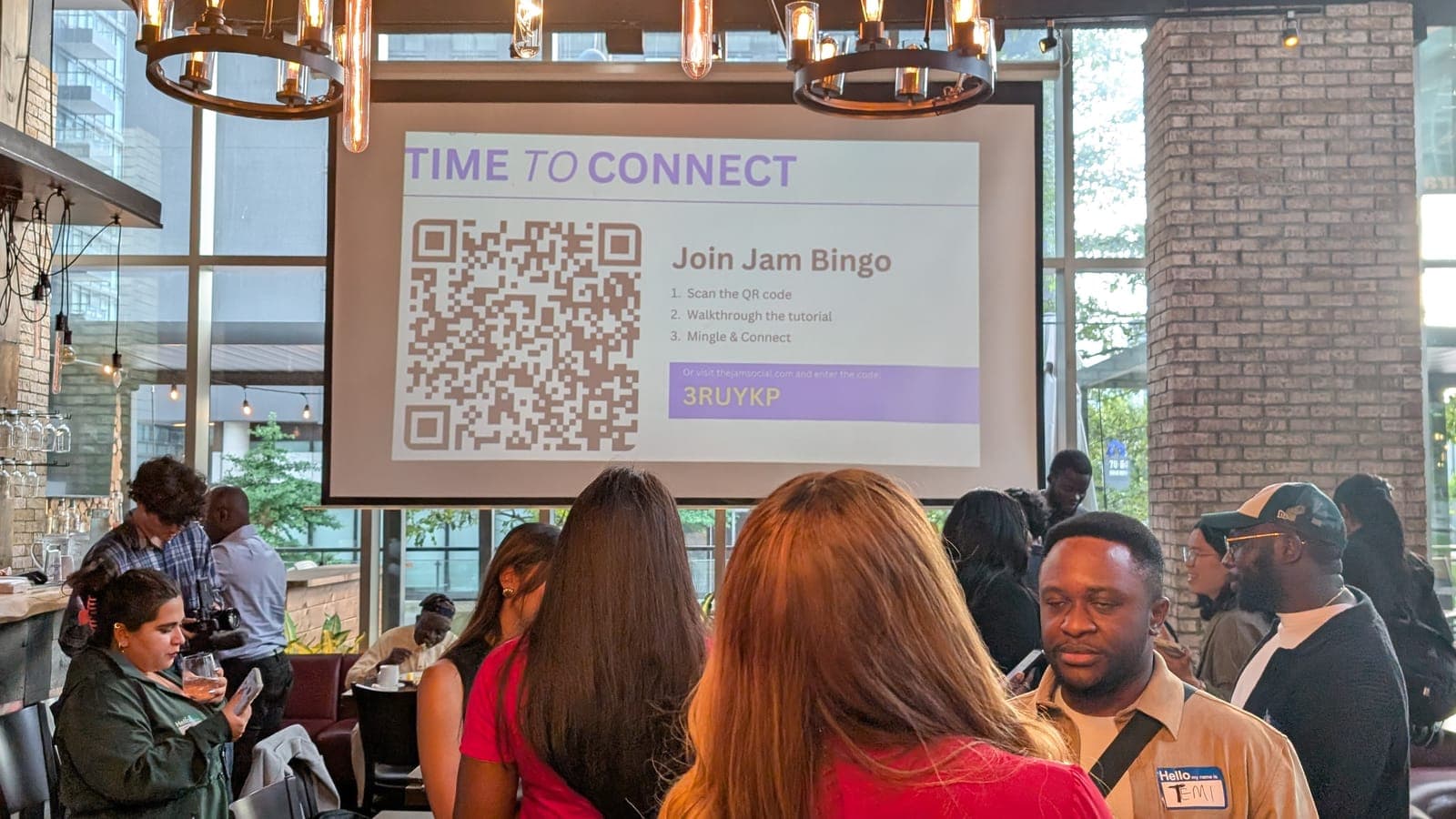
Jam Bingo gives every guest a reason to go meet someone new, without a bell telling them when.
It hands each person a conversation starter, so chats skip the elevator pitch.
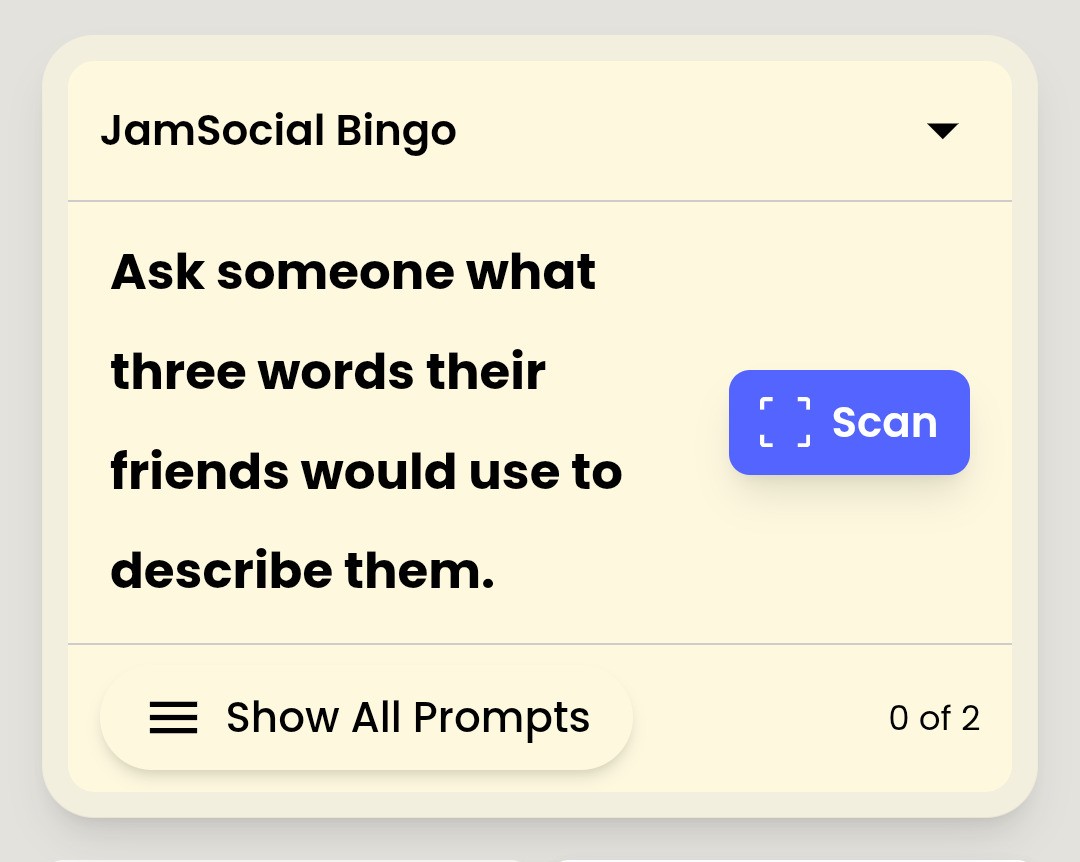
And it turns networking into a game, so a room of 200 keeps moving on its own.
You lose the guarantee of exactly 8 meetings, but you gain choice and real conversations. See how Jam Bingo works!
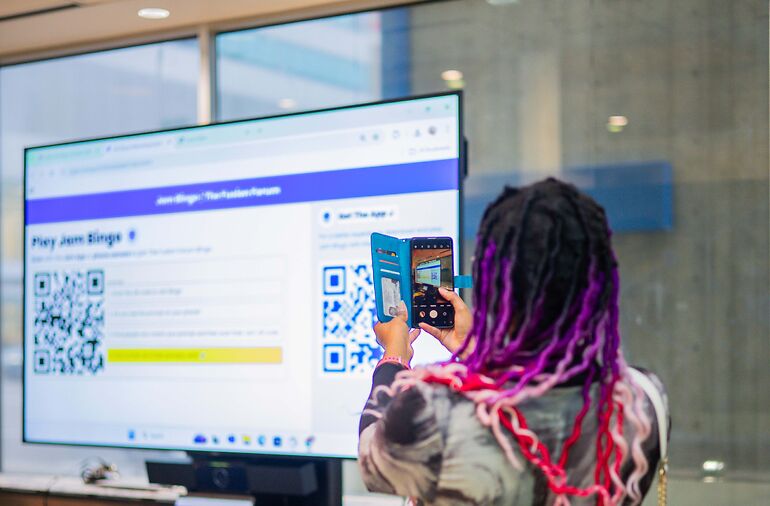

For more on big crowds, see structured networking for a large number of attendees.
5. Topic Tables (for choosing who you meet)
Try topic tables. Put a sign on each table, like 'AI at work' or 'Hiring in 2027.'
Guests pick a table and switch whenever they want.
6. Common Ground Groups (for when it feels too formal)
Try Common Ground. Put 4 or 5 strangers together and give them 5 minutes to find 3 things they all share.
Or see these non-structured networking games for business events.
Which One Should You Use?
- Under 50 people, seated, two-sided goal: keep speed networking, with a question on screen each round.
- 50 to 1,000 people, standing, mixed crowd: use a self-paced game like Jam Bingo.
- Learning-focused group: topic tables.
- Small, casual group: Common Ground or open time with a few connectors.
A 45-Minute Plan That Mixes Both
- 0 to 5 minutes: welcome and explain the format.
- 5 to 20 minutes: 3 quick speed networking rounds with a question on screen.
- 20 to 40 minutes: switch to free play with Jam Bingo so guests go find people they haven't met.
- 40 to 45 minutes: shout out the top 3 players and move into your program.
Need a plan for a slightly longer slot? See this gamification activity for a 1-hour networking session.
Frequently Asked Questions
Is speed networking a good format?
Yes, for the right event. It guarantees every guest meets a set number of people and nobody has to approach a stranger. It works best for small to mid-sized, seated groups with a clear goal, like mentoring or buyer-seller meetings.
When doesn't speed networking work well?
With 100+ guests, odd numbers, lots of late arrivals, or a casual crowd. Rotations eat into a 45-minute slot, and 3-minute chats often turn into repeated elevator pitches.
What is a good alternative to speed networking?
For big or casual groups, a prompt-based mingling game like Jam Bingo. Guests get one conversation prompt at a time and find someone who matches it, with no rotations or bell. Topic tables and Common Ground groups also work.
Can I fix speed networking instead of replacing it?
Often, yes. Use groups of 3 to handle odd numbers, put a question on screen each round, cap it at 4 to 5 rounds, and leave open time after so good conversations can continue.
How long should a networking session be?
45 minutes is a sweet spot. It's long enough for 6 to 10 real conversations and short enough that energy stays high.