

Alternative to Icebreaker Bingo
Icebreaker bingo is a classic for a reason.
Everyone gets a card, walks around, and looks for people who match the squares. It gets a room moving.
With 20 people, it works great.
With 150 people, it starts to fall apart.
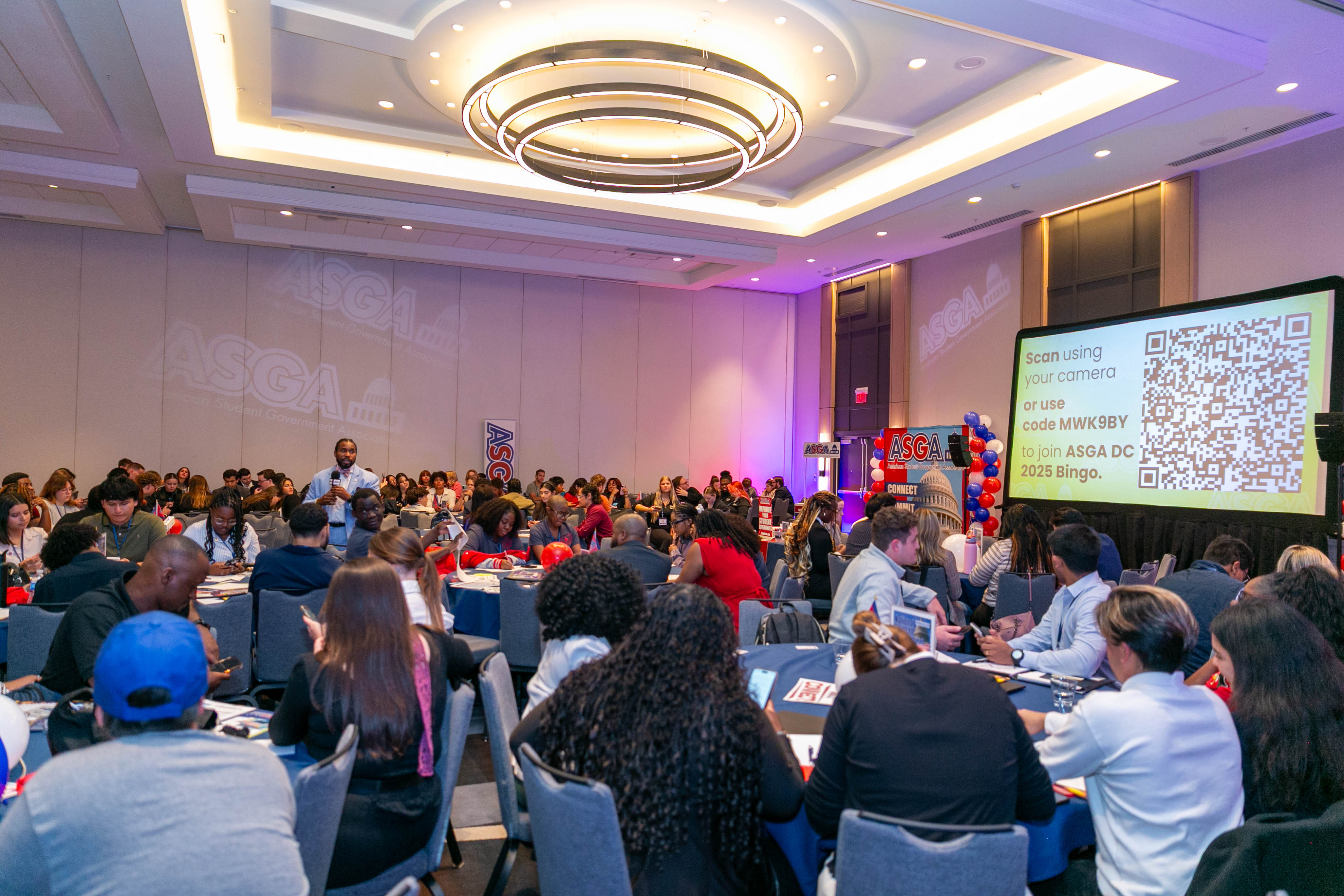

Why Icebreaker Bingo Breaks at 100+ People
Paper, pens and a rush for signatures
Nothing is wrong with the idea. The problems show up when the group gets big.
Printing and Handing Out Cards
150 people means 150 cards and 150 pens.
Someone has to print them, hand them out, and find more when they run out at the door.
The Signature Rush
A card with 25 squares tells people to fill squares fast.
So they do. 'Have you been to Japan? No? Okay, bye.' Lots of names, very few conversations.
Hard to Explain to a Crowd
Rules shouted over a mic don't reach the back of the room.
Half the group ends up asking the person next to them what they're supposed to do.
People Stay With Who They Know
In a big room, it's easy to fill squares with your friends.
The game ends and most people still haven't met anyone new.
What a Large Group Alternative Needs
Instant, self-guided and focused on real conversations
- Nothing to print or hand out.
- Everyone can start at the same time, without a host at every table.
- One thing to talk about at a time, so people actually have a conversation.
- Prompts that push people toward someone new, not their friends.
- Rules simple enough to explain in one sentence.
The one thing almost everyone at your event already has is a phone. That's the easiest place to start.
The Alternative: Jam Bingo
Icebreaker bingo for large groups, one prompt at a time
Jam Bingo keeps the best part of icebreaker bingo, finding people who match a prompt, and fixes what breaks at scale.
There's no card with 25 squares. Each guest gets one prompt at a time on their phone.
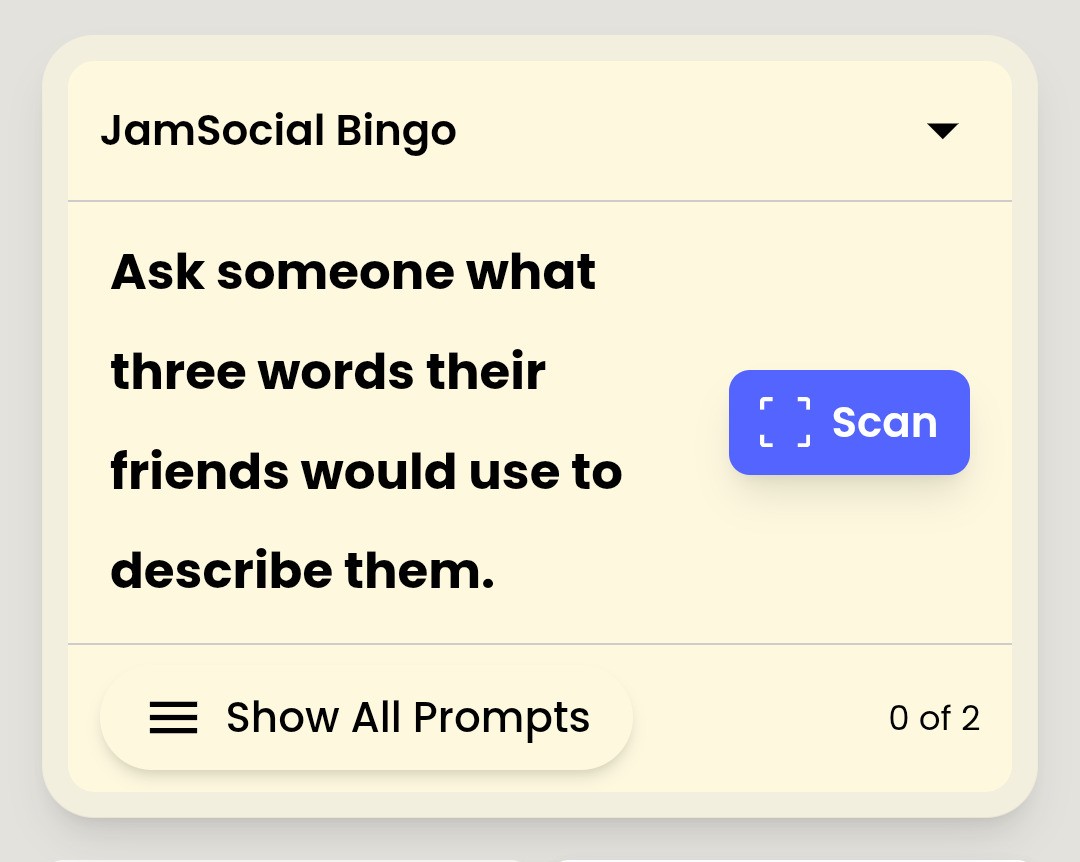
They find someone who fits the prompt and have a quick chat.
Then they scan each other's QR code to unlock their next prompt.
No app download. No paper. See how Jam Bingo works!

Icebreaker Bingo vs. Jam Bingo
What changes when the group gets big
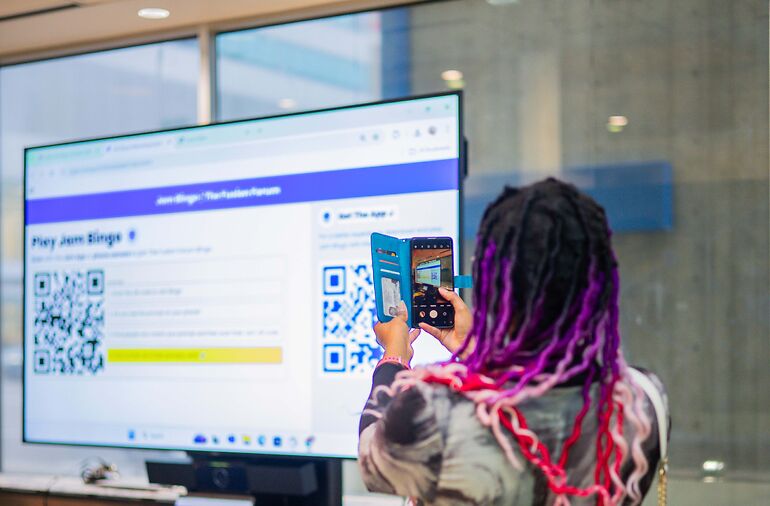
- Setup: paper bingo needs a card and pen for every guest. Jam Bingo needs one QR code on a screen.
- Conversations: paper bingo rewards quick signatures. Jam Bingo gives one prompt at a time, so people slow down and talk.
- Group size: paper bingo gets messy past 50 people. Jam Bingo works the same for 100 or 1,000.
- Energy: paper bingo ends when someone yells bingo. Jam Bingo has a live leaderboard on the big screen.
- After the event: paper cards get tossed. Jam Bingo saves every connection so people can follow up.
How to Set It Up for a Large Group
- Create your game and add 10 to 15 prompts, or start from a template.
- Put your event's QR code on the big screen and on a few table cards near the entrance.
- Explain it in one line: 'Scan the code, find someone who matches your prompt, chat, then scan each other's code for your next one.'
- Turn on skips so nobody gets stuck on a tough prompt.
- Show the leaderboard on the screen while people play.
- After 20 to 30 minutes, shout out the top 3 and move on with your program.
Need prompts? Browse the Jam Bingo templates.
Prompts That Work for Big Groups
Push people past their friend group
In a small group, everyone eventually talks to everyone.
In a big group, people only meet a slice of the room. So every prompt should point them somewhere new.
- Find someone you've never met and ask what brought them here today.
- Find someone from a different city and ask what you should eat there.
- Find someone who works or studies in a different area than you and ask what they like about it.
- Find someone who has a hobby you've never tried and ask how they got into it.
- Find someone standing on the other side of the room and ask about the best part of their week.
That last one is a small trick. It gets people walking across the room instead of talking to whoever is closest.
Other Alternatives Without Phones
Good options, with a bit more hosting
If phones aren't an option, these work too. They just need more hands-on help as the group grows.
This or That
Read two options, like 'coffee or tea,' and point to two sides of the room.
People walk to their side and chat with whoever is there. Takes 5 minutes.
Common Ground
Put people in groups of 4 to 5 strangers.
Give them 5 minutes to find 3 things they all have in common. Then mix the groups.
Find Your Match
Hand out cards with half a pair, like 'Salt' and 'Pepper.'
Everyone finds their other half and talks about a question you put on the screen.


Tips for Running It at Scale
Run it early, while people are still standing and looking for someone to talk to.
Ask staff or volunteers to play too, and to spread out.
If they see someone standing alone, that's their next conversation.
And end it while the room is still loud. That's how people remember it as fun.
Want more ideas for big crowds? Here are some networking games for 100+ people.
Frequently Asked Questions
What is a good alternative to icebreaker bingo?
For large groups, Jam Bingo. Guests scan one QR code and get one conversation prompt at a time on their phone, so there's nothing to print and everyone can play at once.
Why doesn't icebreaker bingo work well for large groups?
Printing and handing out 100+ cards takes time, pens go missing, and people rush to fill squares with quick signatures instead of having real conversations.
How many people can play an icebreaker bingo alternative like Jam Bingo?
It works the same for 50 people as it does for 1,000. Everyone plays on their own phone at their own pace, so nobody has to run each group.
Do guests need to download an app?
No. Jam Bingo runs in the phone's browser. Guests scan the QR code with their camera and start playing.
Is there an icebreaker bingo alternative that doesn't use phones?
Yes. This or That, Common Ground and Find Your Match all work without phones. They just take more hands-on hosting as the group gets bigger.