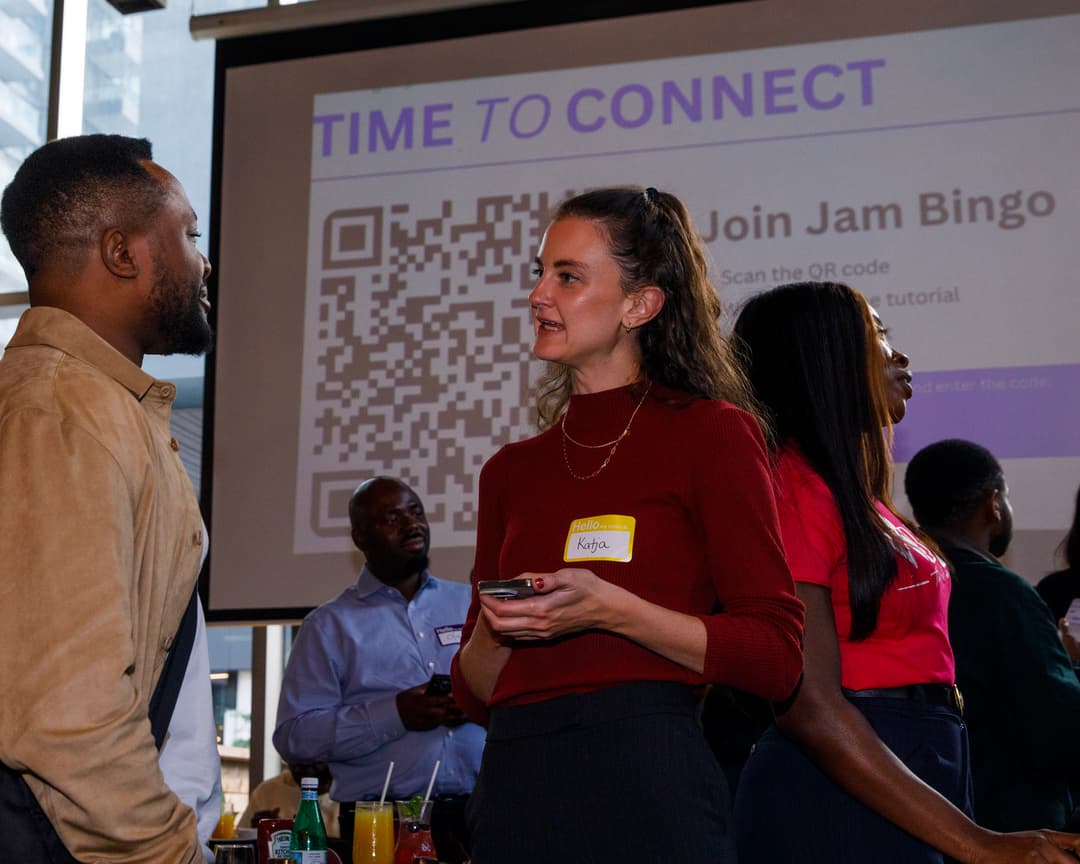

Ice Breaker Activities for Timeleft Dinner After-Party
Networking Game for Timeleft After-Party to Get Groups Talking
Tonight, a bunch of Timeleft dinners wrap up across the city.
And every one of those groups heads to your venue for the after-party.
Each group of 5 just spent two hours getting to know each other.
So they walk in together, grab a spot together, and stay together.
Your goal as the host is the opposite: get people mixing across every group, without it feeling awkward.


What Is Timeleft?
Timeleft is an app that matches strangers for dinner.
Guests answer a short personality quiz, and it books them a table with a small group of people they've never met.
The Timeleft After-Party
Timeleft dinners happen at different restaurants on the same night.
Once dinner wraps up, each group of 5 heads to one shared location for a bigger networking mixer.
Groups from every dinner end up in the same room.
It's the chance for guests to meet people beyond their own table. That's your after-party.
The Problem: Groups Stick Together
Here's what usually happens.
Each group of 5 arrives together, finds a spot together, and stays together all night.
Ten groups of 5 walk in, and you end up with ten little circles instead of one big mixer.
As the host, you want the opposite: guests from different dinners mixing and mingling, without it feeling awkward or forced.
Why Dinner Groups Struggle to Meet Others Outside Their Group
Comfort Keeps Dinner Groups Together
Nobody's being unfriendly. There are a few good reasons it happens:
- They just bonded. Their dinner group is the only group they know in the room.
- They arrive together, so they settle in together.
- Walking up to someone new without a reason feels awkward.
- Walking up to another circle at a loud bar feels like starting from zero.
- Nobody wants to be the first one to break off.
Left alone, most guests go home having met only the 4 people they ate with.
Incentivize Interactive Networking for Everyone
Every Guest Meets New People from Other Dinners
- Every guest meets people from other dinners.
- Nobody feels pushed to abandon their tablemates.
- Quieter guests have an easy first line.
- You don't have to introduce everyone yourself.
- It works even though groups arrive at different times.
Make Networking Feel Like Fun
The trick is giving people a reason to talk to someone new, so it feels fun instead of awkward.
What to Look for in an After-Party Networking Game
- It points guests to people from other dinners, not their own.
- One-line rules. Nobody can hear a long explanation over the music.
- No paper or pens. Hands are already holding drinks.
- Groups can join the moment they walk in.
1. Jam Bingo: Large Group Interactive Networking Game
100+ Person Networking Game. No Prep.
If you want the whole room mixing, not just one or two groups, Jam Bingo does the most work for you.
Every Group Meets Other Groups
Jam Bingo helps the groups arriving at your after-party meet people from other groups.
It does it in an interactive way, so it never feels awkward.
Each guest gets a prompt that sends them to someone from a different dinner.
That gives everyone an easy reason to start a conversation with someone new.
Your after-party feels like one big mixer, not a room of separate dinner tables.
Friendships Last Past Last Call
And every connection gets saved, so the friendships made at your after-party don't end at last call.


Prompts Pointing to Other Dinners
Write every prompt so it only works with someone from a different dinner:
- Find someone from a different dinner and ask about the best moment at their table.
- Find someone who ate at a different restaurant tonight and ask what they ordered.
- Find someone who's at their first Timeleft dinner and ask what made them sign up.
- Find someone from another group who has lived here the longest and ask for their favorite spot.
- Find someone you didn't eat with who has a trip coming up and ask where they're headed.
2. Color Crews
Split Every Group at Door
Best for: 20 to 100 people. Time: 10 to 15 minutes.
As each dinner group arrives, hand out colored stickers or wristbands. Give everyone in the group a different color.
Once most groups are in, ask everyone to find their color.
Each color crew ends up with one person from each dinner.
One Question Gets Crews Talking
Put one question on a screen, like 'What was the most surprising thing someone said at your dinner?'
It splits groups without anyone feeling singled out.
3. Table Swap Intros
Two Dinner Groups Meet Up
Best for: 4 to 10 dinner groups. Time: 10 minutes.
Pair up two dinner groups. Each group picks one person to introduce everyone at their table.
For each person, they share one fun thing they learned about them at dinner.
It's a soft first step. Guests meet a new group while still standing with their own.
4. This or That
Zero Prep, Zero Explaining Needed
Best for: any size. Time: 5 minutes.
Call out two options, like 'beach or mountains,' and point to two sides of the room.
People move to their side and chat with whoever is standing next to them.
Do 4 or 5 rounds. Dinner groups get split up without anyone being told to leave.

5. Dinner Superlatives
Compare Dinner Notes Across Tables
Best for: 10 to 60 people. Time: 10 minutes.
Read out a few superlatives and have people find their match from another dinner:
- Find the person whose table talked the longest about one topic.
- Find the person who told the best story at dinner.
- Find the person whose table had the most different jobs.
- Find the person who traveled the farthest to get here tonight.
People love comparing how their dinner went, so the conversations start easily.
How to Run the Night
Catch Groups Before They Settle
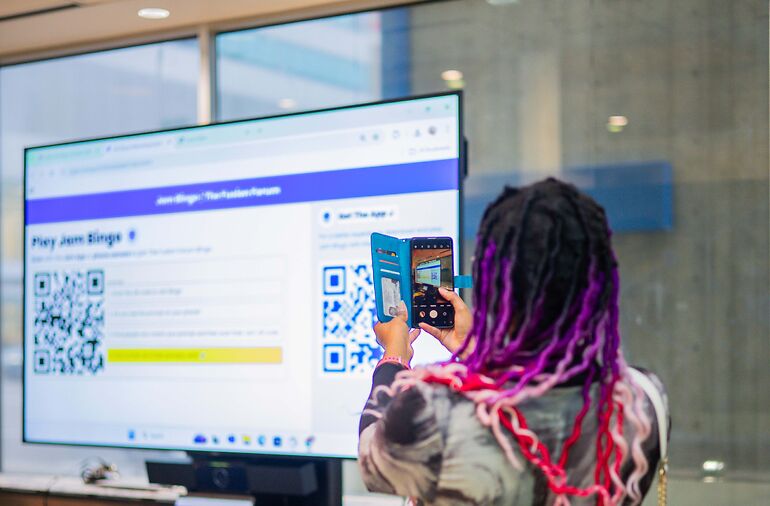
- As groups arrive: greet them, hand out stickers, and get them scanning the QR code.
- Once most groups are in: give a 30 second welcome and explain the game in one line.
- Next 20 to 30 minutes: let the game run while you nudge any group still sticking together.
- After that: step back. Once people are mixing, they'll keep going on their own.
Tips for the Host
Standing Tables Beat Cozy Booths
Use standing tables, not booths. Booths trap a group for the whole night.
Invite Mixing, Don't Demand It
Don't tell people to leave their group. Give them a reason to want to.
Keep It to Two Activities
Keep it to one or two activities. It's a party, not a workshop.
End While the Room's Loud
And end the game while the room is still loud. That's how guests remember it as fun.
Want more ideas for a room full of strangers? Here are some no prep icebreakers for a social mixer.
Frequently Asked Questions
What happens at a Timeleft dinner after-party?
After the dinners, each group of 5 heads to one shared venue for a bigger mixer. It's the chance for guests to meet people from the other dinners, not just their own table.
Why do dinner groups stick together at the after-party?
They just spent two hours bonding, they arrive together, and walking up to someone new feels awkward. Without a reason to split up, most groups stay together all night.
How do I get guests from different dinner groups to mix?
Give every guest a reason to talk to someone from another dinner. A networking game like Jam Bingo hands each person a prompt that points them to someone new, so talking to someone new feels like part of the game, not awkward.
What's the best networking game for a Timeleft after-party?
Jam Bingo works well because guests join with one QR code as their group arrives, get one prompt at a time, and scan each other's code to connect. No paper, no long rules over the music.
How long should the networking game run?
20 to 30 minutes, starting once most groups have arrived. After that, people usually keep mingling on their own.