

Why Look Beyond Open Networking?
Most event agendas have the same line: '6:00 to 6:45, open networking.'
Give people drinks and time, and let them meet each other.
For some crowds, that's all you need. For others, it leaves half the room on their phones by the wall.
Here's when open networking works, who it's for, where it falls short, and what to add.

What Open Networking Does Well
1. Nothing to Plan
No rules, no supplies, no host on a mic. You open the doors and it runs itself.
2. Guests Choose Who to Meet
If you came to meet a specific speaker or company, you can go straight to them.
3. Conversations Run Their Natural Length
A great chat can go 20 minutes. A dull one can end politely after 2.
4. It Feels Relaxed
Some guests don't want a game or a format. Open time feels grown-up and low-pressure.
5. Great for Catching Up
For regulars, open networking is how they reconnect with people they see every month.
Who Open Networking Is Good For
- Established communities where most guests already know a few people.
- Confident, experienced networkers.
- Small, casual groups of under 30.
- After-work drinks where the goal is to unwind, not meet 10 new people.
- Events where guests come to meet one specific person, like a speaker.
Where Open Networking Falls Short
1. Approaching Strangers Is Hard
Walking up to a group you don't know feels like interrupting.
So most people don't. They wait for someone to come to them.
2. Groups Close Up
People who arrive together stand together. Circles form in the first 5 minutes and stay that way.
3. First-Timers Feel Left Out
Regulars catch up with each other. New guests stand alone and often don't come back.
4. Mixed Groups Don't Mix
Members talk to members. Sponsors talk to sponsors. Students talk to students.
5. Same Small Talk
'So what do you do?' Every conversation starts the same way and ends quickly.
6. Big Rooms Make It Worse
The more people there are, the easier it is to hide in your own group.
4 Alternatives to Open Networking
The goal is to keep what people like about open networking, and fix the first move.
1. Connectors (for first-timers standing alone)
Ask a few friendly regulars to be connectors. Their job is to spot people standing alone and introduce them.
It works well in small rooms. In big rooms, there are never enough connectors.
Lots of new faces? See this conference first-timers reception icebreaker.
2. Name Tag Prompts (for the same small talk)
Add a line to every name tag, like 'Ask me about my last trip.'
It gives people a better opener, but they still have to make the first move.
3. This or That (for when nobody makes the first move)
Start with a 5-minute warm-up like This or That. Call out two options and point to two sides of the room.
Guests walk to a side and chat with whoever is there.
Need more ideas that take no prep? Here are no-prep ways to get people talking at a networking mixer.
4. Jam Bingo (for big or mixed groups that stay in circles)
Give every guest a reason to approach someone new, without taking away the freedom.
Jam Bingo gives everyone a built-in excuse to walk up to a stranger.
It hands each guest a conversation starter, so 'Hi, can I join your circle?' becomes 'I'm looking for someone who has lived in another country.'
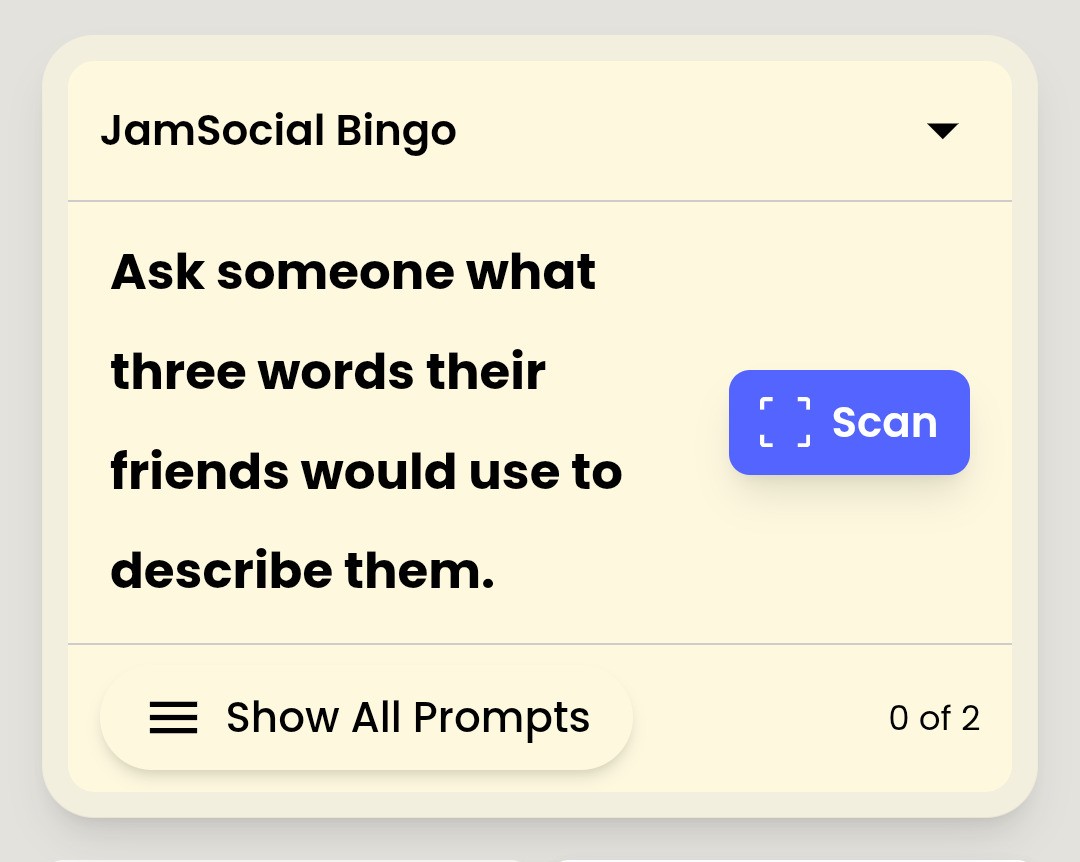
And it makes mingling a game, so first-timers have something to do from minute one.
Guests still choose who to talk to and how long to chat. They just have a reason to start. See how Jam Bingo works!


Want it to stay casual? See this informal networking game.
Which One Should You Use?
- Small group of regulars: keep it open. Maybe add a name tag prompt.
- Lots of first-timers: connectors plus a short opening game.
- Mixed groups like members and sponsors: a game with prompts that point people across groups.
- 100+ guests: a self-paced game for the first 20 to 30 minutes, then open time.
A 45-Minute Plan That Mixes Both
- 0 to 10 minutes: guests arrive, grab a drink and scan the QR code at the door.
- 10 to 30 minutes: everyone plays. The host shares a quick leaderboard update halfway.
- 30 to 40 minutes: open networking with the new people they just met.
- 40 to 45 minutes: shout out the top 3 and move into your program.
Want to take the awkward out of it? See this networking game to get people talking.
Frequently Asked Questions
What is open networking?
It's the classic 'grab a drink and mingle' block on the agenda. There's no activity, just time for guests to meet each other on their own.
Who is open networking good for?
Established communities where most guests already know a few people, confident networkers, and small, casual groups. It's also the easiest format to run.
Why doesn't open networking work for everyone?
Most guests don't want to interrupt a group or walk up to a stranger cold. First-timers and introverts often stay with who they came with, or end up on their phones.
How can I improve open networking without making it too structured?
Add greeters who make introductions, a conversation prompt on each name tag, or a short opening game like Jam Bingo, then let the rest of the time stay open.