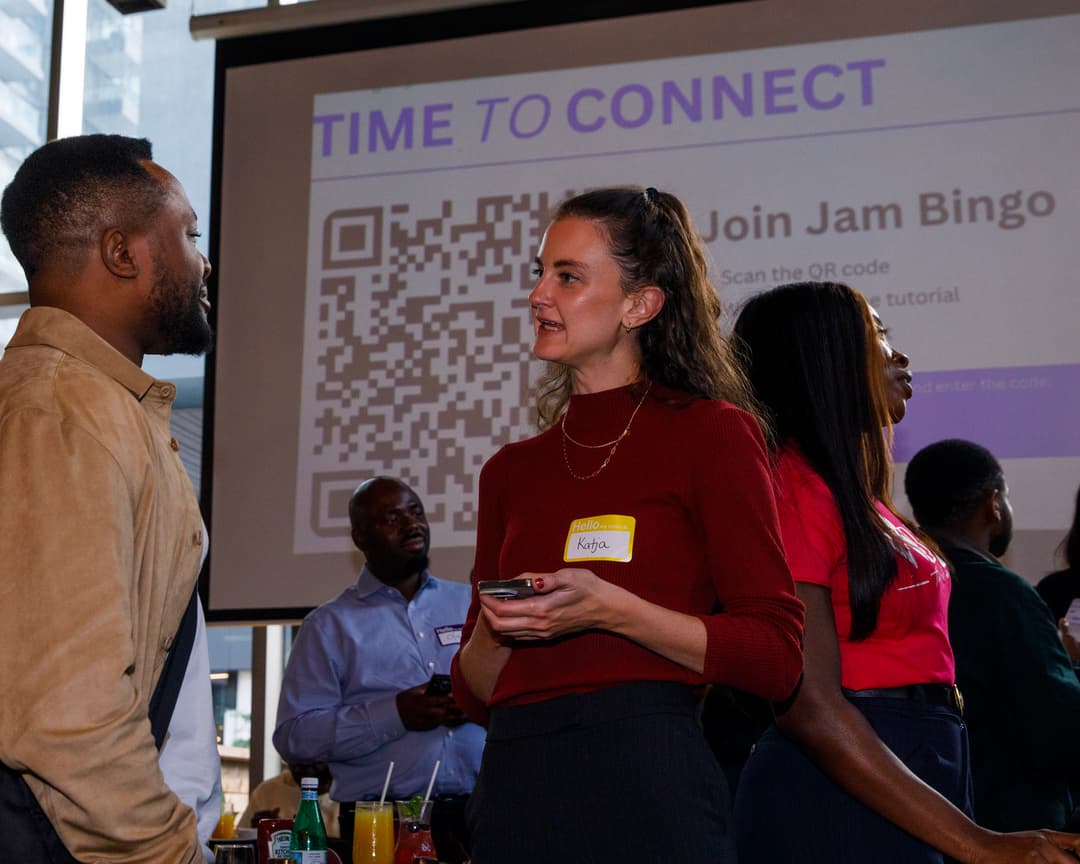

Networking Event Games
What Are Networking Event Games?
Networking event games are short activities that get guests talking to people they haven't met.
They give everyone a reason to approach someone new and something to say when they get there.
Unlike team building, the goal isn't to bond a group you already know. It's to mix the whole room.
Why Most Networking Event Games Fail
Most lists of networking event games are just lists.
Twenty games, no context, and half of them are team building in disguise.
Then you try one at your event, and the room goes quiet.
This playbook is different.
- Every game is rated on how well it mixes the room and how cringe it can get.
- Every game is mapped to a moment in your event.
- You get the exact words to say, sample run-of-shows, and fixes for when things stall.

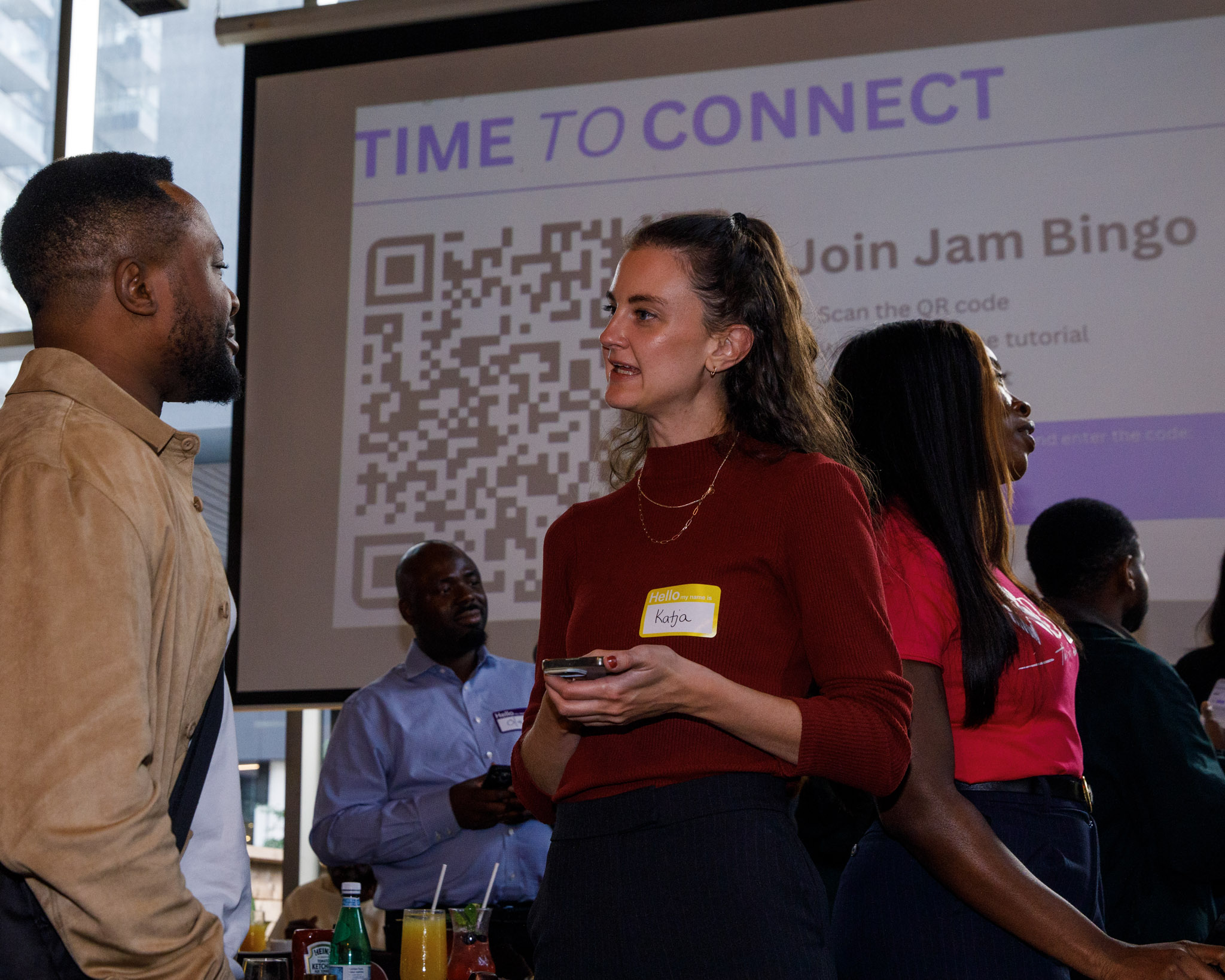
Top 3 Networking Games
Short on time? Start with one of these.
- Jam Bingo: an interactive networking game that gives every guest one conversation prompt at a time.
- Human Bingo App: classic human bingo on guests' phones, with no paper cards to print.
- People Scavenger Hunt for Large Groups: guests hunt for people who match each clue, perfect for 100+ guests.
The 3 Jobs of a Networking Game
Before picking a game, know what it's for.
A good networking event game does three jobs. Most games only do one.
1. Break the Clusters
People arrive with coworkers and friends. They stay with them.
The game has to give them a reason to leave that circle.
2. Hand Over the First Line
The hardest part of networking is the first sentence.
A good game gives guests something to say, so they never open with 'So, what do you do?'
3. Give a Polite Exit
Guests won't start a conversation if they're afraid of getting stuck in it.
A good game gives a natural reason to move on: 'I've got to find my next person!'
How Each Game Is Rated
Every game below gets a quick scorecard:
- Mixing: how many new people each guest meets (1 to 5).
- Cringe risk: Low, Medium or High. High means someone is on the spot.
- Prep: how much you need to do before the event.
- Group size: the range where it works best.
- Time: how long to run it.
Moment 1: Arrival Games
Beat the Awkward First 20 Minutes
The first 20 minutes decide your whole event.
Early guests stand alone, check their phones, and form small clusters that last all night.
Arrival games give early birds something to do right away.
1. Name Tag Questions
- Mixing: 2/5
- Cringe risk: Low
- Prep: Low (printed name tags)
- Group size: any
- Time: all night
Add one line under every name: 'Ask me about...'
Guests fill it in at check-in. 'Ask me about my sourdough' or 'Ask me about moving to Lisbon.'
Now every name tag is a conversation starter.
2. Pin Your Map
- Mixing: 2/5
- Cringe risk: Low
- Prep: Medium (a big map and pins)
- Group size: 20 to 300
- Time: during check-in
Put a big map near the entrance. Guests pin where they grew up.
People gather around it naturally. 'Wait, you're from Lagos too?'
3. Color Split
- Mixing: 3/5
- Cringe risk: Low
- Prep: Low (colored stickers)
- Group size: 30 to 200
- Time: 10 minutes
Hand out colored stickers at the door. Give people who arrive together different colors.
Later, ask everyone to find 2 people with the same color.
It splits groups without anyone being told to leave their friends.

Moment 2: Warm-Up Games
5 to 10 Minutes to Wake Up the Room
Warm-ups are short. They get people moving and laughing before the main game.
4. This or That
- Mixing: 3/5
- Cringe risk: Low
- Prep: None
- Group size: any
- Time: 5 minutes
Call out two options and point to two sides of the room.
'Coffee or tea?' 'Early bird or night owl?' 'Remote or office?'
People move, then chat for 60 seconds with whoever is next to them.
Run 4 or 5 rounds. Clusters break up without anyone noticing.
5. Common Ground
- Mixing: 3/5
- Cringe risk: Low
- Prep: None
- Group size: 12 to 150
- Time: 8 minutes
Put 4 strangers together. They have 5 minutes to find 3 things they all have in common.
The obvious ones don't count. 'We all like food' is out.
Digging for weird overlaps makes people laugh fast.
6. Line Up
- Mixing: 2/5
- Cringe risk: Medium
- Prep: None
- Group size: 15 to 60
- Time: 7 minutes
Ask guests to line up by years in their industry, or by distance traveled to get here.
They have to talk to figure out the order.
Then they chat with the person on each side of them.
Cringe risk is medium because it's very visible. Keep it light.
Moment 3: The Main Networking Game
Where Most Real Connections Happen
This is the 20 to 45 minutes you set aside for networking.
Pick one main game. Not three.
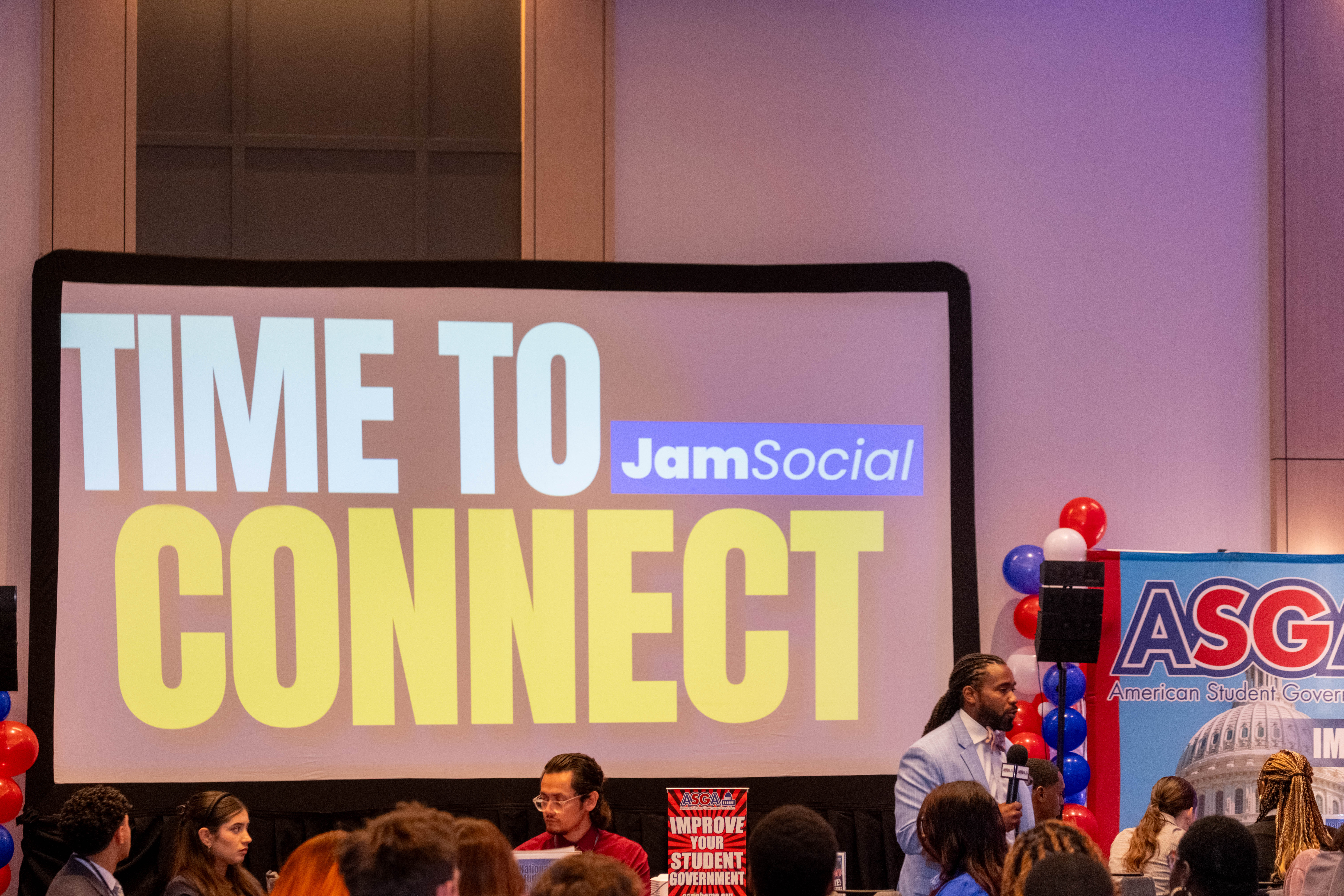
7. Jam Bingo
- Mixing: 5/5
- Cringe risk: Low
- Prep: Low (add your prompts)
- Group size: 10 to 1,000+
- Time: 15 to 60 minutes
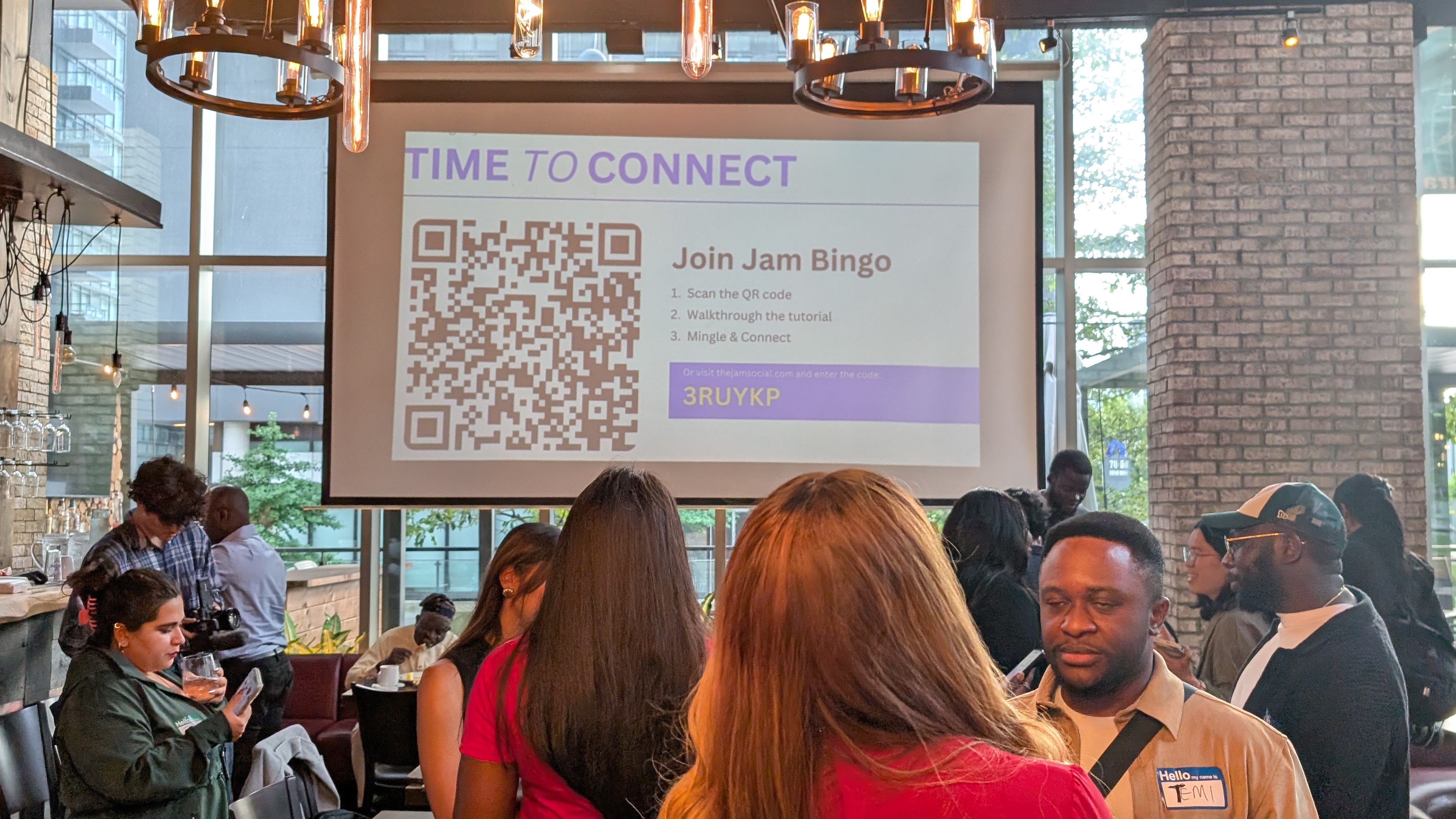
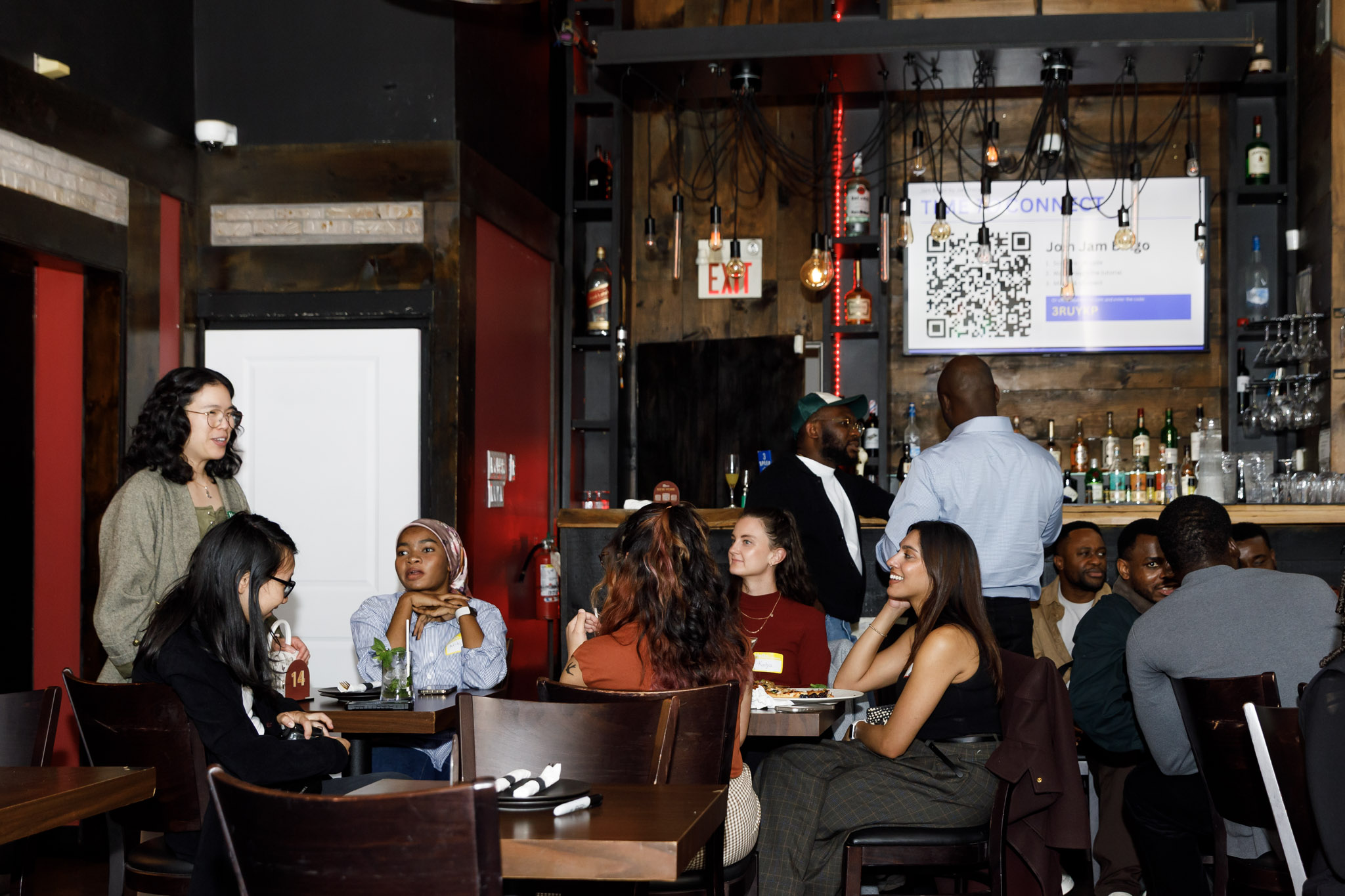
Jam Bingo is a phone-based mingling game built for networking events.
It does all 3 jobs of a networking game at once.
- It gives you a conversation starter.
- You find someone to ask.
- You connect with them.
- It gives you your next prompt.
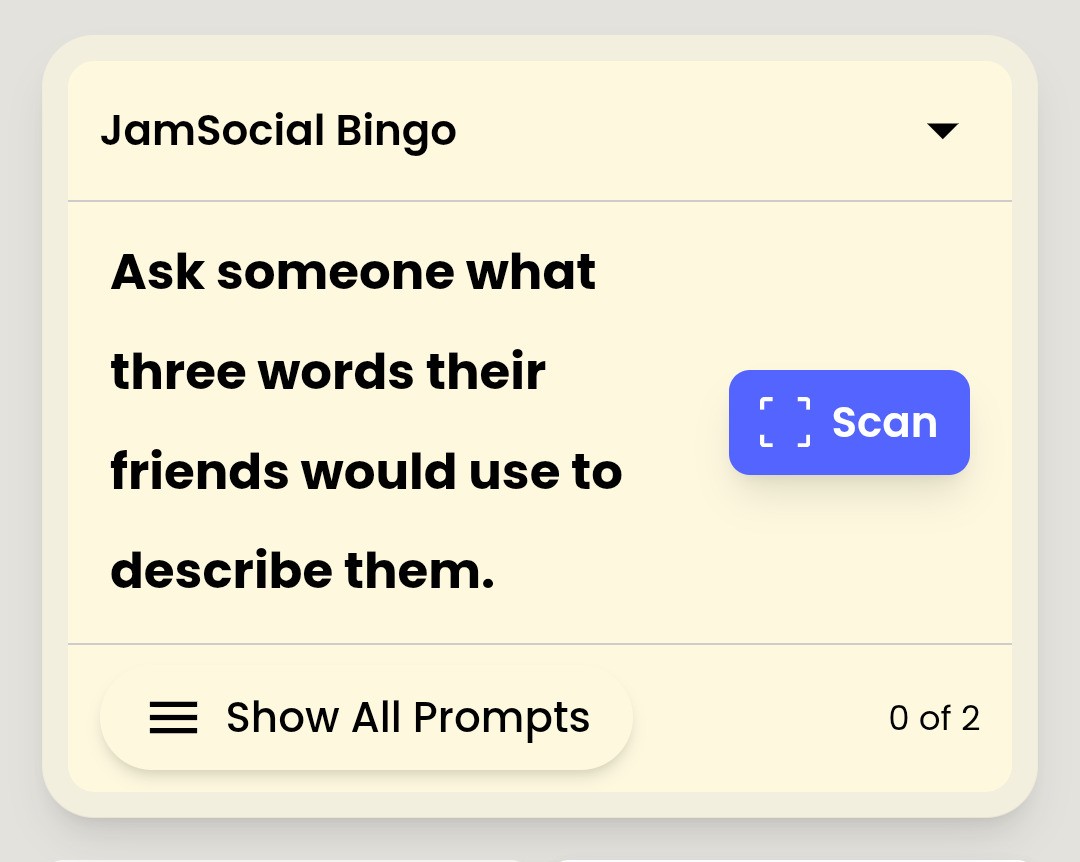
One prompt at a time, so guests always know their next move.
The prompt breaks the cluster. It hands over the first line. And 'I need to find my next person' is the polite exit.
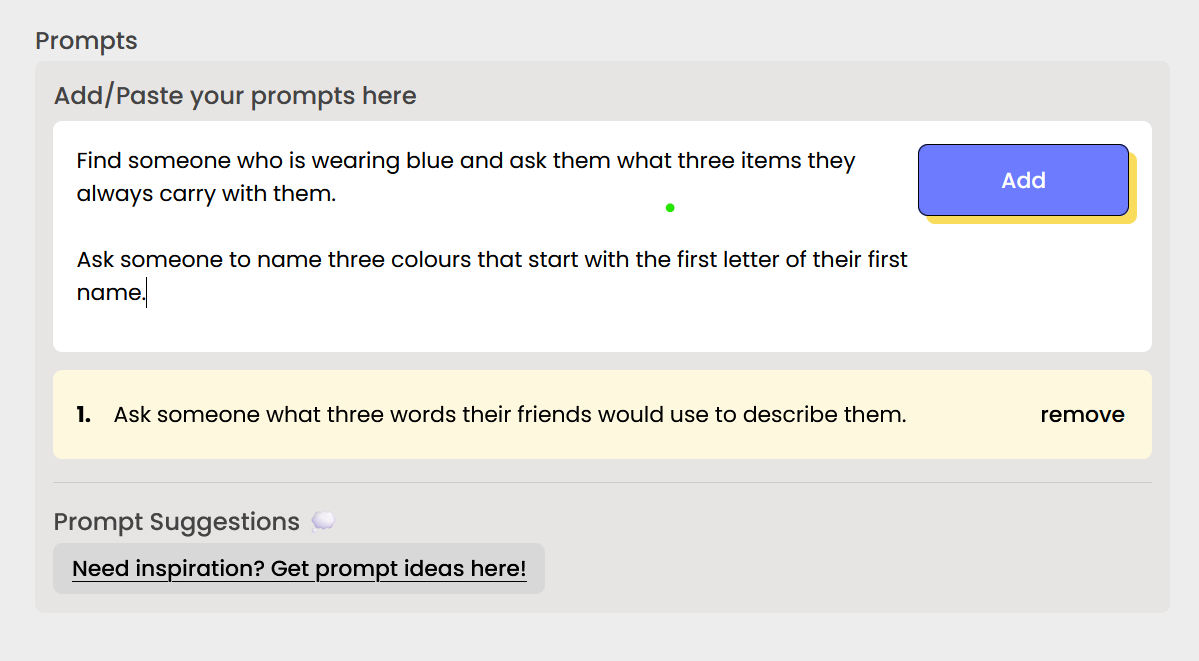
You can add your own prompts, and each person gets a random mix of them.
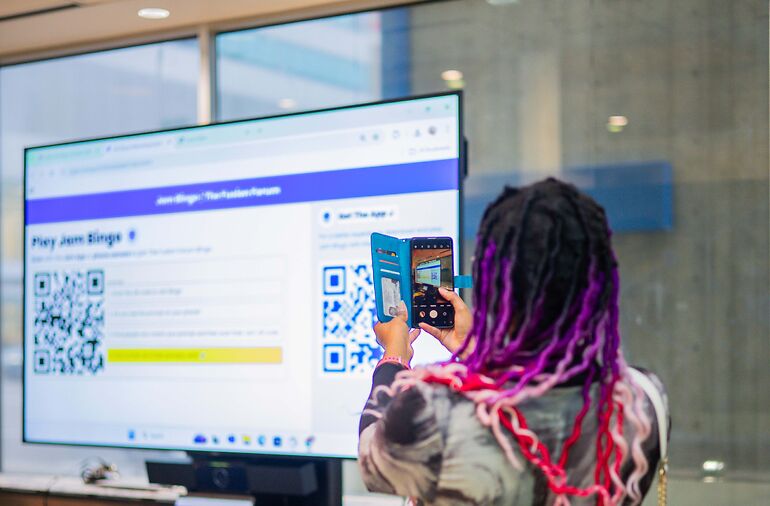
No rotations, no bell, no paper. Guests scan each other's QR code to connect.
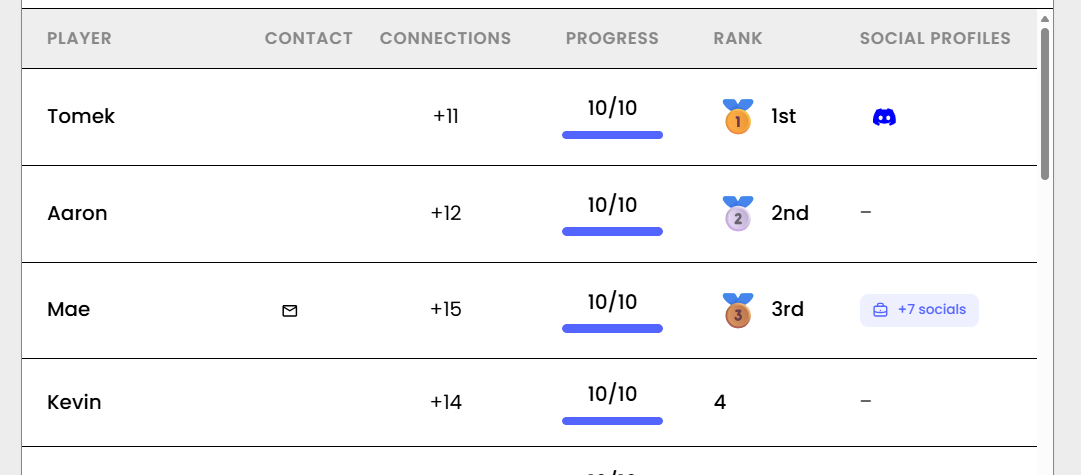
Every connection gets saved, so the follow-up happens after the event too.
8. Question-Led Speed Networking
- Mixing: 4/5
- Cringe risk: Medium
- Prep: Medium (seating, timer, questions)
- Group size: 16 to 50
- Time: 20 to 40 minutes
Classic speed networking, with one twist: a new question on screen every round.
It stops 8 rounds of the same elevator pitch.
It struggles with big groups and late arrivals. Here are alternatives to speed networking.
9. Topic Tables
- Mixing: 3/5
- Cringe risk: Low
- Prep: Medium (table signs)
- Group size: 30 to 300
- Time: 30 to 45 minutes
Put a sign on each table, like 'AI at work' or 'Starting a side business.'
Guests pick a table and switch whenever they want.
Great for learning-focused crowds. Guests meet people who share an interest.
10. Give and Get Board
- Mixing: 3/5
- Cringe risk: Low
- Prep: Low (wall, sticky notes, markers)
- Group size: 20 to 500
- Time: all event
Set up a wall with two sides: 'I can help with' and 'I'm looking for.'
Guests write a sticky note for each side and add their name.
Then they go find the person whose note matches theirs.
It's the most business-useful game on this list. Every conversation has a purpose.
11. Connector Challenge
- Mixing: 4/5
- Cringe risk: Low
- Prep: None
- Group size: 30 to 200
- Time: 15 minutes
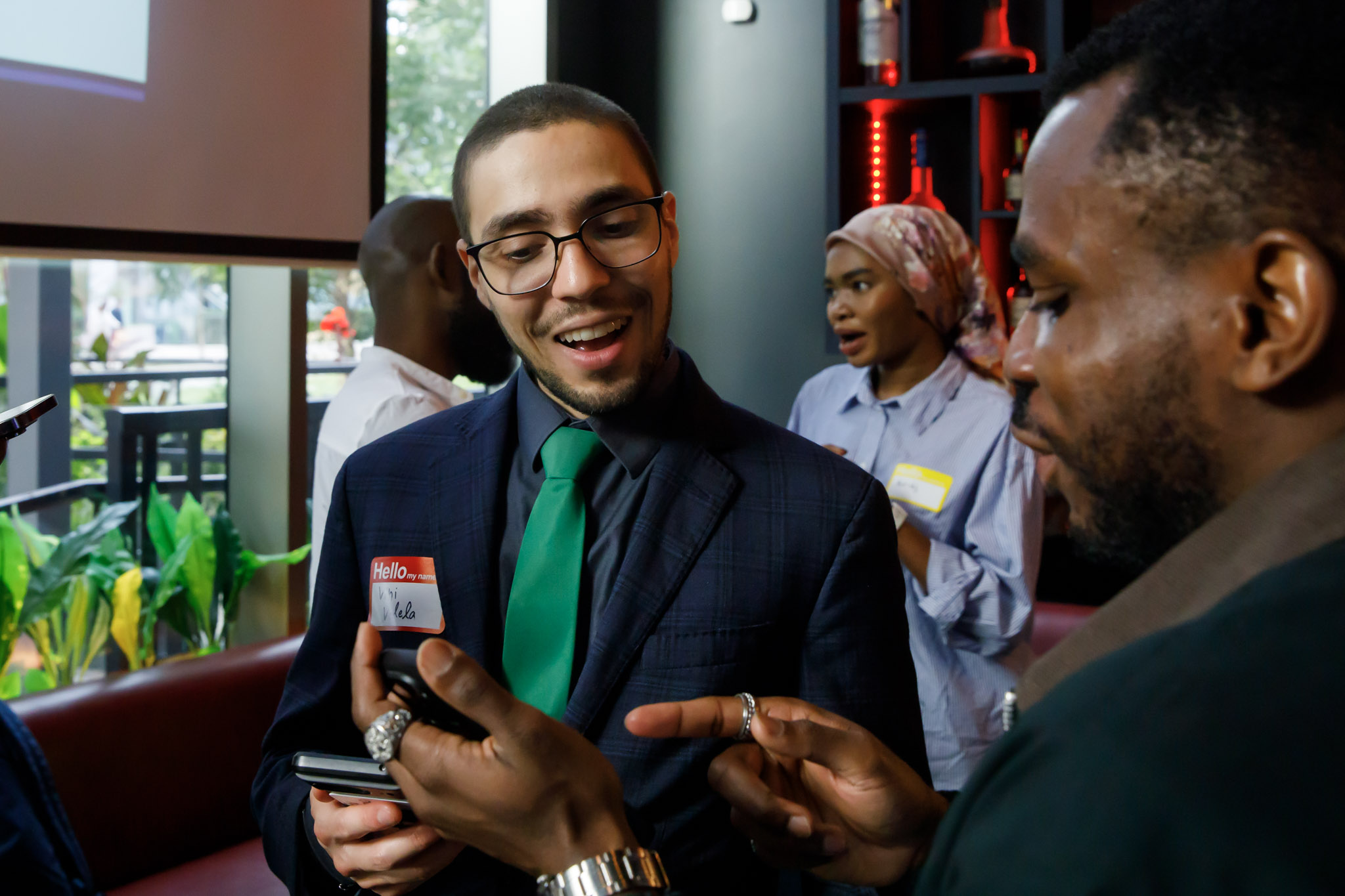
Challenge everyone to introduce two people who haven't met yet.
It turns guests into hosts. Regulars start pulling newcomers into conversations.
Moment 4: Seated Dinner Games
Keep Mixing Once People Sit Down
Seated dinners lock guests at one table for two hours.
These games keep conversations going and move people around.
12. Dessert Swap
- Mixing: 3/5
- Cringe risk: Low
- Prep: Low (numbered place cards)
- Group size: 40 to 400
- Time: dessert course
Before dessert, ask half of each table to move to the next table over.
Same dinner, a whole new set of people to meet.
13. Table Question Cards
- Mixing: 1/5
- Cringe risk: Low
- Prep: Low (printed cards)
- Group size: any
- Time: all dinner
Leave a small stack of question cards in the middle of each table.
When things go quiet, someone flips a card.
Need questions? Grab some conversation starters.
Moment 5: Closing Game
Turn Chats Into Follow-Ups
14. One Last Hello
- Mixing: 2/5
- Cringe risk: Low
- Prep: None
- Group size: any
- Time: 5 minutes
Ten minutes before the end, ask everyone to find the most interesting person they met tonight.
Go say goodbye, swap contacts, and plan one follow-up.
It turns good conversations into real connections.
Games to Skip at Networking Events
Some popular games hurt networking more than they help.
- Two truths and a lie: one person performs while everyone watches.
- Go-around-the-room intros: 40 people, 40 nervous speeches, zero conversations.
- Trust falls and team challenges: great for teams, wrong for strangers.
- Paper human bingo: fun, but guests chase squares and skip the actual conversation.
See why paper bingo falls short: alternatives to paper networking bingo.
Pick Your Game in 30 Seconds
By Group Size and Time
- Under 30 people, 15 minutes: Common Ground or This or That.
- Under 30 people, 45 minutes: Jam Bingo or question-led speed networking.
- 30 to 100 people, 15 to 20 minutes: Jam Bingo.
- 30 to 100 people, 45+ minutes: Jam Bingo plus a Give and Get Board.
- 100+ people, any length: Jam Bingo. Rotations and group intros won't scale.
- Seated dinner: Table Question Cards plus a Dessert Swap.
By Crowd
- Lots of introverts: Name Tag Questions and Jam Bingo. Nobody is on the spot.
- Lots of coworkers arriving together: Color Split, then Jam Bingo.
- Deal-focused professionals: Give and Get Board.
- Members and regulars: Connector Challenge, so regulars welcome newcomers.
What to Say: Host Scripts
How you introduce a game matters as much as the game itself.
Keep it to one breath. Here are scripts you can use word for word.
Jam Bingo Script
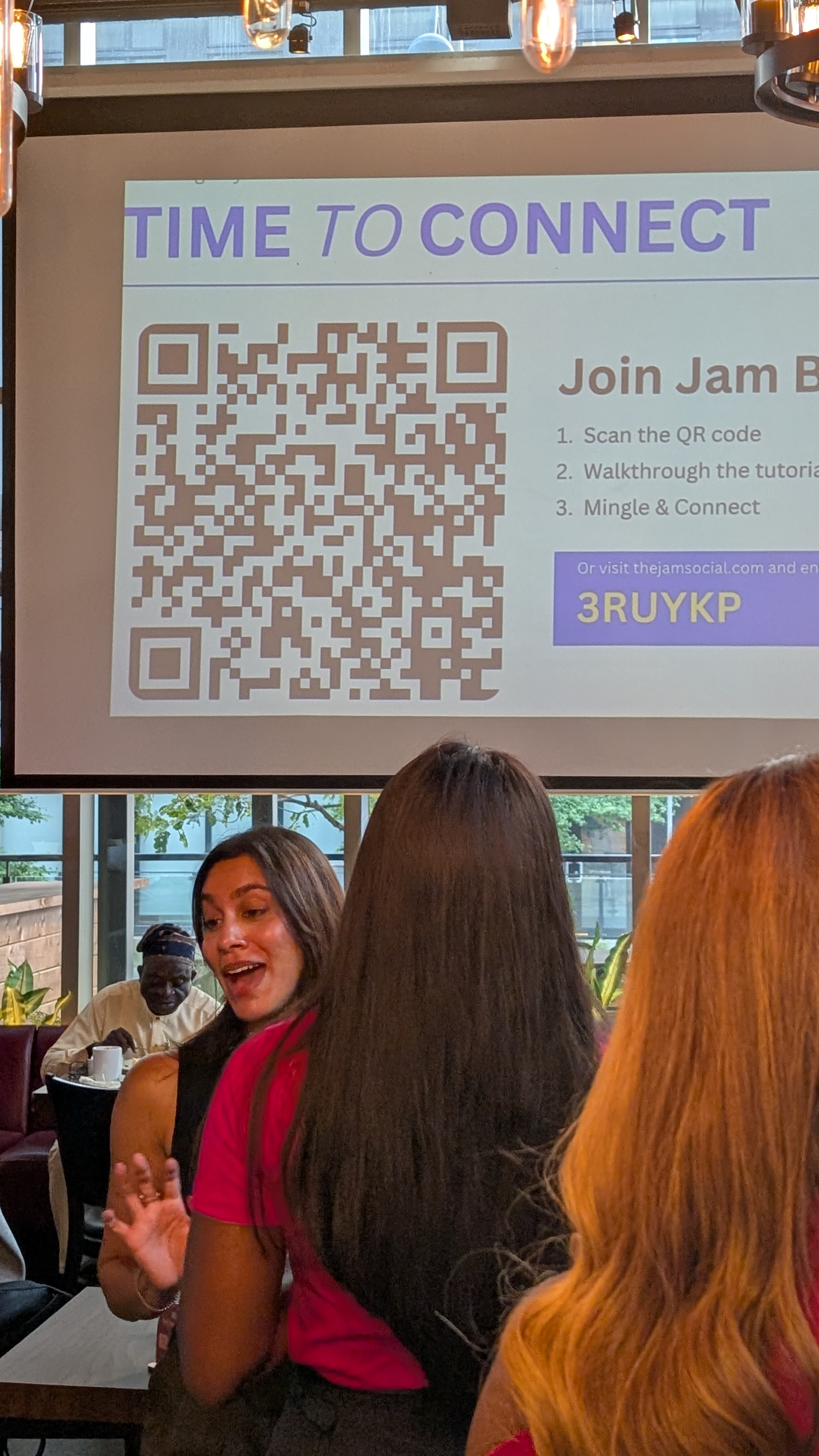
'Scan the QR code on screen. You'll get a prompt. Find someone who matches it, scan to connect, and get your next one. Top 3 players get a prize. Go!'
This or That Script
'Quick game. Coffee people to the left, tea people to the right. Now say hi to someone next to you.'
Give and Get Script
'Write one thing you can help with and one thing you're looking for. Stick them on the wall. Then go find your match.'
Words to Avoid
- 'Now we're going to do an icebreaker.' Groans guaranteed.
- 'Everyone has to...' Invite, don't demand.
- Long rule explanations. The game should explain itself.
Sample Run-of-Shows
2-Hour Evening Mixer
- 6:00: doors open. Name Tag Questions at check-in.
- 6:20: This or That, 3 rounds.
- 6:30 to 7:15: Jam Bingo as the main game.
- 7:15: shout out top players and hand out prizes.
- 7:20 to 7:50: open networking.
- 7:50: One Last Hello.
Conference Reception
- Doors: Give and Get Board by the entrance.
- First 10 minutes: Jam Bingo QR code on every screen.
- Middle: guests play at their own pace, coming and going.
- Last 5 minutes: leaderboard shout-out.
Seated Association Dinner
- Cocktail hour: Jam Bingo while people arrive.
- Dinner: Table Question Cards.
- Dessert: Dessert Swap.
- Close: One Last Hello.
When a Game Stalls: Quick Fixes
Clusters Won't Break
Write prompts that only work with someone new, like 'Find someone from a different company.'
Energy Drops at Minute 15
Shout out the leaderboard. A little competition brings the room back.
Introverts Hang Back
Give them a role, like greeter or prompt helper. A job makes it easier to approach people.
Late Arrivals Feel Lost
Pick self-paced games. Anyone can join Jam Bingo mid-game without slowing anyone down.
Nobody Wants to Go First
Plant 3 or 4 friendly regulars who start playing right away. Others follow.
How to Know It Worked
Don't just guess. Look for these signs:
- The room is loud. Quiet rooms mean people are on their phones or stuck.
- Guests met 5+ new people, not just 1 or 2.
- Clusters from the start of the night are mixed up by the end.
- People saved contacts and followed up.
Digital games like Jam Bingo track connections, so you get real numbers for your recap.
The Bottom Line
The best networking event games don't feel like games.
They feel like an easy reason to say hi to someone new.
Pick one opener, one main game, and one closer. Keep the rules short. End on a high.
Want more ideas? Browse our networking games.
Ready for your main game? See how Jam Bingo works!
Frequently Asked Questions
What are the best networking event games?
It depends on the moment. Name Tag Questions and This or That are great openers. For the main networking block, a self-paced prompt game like Jam Bingo mixes the most people. Topic Tables and Give and Get Boards work well for focused professional crowds.
How do you make networking games not cringe?
Never make one person perform in front of the room. Keep conversations one on one or in small groups, explain the game in one sentence, let people play at their own pace, and end while energy is still high.
How many networking games should I run at one event?
Two or three at most: one quick opener, one main game, and optionally a short closer. More than that and your event starts to feel like a workshop.
What networking games work for large groups of 100+ people?
Self-paced games that don't need rotations or a host running the clock. Jam Bingo, This or That and Give and Get Boards all scale to hundreds of guests. Speed networking and group intros get messy past about 50 people.
How long should a networking game last?
Openers run 5 to 10 minutes. A main networking game runs 20 to 45 minutes. Closers take 5 minutes. End a game while the room is still loud, not when it fizzles out.
How do I know if my networking game worked?
Look at how many new people each guest met, whether the room stayed loud, and how many connections were saved for follow-up. Digital games like Jam Bingo track connections for you.