
Ice Melters vs Icebreakers
The Quick Answer
Icebreakers break the tension fast. They're quick, structured and often done in front of the whole group.
Ice melters warm people up slowly. They happen one conversation at a time, around things that actually matter.
One gets people talking. The other gets people connecting.


What Are Icebreakers?
Icebreakers are short, lighthearted activities that ease the first awkward minutes in a group.
They're designed to be quick, low-risk and easy for anyone to join.
Classic Icebreaker Examples
- Two Truths and a Lie: share three statements, and others guess the lie.
- Name Game: say your name plus a fun fact or adjective.
- Speed Networking: rotate through short one-on-one intros.
Where Icebreakers Fall Short
They spark laughs, but they often stay surface level.
Basic facts like 'I have a dog' rarely lead to a real connection.
And for many guests, especially introverts, they can feel forced or cringe.
What Are Ice Melters?
Ice melters build trust and comfort within a group.
They invite people to share stories, values and experiences, so guests actually understand each other.
Ice Melter Examples
- Story Circles: share a personal story tied to a theme.
- Values Exercise: talk about a core value and how it shows up in your life.
- What's Your Why?: explore what motivates each person.
- Prompt-based conversation games: one meaningful question at a time, one on one.
The Key Difference
Ice melters 'melt' emotional barriers. People leave feeling seen and heard.
They take a little more time, but they create much stronger bonds.
Ice Melters vs Icebreakers Side by Side
- Goal: icebreakers ease tension. Ice melters build connection.
- Format: icebreakers are often group-wide. Ice melters are one on one or small groups.
- Depth: icebreakers stay light. Ice melters go a layer deeper.
- Time: icebreakers take 5 to 10 minutes. Ice melters take 15 to 45.
- Cringe risk: higher for icebreakers, since someone is on the spot. Lower for ice melters.
- Best for: icebreakers suit teams that know each other. Ice melters suit strangers and networking.

Why the Shift Is Happening
People Want Real Connection
Surface-level small talk feels less and less worth it.
Ice melters let people share something meaningful, which builds trust fast.
Events Need Real Outcomes
Attendees expect value from their time.
Deeper conversations lead to collaboration, mentorship and business opportunities.
Introverts Are Half the Room
Activities that put people on the spot push many guests to the wall.
Ice melters meet them where they are. More on that: ice melters to help introverts network.
Digital Tools Make It Easy
- QR codes replace printed cards and handouts.
- Hosts can see participation in real time.
- Connections get saved for follow-up.
See more in digital ice melters for events.
When to Use Each
Use an Icebreaker When...
- You need a 5-minute energy boost.
- The group already knows each other.
- You're warming up a room right before a workshop.
Use an Ice Melter When...
- Guests are mostly strangers.
- Networking is the goal.
- Your crowd has lots of introverts.
- You want people to follow up after the event.
Running a workshop? Here are ice melters for workshop facilitators.
Ice Melters in Action: Calgary
The Event
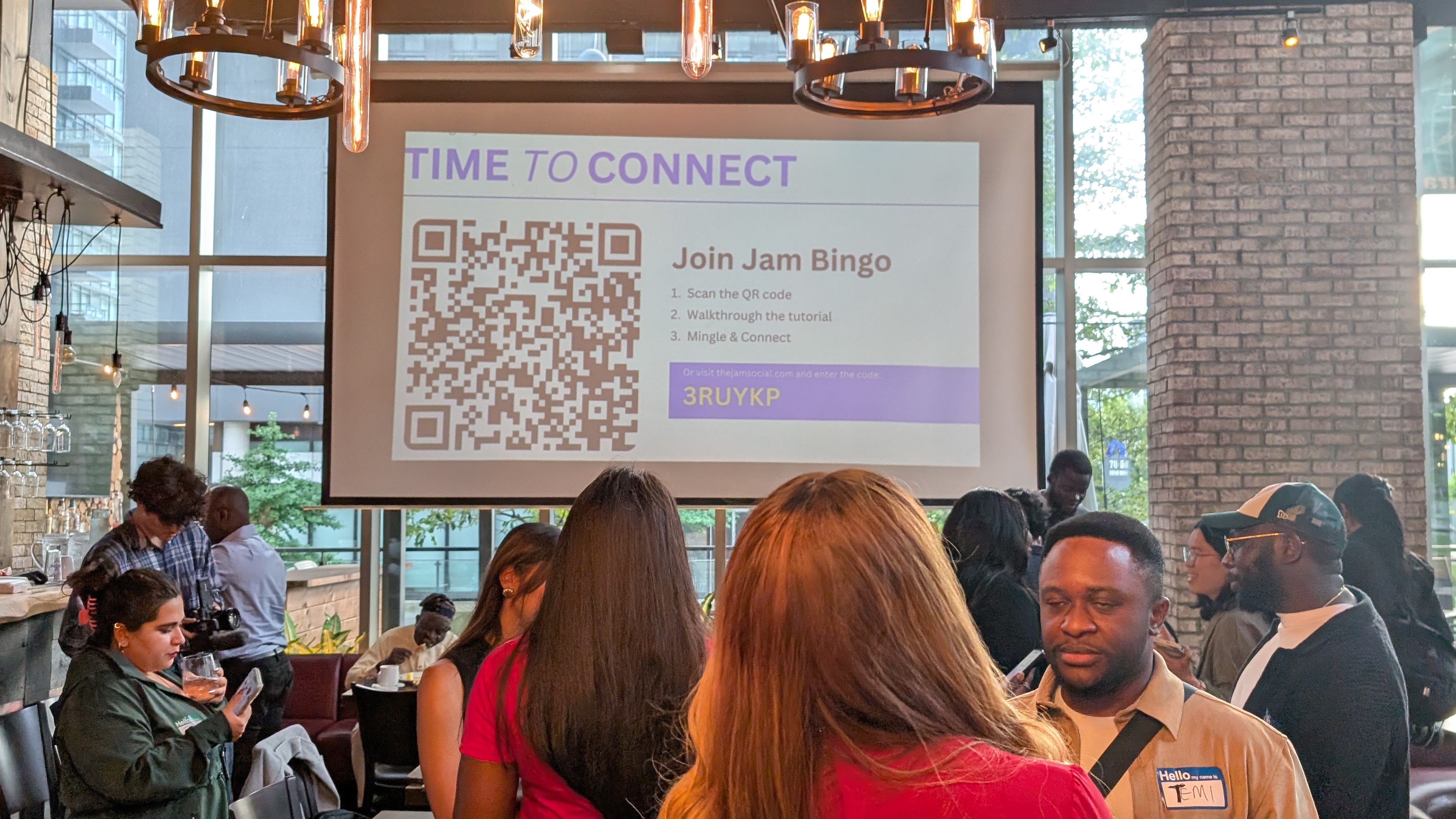
We hosted an event in Calgary at a local furniture shop.
The theme was 'Making friends and meeting new people.'
That theme naturally attracted shy and introverted guests.
The Ice Melter Prompts
Instead of 'Find someone who has a dog,' guests got prompts like these:
- Share a moment this year that made you feel truly alive.
- Ask someone who inspires them or keeps them motivated.
- What advice would you give your younger self?
- Ask someone about the most important decision they're facing right now.
The Result
Strangers turned into fast friends.
Guests who came in quiet were laughing, chatting and opening up.
The right questions did the melting.
Jam Bingo: A Digital Ice Melter
One Meaningful Prompt at a Time
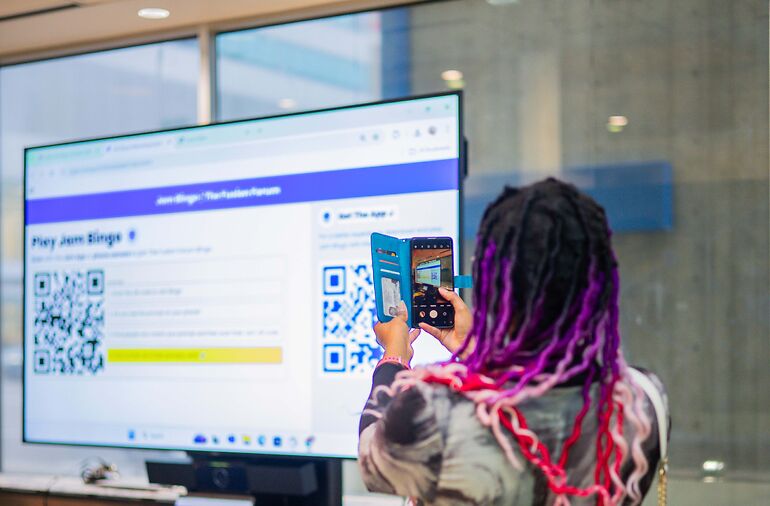
Jam Bingo is the game we used in Calgary.
- It gives you a conversation starter.
- You find someone to ask.
- You connect with them.
- It gives you your next prompt.
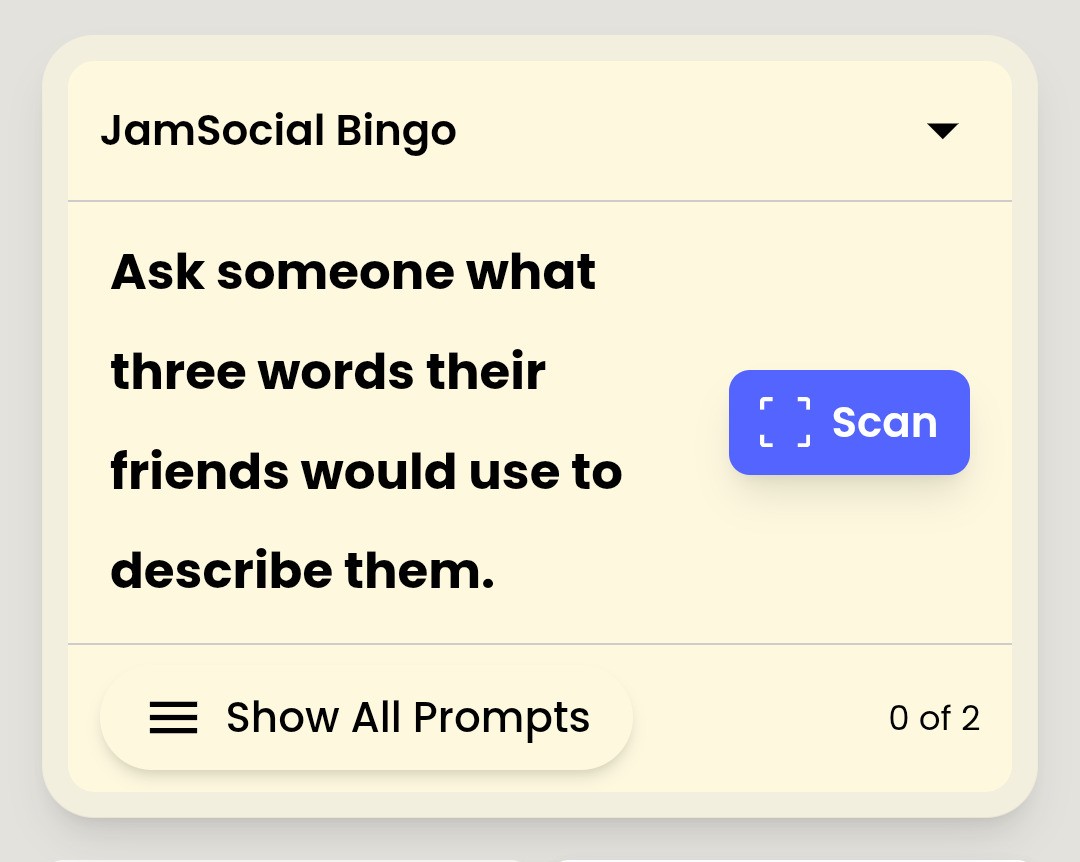
It's one on one, so nobody performs for the room.
Write Your Own Ice Melters
You can add your own conversation prompts to the game.
Each person receives a random mix of them.
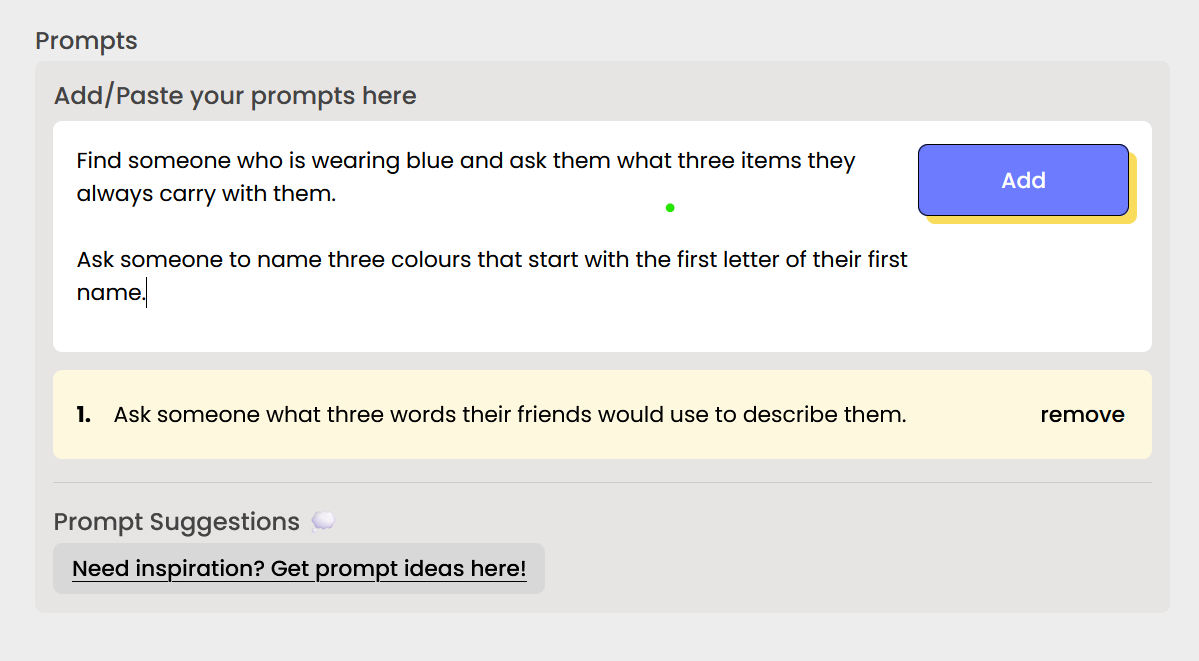
Need deeper prompts? Try these 52 intentional conversation card prompts.

Ice Melter Prompts by Industry
Tech Summit
- Find someone who has contributed to open-source software.
- Connect with a startup founder and ask why their work matters to them.
Healthcare
- Meet someone working on telemedicine and ask what got them into it.
- Find someone who has put patient-centered care into practice.
Any Professional Event
- Ask someone about a project they're proud of.
- Find someone who changed careers and ask what pushed them.
- Ask someone who their biggest mentor was.
Turn Any Icebreaker into an Ice Melter
Swap the Question
'Share a fun fact' becomes 'Share something you're excited about this year.'
Go One on One
Move it from the whole room to pairs or groups of 3.
Give It Time
Let conversations run 3 to 5 minutes instead of 30 seconds.
Let People Choose Their Depth
Good prompts invite depth but never force it. Guests share what they're comfortable with.
For more, see how to make networking interactive and fun.
Why Event Planners Should Use Ice Melters
- Inclusive: everyone can join without being put on the spot.
- Measurable: digital ice melters track connections in real time.
- Lasting: deeper conversations lead to real follow-ups.
Icebreakers break the ice. Ice melters make sure it stays broken.
Ready to try an ice melter at your next event? See how Jam Bingo works!
Frequently Asked Questions
What is the difference between an ice melter and an icebreaker?
An icebreaker is a quick, structured activity that eases initial awkwardness, often with everyone watching. An ice melter warms people up gradually through one-on-one conversations about things that matter, like stories, values and motivations.
What is an example of an ice melter?
Story circles, a values exercise, or 'What's your why?' conversations. Jam Bingo also works as a digital ice melter: guests get one meaningful prompt at a time and find someone to talk it through with.
Are ice melters better for introverts?
Usually, yes. Ice melters happen one on one or in small groups, nobody performs in front of the room, and the prompt gives people something real to talk about.
When should I still use an icebreaker?
When you need a quick 5-minute energy boost, when the group already knows each other, or when you're about to start a workshop and just need people loosened up.
Do ice melters take longer than icebreakers?
A bit. Plan 15 to 45 minutes instead of 5. That extra time is what turns a quick hello into a real connection.