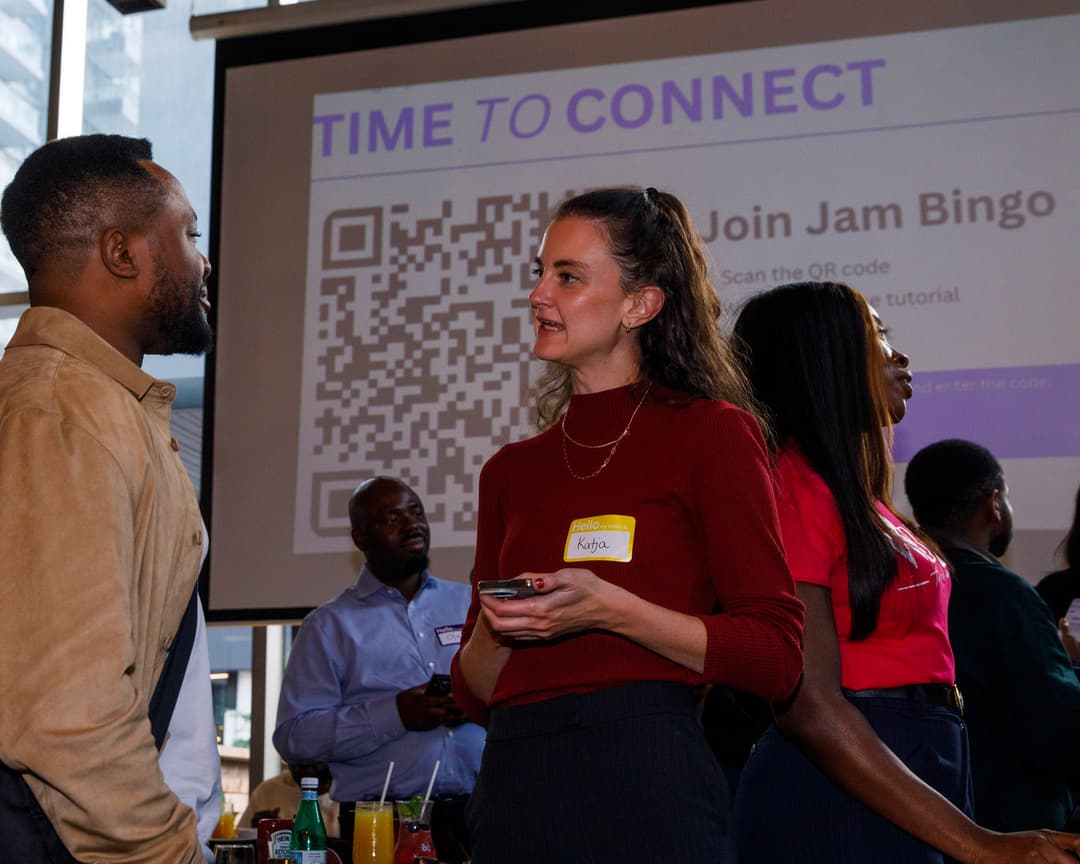

Why do corporate conferences struggle with engagement?
Most internal conferences are designed around presentations, updates, and strategy sessions. Employees sit together, listen, and move between sessions, but rarely interact outside their existing teams. Even when networking time is scheduled, people often stay with colleagues they already know.
The challenge is rarely attendance. It’s interaction. Employees want to connect, but they need permission and structure to do it naturally.
Do employees actually want icebreakers?
Yes, when they feel purposeful.
People don’t dislike icebreakers. They dislike forced activities that feel unrelated to why they came. When an activity helps them meet useful contacts, learn about coworkers, or feel included quickly, participation rises significantly.
The goal isn’t entertainment. It’s lowering the social barrier between departments, roles, and seniority levels.
What makes a good corporate conference icebreaker?
Simple rules and clear outcomes.
- The most effective conference icebreakers share a few traits:
- They take less than two minutes to explain.
- They encourage movement and conversation.
- They work for both introverts and extroverts.
- They connect employees who would not normally meet.
- They feel optional but easy to join.
Which icebreakers work best at internal conferences?
Activities that scale with group size.
Below are several formats that consistently work well across company offsites, leadership summits, and internal conferences.
1. Human Bingo
Participants receive prompts and must find coworkers who match them. Instead of small talk, conversations start with a clear purpose. This works especially well when employees come from different offices or departments.
2. Conversation Prompt Cards
Simple question cards placed on tables encourage discussion during meals or breaks. Prompts like ‘What project taught you the most this year?’ feel relevant and professional.
3. Department Mixers
Assign employees temporary groups that mix roles and seniority. Give each group a small task or discussion goal to complete during networking time.
How do you introduce an icebreaker without awkwardness?
Make it part of the agenda.
Icebreakers fail when they feel optional or unclear. The facilitator should introduce the activity confidently and explain why it exists.
- A simple introduction might sound like:
- “Before our next session, we want everyone to meet someone new outside their team.”
- “You’ll have 10 minutes to complete this activity.”
- “The goal is simple: learn something new about someone you haven’t met yet.”
What changes when the group is large?
Manual coordination becomes difficult.
Once events pass 75 to 100 attendees, paper activities become harder to manage. Printing materials, explaining rules repeatedly, and tracking participation takes time away from the event itself.
This is where digital formats can simplify logistics while keeping the same human interaction.
Is there a digital version of Human Bingo?
Yes, and it removes setup friction.
Digital Human Bingo tools replace paper sheets with prompts delivered through phones. Participants walk around meeting coworkers, scanning codes, and unlocking new questions as they go.
One example is Jam Bingo, which is designed specifically for conferences and structured networking environments.
How does Jam Bingo work during a conference?
Conversation first, technology second.
- The flow is intentionally simple:
- Attendees scan a shared QR code to join.
- Each person receives a prompt.
- They find someone who can answer it.
- Scanning each other unlocks the next prompt.
Because everyone follows the same structure, the room quickly shifts from passive attendance to active participation.
When should you run an icebreaker during a conference?
Early, but not immediately.
The best timing is after the first session or before a major networking break. Attendees already feel oriented, but social groups have not fully formed yet.
Running the activity too late reduces impact because people have already settled into familiar circles.
How long should a corporate icebreaker last?
Ten to fifteen minutes is enough.
Short activities create energy without exhausting attendees. The goal is momentum, not completion. Many organizers find conversations continue naturally after the activity ends.
What outcomes should planners expect?
More conversations across teams.
Successful icebreakers lead to visible movement, laughter, and conversations between employees who previously had no reason to interact. The effect often carries into sessions, meals, and follow-up collaboration after the conference.
How do you choose the right icebreaker?
Match the activity to your goal.
- Ask yourself:
- Do employees need to meet new people?
- Do departments need stronger alignment?
- Is the goal energy, learning, or relationship building?
When the activity supports the purpose of the conference, participation feels natural rather than forced.