The Dinner Party Problem Nobody Talks About


Half your guests do not know each other — and nobody is fixing that.
You have put real effort into the food, the seating, the playlist. But the moment guests walk in, the same thing happens every time — people find someone they already know, grab a drink, and park themselves in the same corner for the rest of the night. The guests who do not know anyone smile politely and wait for someone to come to them.
As the host you feel it. You are running between the kitchen and the living room trying to personally introduce everyone, and it is exhausting. There has to be a better way — and there is.
Why Small Talk Does Not Work at Dinner Parties
Nobody actually wants to answer 'so what do you do' for the fifth time.
Forced small talk puts the burden entirely on the guest — come up with something interesting to say, to a stranger, in a room full of people you do not know. That is genuinely hard, even for extroverts. And for introverted guests, it can make the whole evening feel like work.
- What actually helps people connect at social gatherings:
- A shared activity that gives them something to do together, not just talk about.
- A prompt that does the conversation-starting for them so they can focus on the person.
- A low-stakes reason to approach someone new without it feeling forced or weird.
The Fix: Human Bingo
Give every guest a mission and they will do the mingling themselves.
Human bingo — also called people bingo — works by giving each guest a card filled with prompts like 'Find someone who has lived in another country' or 'Ask someone to name the best meal they have ever eaten.' To check off a square, they have to actually find and talk to that person. The game does the awkward part for you.
It works for dinner parties because it does not interrupt the natural flow of the evening. Guests play between courses, during drinks, or while waiting for food. It blends into the party rather than stopping it.
How to Run It at Your Party
Tell guests at the start, then let it run itself.
You do not need to MC this or turn it into a formal activity. Here is how to introduce it without making it feel like a corporate team-building exercise:
- Step 1 — Introduce it casually as guests arrive or sit down for drinks.
- Keep it to two sentences: here is the card, here is the goal, here is the prize.
- Framing matters — 'we are playing a game' sounds forced, 'here is a fun thing to try tonight' lands much better.
- If you have a mixed group, mention that the prompts are an easy way to meet people they have not chatted with yet.
- Step 2 — Hand out cards or share the QR code.
- Paper cards work perfectly well for a small dinner of 8 to 12 people.
- For larger gatherings or if you want to skip the printing, a digital card shared via QR code works just as well.
- Place cards at each seat setting so guests see them immediately when they sit down.
- Step 3 — Let it run in the background.
- The best dinner party bingo does not have a formal start time — it just exists and guests pick it up naturally.
- Check in halfway through the evening and nudge any guests who have not started yet.
- Wrap it up before dessert with a quick acknowledgement of who finished their card.
What to say when you introduce it
- Hey everyone — before we sit down, grab one of these cards or scan the code on the table.
- The goal is to find someone in the room who matches each square — you have to actually talk to them to check it off.
- First person to finish wins. Prize is bragging rights and possibly the last dessert.
Prompts That Actually Work at Dinner Parties
Skip the generic ones — the best prompts lead to real stories.
The difference between a forgettable bingo card and a great one is the prompts. Avoid anything with a yes-or-no answer. The goal is to get two people talking for at least 30 seconds. Here are prompts that consistently work at social dinners:
Find someone who...
- Has lived in another country — ask them what they miss most about it.
- Changed careers at some point — ask what finally pushed them to make the move.
- Has a completely unexpected hidden talent.
- Has eaten at a restaurant they still think about years later — get the name.
- Grew up in a different city or town than where they live now.
Challenge someone to...
- Name three things you both have in common — you have got two minutes.
- Describe their personality using only three words.
- Tell you the most spontaneous thing they have ever done.
- Name a skill they have been meaning to learn for years but still have not.
- Pitch their dream job in under 20 seconds.
Ask someone to...
- Tell you about the best trip they have ever taken and why it stood out.
- Share one piece of advice they wish they had gotten earlier in life.
- Name the best book, show, or movie they have consumed in the last six months.
- Describe their perfect Sunday in three sentences.
- Tell you something about themselves that most people in the room would not guess.
Tailoring the Card to Your Specific Guest List
The more specific the prompts, the better the conversations.
Generic bingo cards get generic conversations. If you know your guest list well, spend 10 minutes customizing a few squares to reflect your crowd. It makes the card feel personal and signals to guests that you actually thought about them:
- For a holiday family dinner:
- Include prompts about shared memories, family traditions, or childhood stories.
- Example: 'Find someone who remembers a holiday tradition that no longer happens — ask them about it.'
- For a friend group with mixed familiarity:
- Include prompts that reveal the less-known sides of people guests think they already know.
- Example: 'Find someone in the room who has a skill that would genuinely surprise you.'
- For a work or professional social dinner:
- Keep prompts social rather than work-focused — this is not the office.
- Example: 'Find someone who has a side project or hobby that has nothing to do with their job.'
Paper Cards or Digital — Which Should You Use?
Both work. Pick based on your group size and how much prep you want to do.
- Use paper cards if:
- Your dinner is 15 people or fewer and printing is easy.
- You want a tactile, screen-free feel that fits the atmosphere of a sit-down dinner.
- You like the look of a card at each place setting as a conversation piece on its own.
- Use a digital QR code if:
- You have more than 15 guests and printing individual cards is impractical.
- You want to skip the prep entirely and just share a link or code at the door.
- You want to update or swap prompts last minute without reprinting anything.
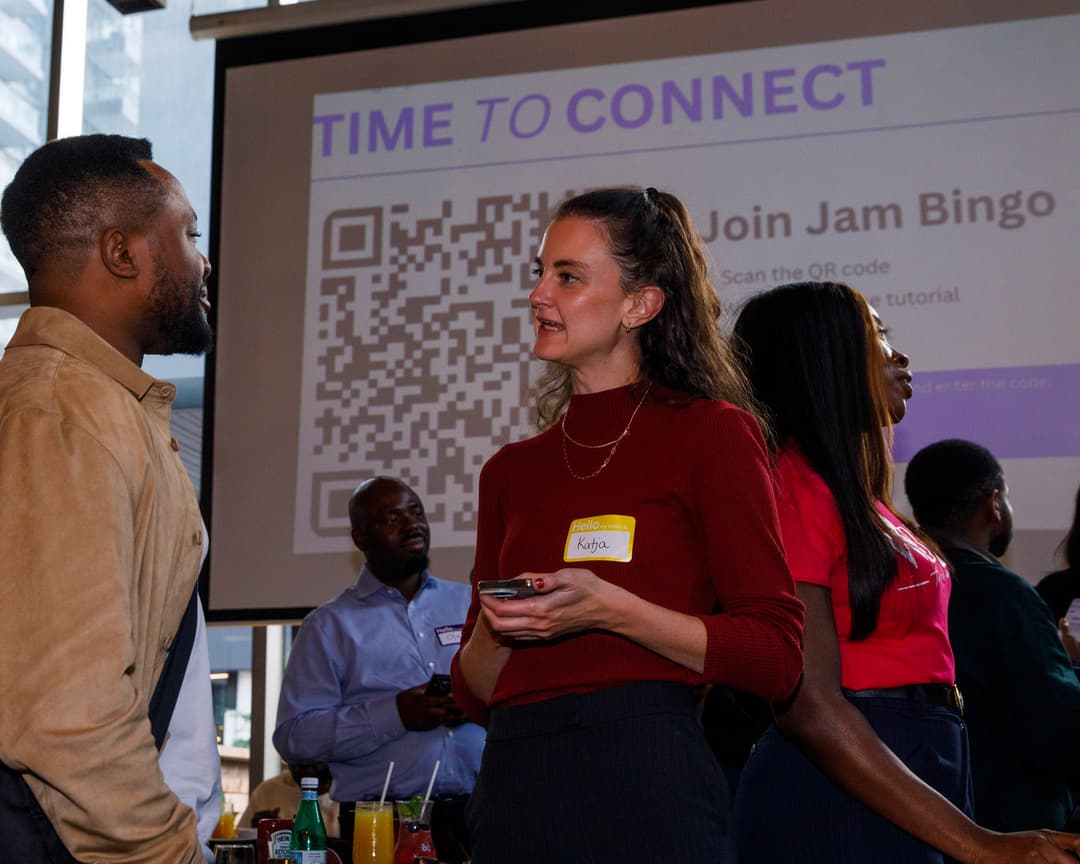
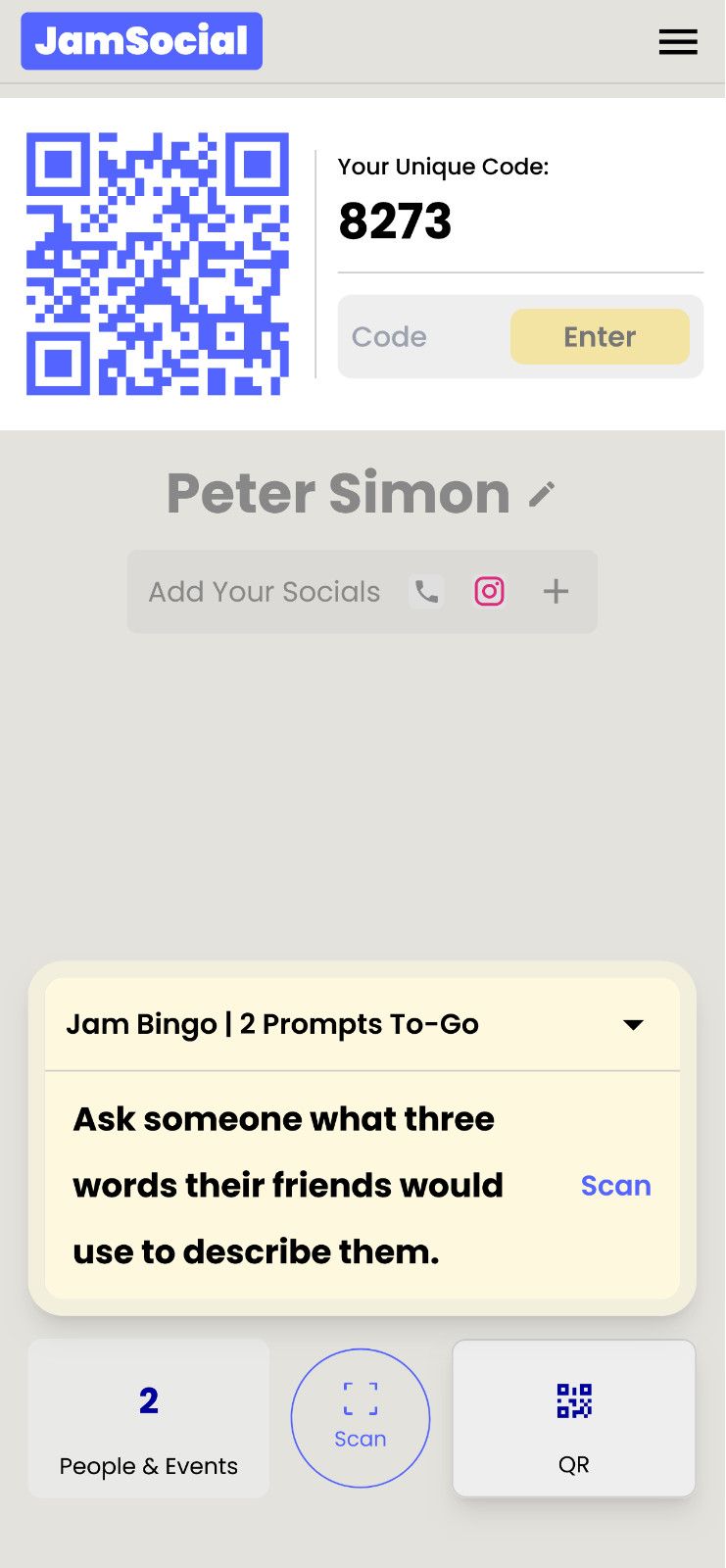
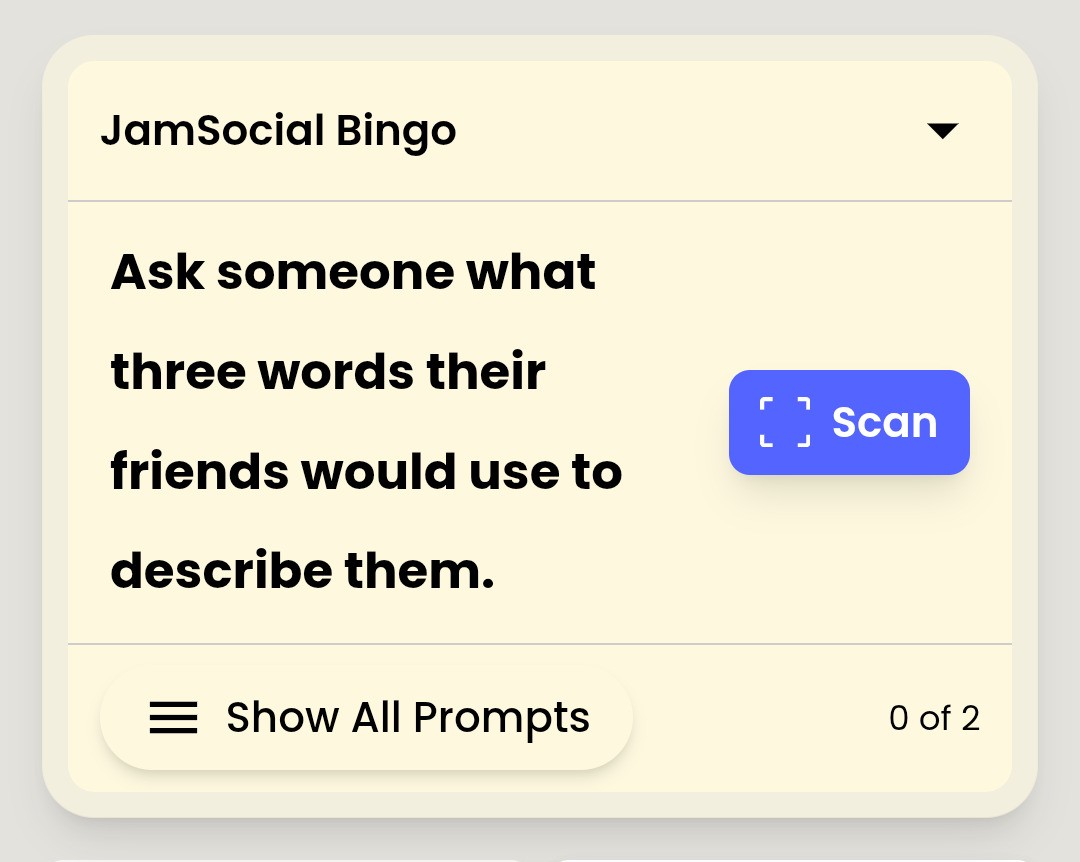
If you want the digital route, Jam Bingo lets you build a custom card and generate a shareable QR code in a few minutes — guests scan it on arrival and play straight from their phone.
Jam Bingo (Left) <-> People scan to play (Right)
Making the Night Actually Memorable
The bingo starts the conversation — your job is to keep it going.
Human bingo is most effective when it connects naturally into the rest of the evening rather than existing as a standalone activity. A few ways to extend the energy it creates:
- Use bingo discoveries as dinner table conversation starters.
- If someone found out a guest has an unusual hidden talent, bring it up at the table.
- Reference the connections people made during the game — it signals that the evening was actually about them, not just the food.
- Acknowledge completions publicly.
- A quick shoutout to whoever finished their card first keeps the competitive energy fun without being over the top.
- Even just 'who managed to talk to everyone tonight?' opens a natural moment for guests to share something they learned about someone new.
- Keep it optional, not mandatory.
- Some guests will dive in immediately. Others will watch and join gradually. Both are fine.
- Do not pressure guests who are deep in a conversation to stop and play — the point is connection, and if they are already connecting, the game is working.