
Why the Kickoff Moment Matters More Than You Think
The energy you set in the first hour carries through the whole offsite.
Work offsites are expensive. Between travel, accommodation, catering, and lost productive hours, most companies spend a meaningful amount pulling their team out of the office for a day or two.
The expectation is that something valuable comes out of it:
- better alignment
- stronger relationships
- fresh ideas
- renewed energy
But here is what often happens instead.
People arrive at different times, drift into their usual friend groups, spend the first thirty minutes on their phones catching up on Slack, and then sit down for a full day of presentations feeling no different than they would on a normal Tuesday in the office.
The offsite never really took off. Not because the content was bad or the planning was poor, but because nobody ever created the conditions for the team to actually show up and be present together.
That is the job of your kickoff. It is not just a formality before the real stuff starts. It is what determines whether your team spends the day guarded and transactional or open, energized, and genuinely collaborative. Getting it right is worth your attention.
What a Good Kickoff Actually Does
It is not about fun for fun's sake. It is about shifting the room.
A well-designed offsite kickoff does a few specific things. It signals to the team that this is not a normal workday. It creates a shared experience that everyone has in common before the day begins. It loosens people up so they are more likely to speak honestly, ask questions, and engage.
It also helps with the parts of your team that do not interact much day to day. Most companies have people who work in completely separate streams and barely cross paths. An offsite is a rare chance to change that. But it does not happen on its own. You have to create the moment.
Think of the kickoff activity as a social warm-up. Just like you would not ask an athlete to sprint without stretching first, you should not ask a team to do their best thinking and collaborating without warming up first.
Icebreaker Activities That Work Well for Work Offsites
Low pressure, high connection. That is the goal.
Here are some of the formats that consistently work well for kicking off a work offsite, across different team sizes and company cultures.
1. Two Truths and a Lie
Classic for a reason. Each person shares three statements about themselves, two true and one false, and the group tries to guess which is the lie. It works because it is genuinely surprising. You find out things about colleagues you would never learn in a normal work context. The person who seems the most reserved has climbed a volcano. The new hire used to be a semi-professional chess player.
It is best for smaller groups of up to twenty people where everyone can take a turn. For larger teams, break into smaller tables and run it simultaneously.
2. JamBingo
Jam Bingo is for groups where not everyone knows each other. It gets people physically moving around the room and talking to people outside their usual orbit.
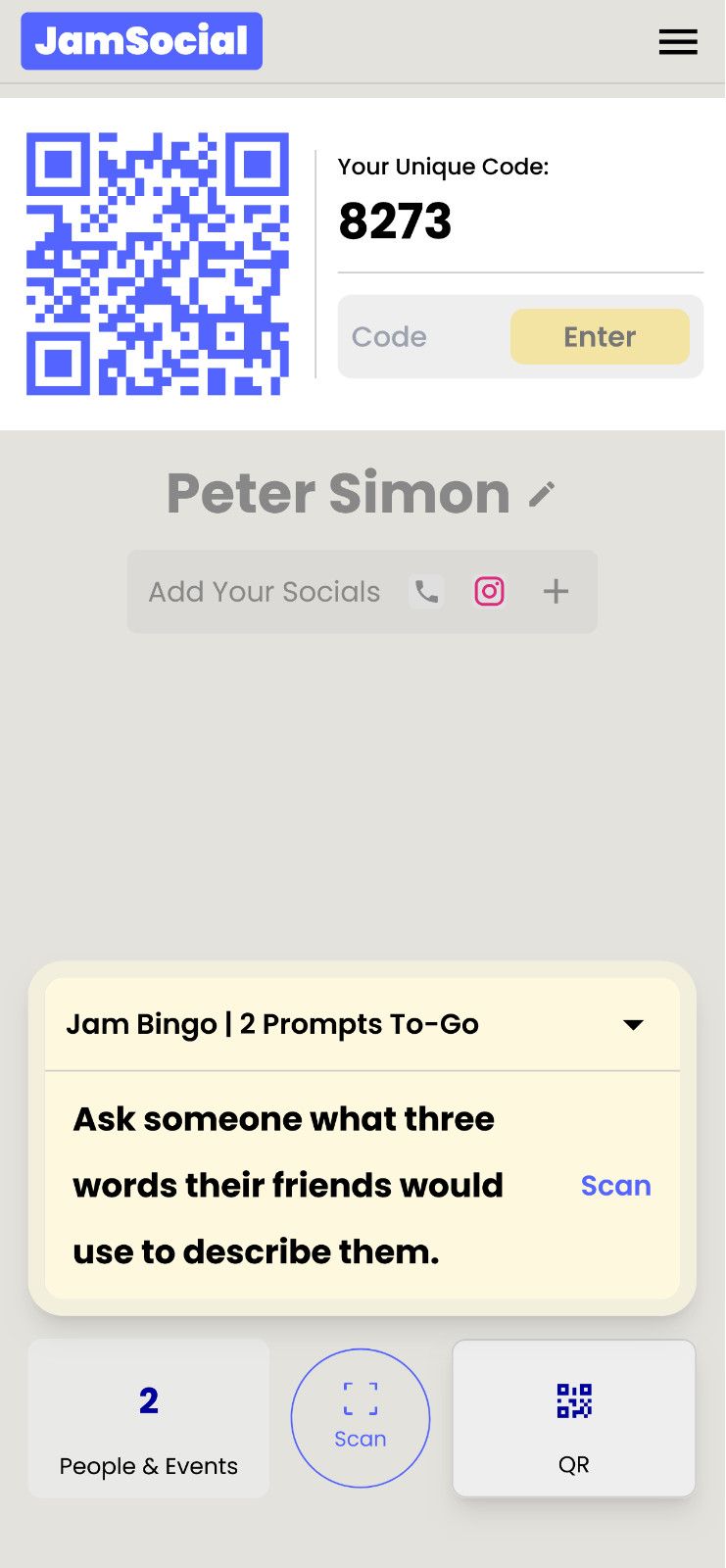
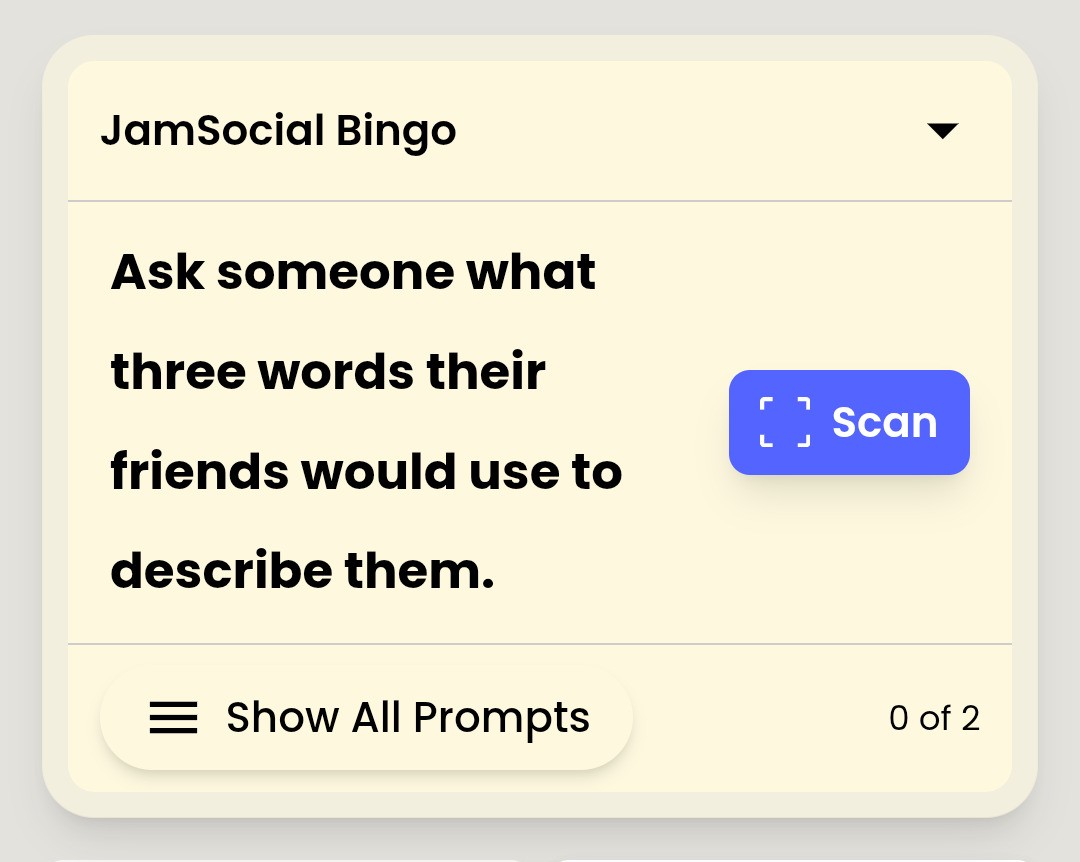
Each person gets conversation challenges like 'Find someone who has worked at the company longer than five years' or 'Find someone who joined in the last six months' or 'Find someone who has never been to this city before.'
The goal is to find a different person who matches each prompt. The structure removes the awkwardness of approaching someone you barely know because you have a specific, easy reason to go talk to them.
You can run this with printed cards, or if you want to skip the printing and setup, Jam Bingo is the digital versions where everyone joins on their phone via a QR code. Either way, the format is reliable and scales easily
3. The Map Activity
Put a large map of the world or the country on the wall and give everyone a dot sticker. Ask people to mark where they grew up, where they have lived, or the most interesting place they have ever traveled to. Then give people five or ten minutes to walk around, look at the map, and ask each other about their dots.
It is visual, it is personal, and it almost always surfaces surprising connections. Two colleagues who have worked together for years suddenly discover they both grew up in the same small town. Someone marks a place nobody has heard of and ten people want to know the story. It is a conversation starter that keeps giving.
4. The Rose, Thorn, and Bud Check-In
This one sits somewhere between an icebreaker and a team reflection. Each person shares one rose (something going well right now), one thorn (something challenging or frustrating), and one bud (something they are looking forward to or excited about).
It works well for teams that are a bit more self-aware and comfortable with a moment of honesty. It also gives you as a facilitator a real-time read on where people's heads are at before the day begins. If half the room names the same thorn, that is important information.
5. A Shared Physical Challenge
If your team enjoys a bit of competition and you have the space for it, a short physical or problem-solving challenge can do a lot to break the ice. Things like a quick team trivia round, a collaborative puzzle, a relay-style game, or even something as simple as a marshmallow tower build with limited materials.
The point is not the challenge itself. The point is that your team does something together that has nothing to do with work, and in doing so, they see a different side of each other. The person who quietly dominates the trivia round. The engineer who turns out to be surprisingly competitive about marshmallow architecture.
Before You Pick an Activity, Know Your Room
The best icebreaker is the one that fits your specific team.
There is no single icebreaker activity that works for every team. A high-energy game that a startup team loves might make a more reserved group feel deeply uncomfortable. Before you decide what to run, think honestly about who is in the room.
- How well does the team already know each other? A team that has worked together for years needs a different kind of icebreaker than a team that has mostly been remote and barely met in person.
- What is the mix of personalities? Every team has introverts, extroverts, and everyone in between. A good kickoff activity gives everyone a way to participate without forcing anyone to perform.
- What is the goal of the offsite? If you are trying to build trust and deepen relationships, go with something personal and story-driven. If you want to get people energized and thinking creatively, something more playful and fast-paced might work better.
- How much time do you have? A kickoff activity should not eat into the core agenda. Thirty minutes is usually enough to shift the energy without taking over the day.
Once you have a clear picture of your room, picking the right activity becomes a lot easier.
How to Run Your Kickoff Activity Well
The activity is only as good as how it is facilitated.
Even the best icebreaker can fall flat if it is introduced poorly. Here are a few things that make a real difference in how your kickoff lands.
- Start before everyone is seated. If you wait until the whole group is settled and quiet, you have already lost some of the energy. Get people moving or talking as they are still arriving.
- Keep the instructions short. Explain the activity in under two minutes. If it takes longer than that to explain, it is too complicated for a kickoff.
- Participate yourself. If you are the host or the senior person in the room and you are standing to the side watching, it sends a signal that the activity is not really important. Get involved. It gives everyone else permission to relax.
- Do not force it. Make the activity clearly optional. Invite people in rather than conscripting them. Most people will join when they see others having fun, and the ones who do not will appreciate not being put on the spot.
- Debrief briefly. After the activity, take two minutes to highlight something that came up. A surprising fact about someone, a funny moment, a common thread. It cements the shared experience and creates a callback you can use throughout the rest of the day.
What to Avoid
Some icebreakers do more harm than good.
Not every activity belongs at a work offsite. A few formats that consistently backfire:
- Anything that singles people out in front of the group. Hot seat formats, activities where one person has to perform while everyone watches, or games that put someone on the spot tend to create anxiety rather than connection.
- Activities that are too competitive. A little healthy competition is fine, but if people feel like they are being evaluated or compared, they close up rather than open up.
- Icebreakers that feel like HR exercises. If the activity feels like it came out of a compliance training deck, people will treat it that way. Keep it human.
- Anything that runs too long. Thirty minutes is usually the ceiling for a kickoff activity. Beyond that, people get restless and start feeling like the activity is eating into the real agenda.
The Kickoff Is an Investment, Not a Warm-Up Act
The conversations that happen in the first hour shape everything that comes after.
It is easy to treat the kickoff activity as a box to check before the real work begins. But the teams that get the most out of their offsites are the ones who treat the kickoff as part of the work. The connection that gets built in that first hour is the foundation everything else is built on.
When someone feels like they know the person sitting across the table from them, they are more likely to push back on a bad idea, share an honest opinion, or admit they do not understand something. That kind of psychological safety does not happen automatically. You create it, and the kickoff is your best opportunity to do that.
So spend time on it. Choose your activity thoughtfully. Facilitate it well. And resist the urge to rush through it to get to the slide decks.
The best offsite your team has ever had probably will not be remembered for the strategy session or the keynote. It will be remembered for the moment in the first hour when everyone relaxed, laughed together, and started actually talking. Build toward that moment and the rest of the day will take care of itself.