100 Perosn Networking Ice Breaker Activity for Professionals (In-Person)
Corporate ice breakers for large groups (100+ people)
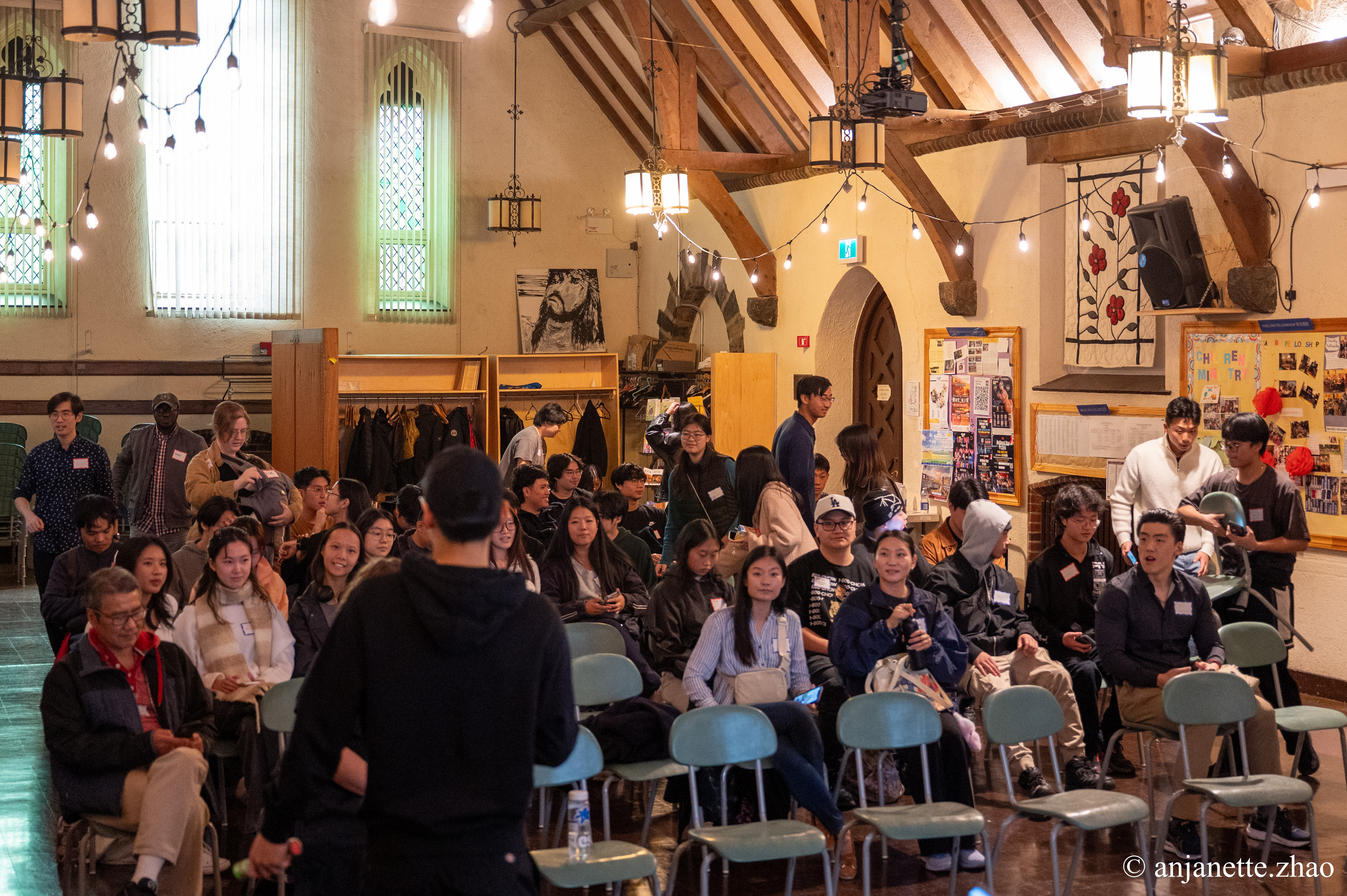
Not every ice breaker scales well. The best ones for 100+ people share four qualities:
- Simple instructions.
- Self guided play. Participants should know what to do without a facilitator holding their hand.
- A clear finish line. People engage best when there is a reward or recognition at the end.
Activities that check these boxes help large groups of people, who may not all know each other, mingle and connect.
5 Networking Ideas for Large Groups
#1: Find Your Squad
5-10 minute activity; creates smaller groups
Here is how it works:
- Divide the room into 4 corners.
- You announce four categories. For example, category one might be "favorite season" (Summer, Winter, Spring, or Fall), "morning person or night owl," or "prefers coffee or tea."
- Everyone moves to a corner of the room that matches their answer.
- Once in their corner, each small group shares one fun fact about themselves with their new squad.
- Then you bring everyone back together and ask one person from each group to share something they learned.
It breaks a large group into smaller teams (in each corner). These smaller groups create a more comfortable environment for conversation.
#2: The Networking Line
15 - 20 minute activity; structured way to meet many people
This activity works like speed dating, but for networking. Arrange chairs in two long rows facing each other (chairs aren’t required; people can also stand facing each other). With 30 people, you’ll have 15 pairs. Give everyone a prompt such as, “Share one project you’re excited about right now.”
Here is the flow:
- Pairs talk for two minutes.
- Then one row stands up and moves one seat to the left.
- Everyone meets a new person.
- Repeat five or six times.
In 12 minutes, each person has met five or six new people. That is more connections than most networking events create in two hours. This works beautifully for professional mixers, conferences, and team building days.
#3: JamBingo - Incentivize people to talk
Get people out of their bubble (30+ Minute Activity)
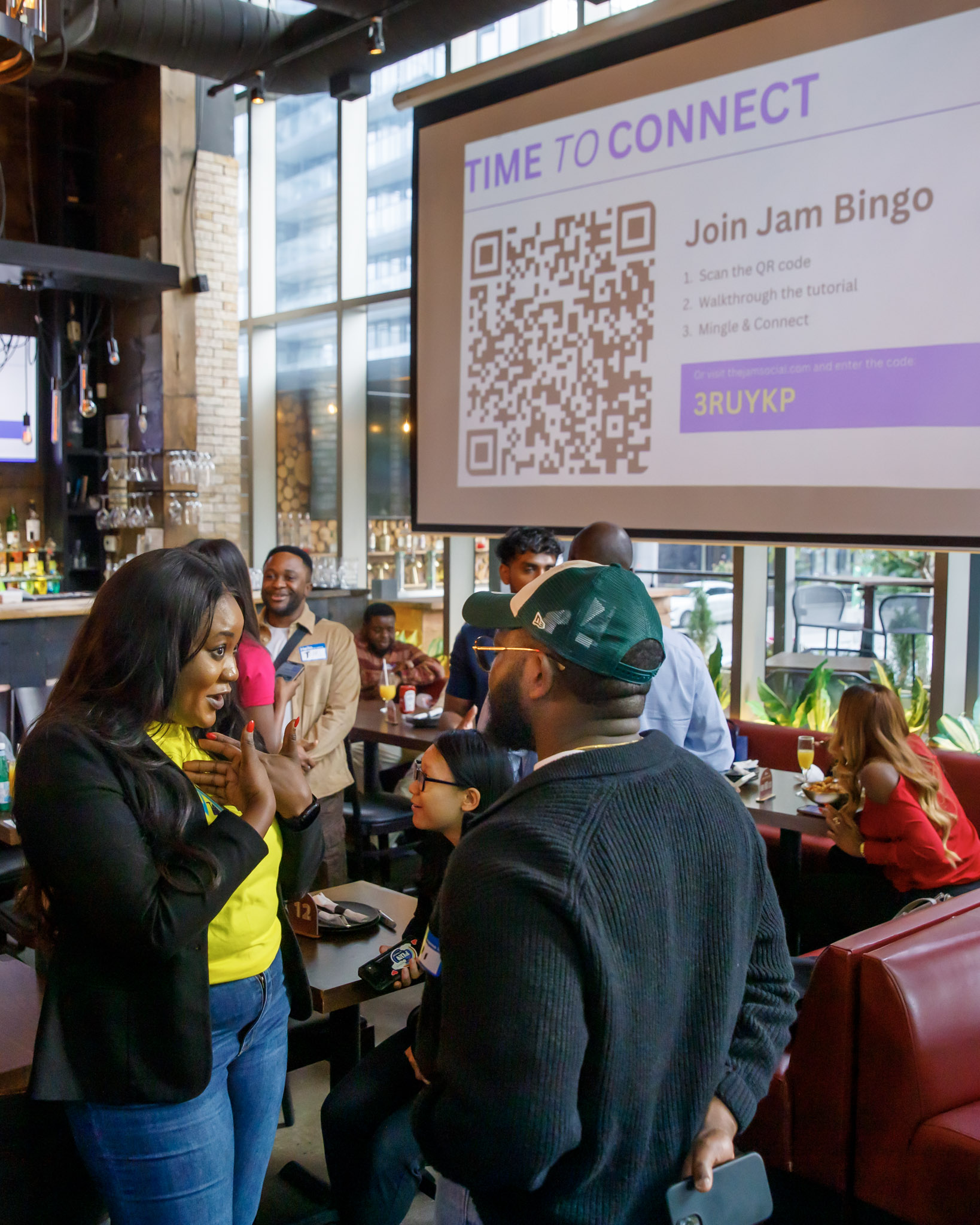
Jam Bingo incentivizes people who do not all know each other to interact, break the ice, and start talking!
If you're bringing together people from different departments, teams, or groups, networking sessions can feel awkward or weird.
The beauty of this game is that you don’t have to set up or facilitate, so you can focus on other aspects of your event. You can also award prizes to the top 5 or 10 winners. See how Jam Bingo works!
#4: The Human Timeline
A visual activity that gets everyone involved at once.
Ask everyone to line up in order of a specific criteria. Some examples:
- Birthday (January 1 on the left, December 31 on the right).
- Distance from where they grew up to the event location.
- Number of years they have been in their current career.
- First letter of their favorite song.
Once the line forms, you ask people to find the person closest to them in line and share a two minute conversation. Then you ask people to find someone on the opposite end of the line and share something different.
This works for large groups because everyone moves at once. There is no waiting for turns. No one gets left out. Plus the visual of the line gives the whole room a shared moment.
#5: Two Truths and a Lie Relay
5-10 minute activity; create smaller groups
Traditional Two Truths and a Lie takes forever with 20 people. No one wants to sit through 20 individual turns. The relay version fixes that.
- Split the large group into teams of four or five people.
- Inside each team, everyone shares their two truths and a lie.
- The team guesses which statement is the lie for each person.
- Then each team sends one representative to the front.
- Those representatives share one truth about themselves. The whole room guesses who it belongs to.
This keeps energy high because people work in small teams first. The final round brings the whole room together for a fun guessing game. Total time is about 10 to 12 minutes.
How to Choose the Right Ice Breaker
Match the activity to your crowd and your space.
Not every ice breaker fits every large group. Ask yourself three questions before you choose:
- Question 1: Do people already know each other a little? If yes, try the Human Timeline or Two Truths and a Lie Relay. If no, start with Find Your Squad or Jam Bingo.
- Question 2: How much space do you have? Small rooms work best with the Networking Bingo Line or seated digital games. Large halls work well with the Human Timeline or Find Your Squad.
- Question 3: What is your goal? For professional networking, use the Networking Bingo Line or Jam Bingo. For team building, use Find Your Squad or the Human Timeline.
Matching the activity to your situation makes the difference between an ice breaker that flops and one that people talk about for weeks.
Common Mistakes with Large Group Ice Breakers
Avoid these traps and your event will thank you.
Mistake 1:
Complicated rules. If you need more than 30 seconds to explain it, the game is too complex. Large groups have short attention spans.
Mistake 2:
Forcing everyone to speak to the whole room. Many people freeze when asked to talk in front of 30 strangers. Small group sharing is safer and more effective.
Mistake 3:
No physical movement. Seated ice breakers lose energy fast. Standing, walking, and rearranging keeps people engaged.
Mistake 4:
Forgetting the prize or recognition. Large groups need a finish line. Even a small reward creates motivation.
Avoid these five mistakes and your ice breaker has a higher chance of success. It really is that simple.
Setting Up for Success
Small logistics that make a big difference.
Here is a quick checklist before you run any large group ice breaker:
- Test your technology. If you are using a QR code, make sure it works from six feet away.
- Plan for acoustics. Large rooms get noisy fast. Use a microphone to get everyone's attention.
- Clear the center of the room. Move chairs and tables to the edges so people have space to move.
- Have a backup activity. Sometimes a game falls flat. It is okay to switch to something simpler.
- Recruit a helper. One facilitator struggles with 20+ people. Two or three helpers make everything smoother.
These logistics take 10 minutes to arrange but save you from chaos during the event. Do not skip them.
Measuring Success
How do you know if your ice breaker actually worked?
Success is not about everyone loving the game. Success looks like this:
- People keep talking after the activity ends.
- You hear laughter from different parts of the room.
- Attendees exchange contact information or social media handles.
- Someone says 'That was actually fun' without being asked.
- The energy feels higher at the end than it did at the beginning.
If you see these signs, your ice breaker worked. The specific game matters less than the connections it created.
Did this blog help?
Were you instead looking for:
In summary:
You do not need to run five different ice breakers. Pick one. Practice the instructions. Set up your space. Then trust the process. Large groups want to connect. They just need a little structure.
Start with something simple. A digital game like JamBingo works well because it runs itself. A physical activity like Find Your Squad works well because it gets people moving. The specific tool matters less than your willingness to try.
Your next large event does not have to feel cold or awkward. The right ice breaker changes everything. Pick one activity from this list. Run it at your next gathering. Watch what happens when strangers have a reason to talk.