The Real Networking Problem at Events
Putting people in a room is not enough.
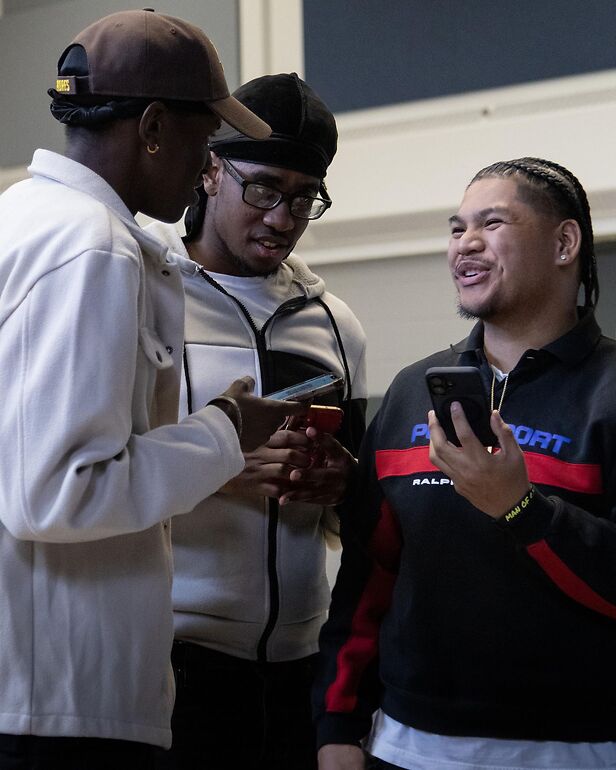
You can nail the venue, the catering, and the run-of-show — and still watch your attendees spend the whole event talking to the three people they already knew. It happens at almost every event. People cluster with the familiar, check their phones during transitions, and leave without having met anyone new.
The fix is not a bigger venue or a better open bar. It is structure. Networking does not happen because you hoped it would — it happens because you designed it to. Here are ten ways to do that.
Why Networking Is Worth Designing For
People remember who they met, not what they heard.
Ask anyone what they got out of a great event and nine times out of ten they mention a person, not a session. The connections made at your event are what determine whether someone comes back next year, tells a colleague to register, or posts about it afterward. Content fills seats. Connection fills them again.
10 Strategies That Actually Work
1. Start networking before the event.
Most planners wait until the day of to think about networking. That is too late. When attendees already know who else will be in the room, in-person introductions are dramatically easier — the hard part of breaking the ice has already happened online.
- Set up a private LinkedIn group, Slack channel, or event app two weeks out.
- Share short attendee profiles with one thing each person is hoping to get from the event.
- Post a daily discussion prompt the week before — even low engagement pre-event builds enough familiarity to make day-of introductions feel less cold.
- Ask attendees to post one question they want answered at the event — it gives others a reason to seek them out when they arrive.
2. Make check-in the first networking moment.
Check-in is the highest-traffic moment of any event and almost universally wasted. Every single attendee passes through it — it is the one guaranteed touchpoint you have with everyone before they scatter.
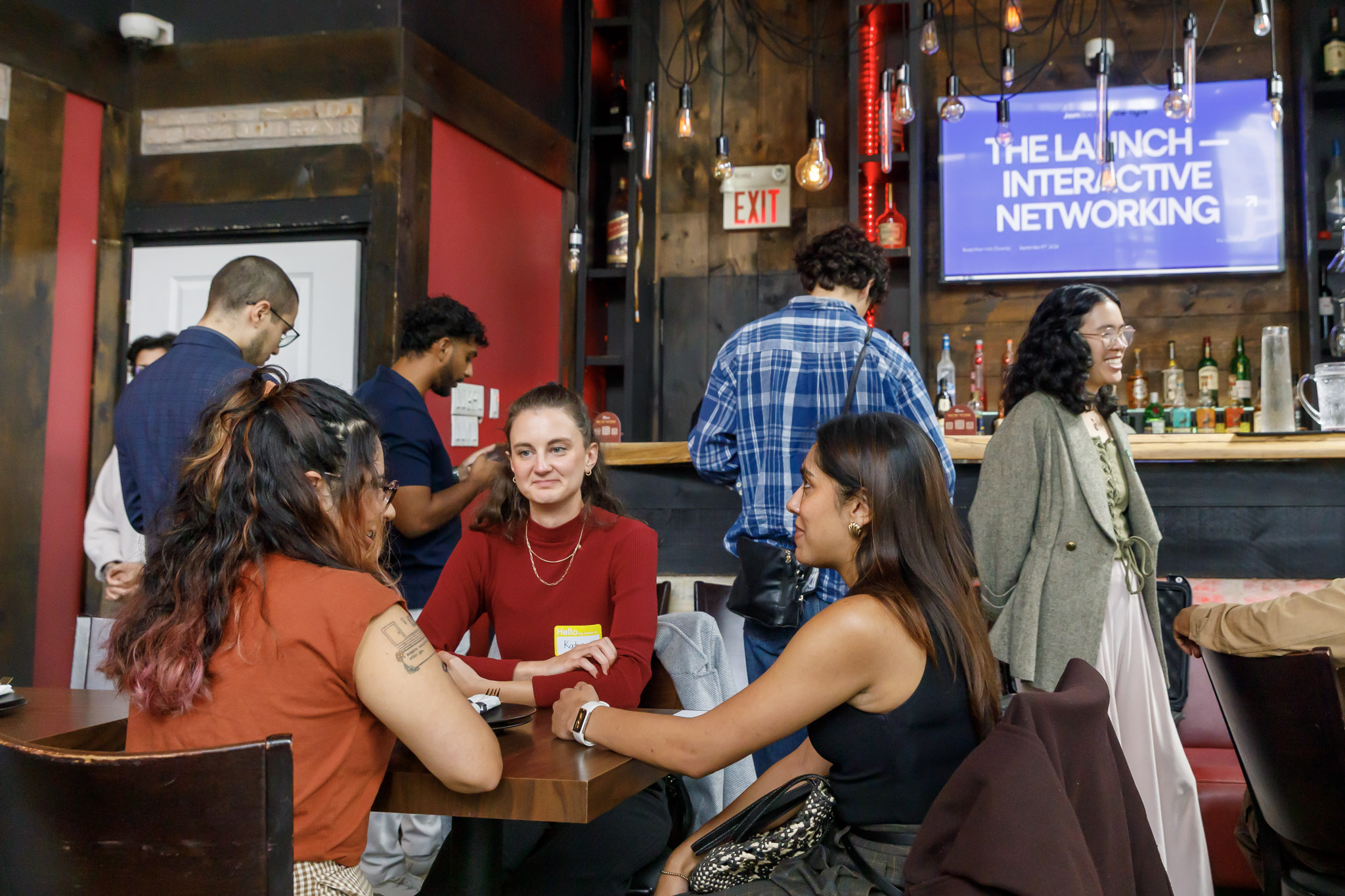
- Add a conversation prompt to name tags — something like 'Ask me about...' or 'I am here because...'
- Place an icebreaker card or QR code at the table so guests have something to engage with while they wait.
- Station one volunteer at check-in whose only job is to introduce new arrivals to someone already in the room.
- Use colored stickers or lanyards to signal role, industry, or goal — it gives strangers a natural opener without anyone having to think of one.
3. Run structured speed networking.
Unstructured mingling defaults to people talking to whoever is nearest. Speed networking solves this by making the structure explicit — everyone knows they have a few minutes, then they move on. The time pressure actually helps shy attendees because it removes the awkwardness of figuring out how to end a conversation.
- Set up two rows of chairs facing each other, or use tables with a rotating system.
- Start each round with a guided prompt — 'What is the biggest challenge you are working on right now?' beats open-ended introductions every time.
- Run 3 to 5 minute rounds with a clear signal to rotate.
- For larger events, theme the rounds — one for people in similar roles, one for people across completely different industries.
- End with a short open mingle so pairs who want to keep talking can.
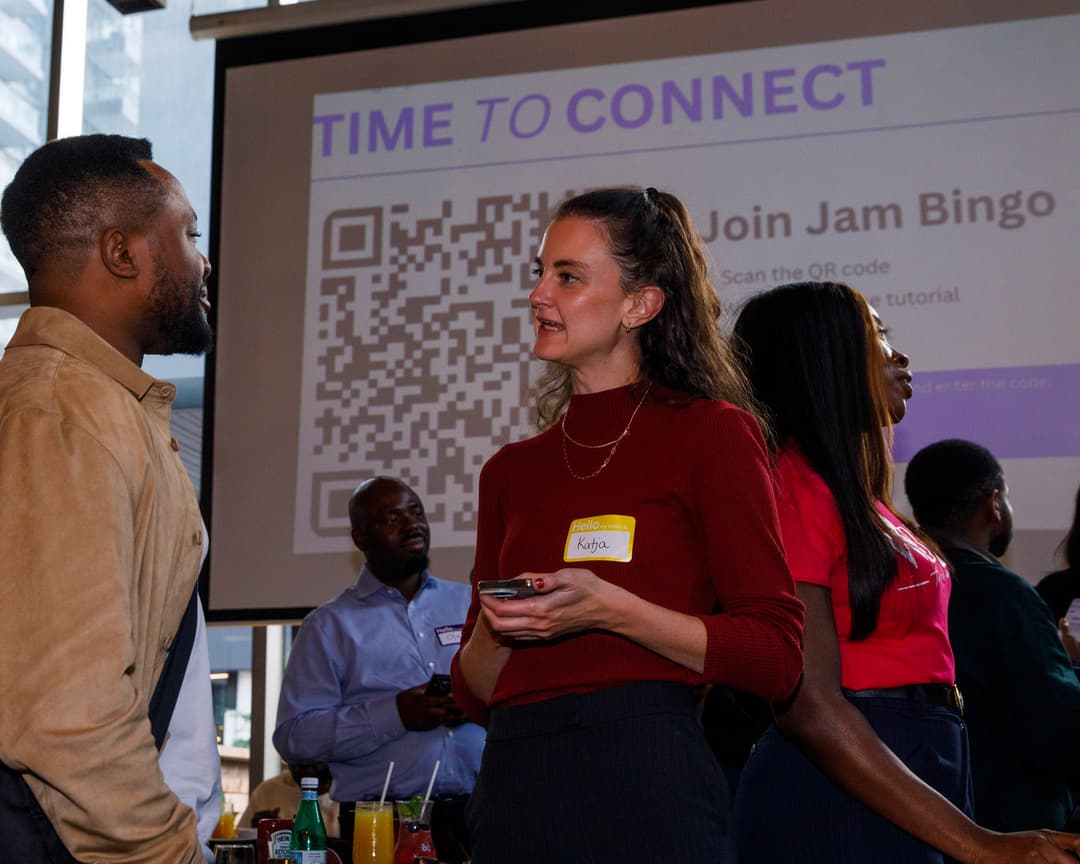
4. Gamify it with human bingo.
Games lower the social stakes of approaching a stranger. The ask shifts from 'go introduce yourself' — which is vague and uncomfortable — to 'help me find someone who has lived abroad' — which is specific and easy. That small reframe changes everything for introverted guests.
- Write prompts that require a real conversation, not just a yes or no answer — each one should generate at least 30 seconds of dialogue.
- Tailor at least half the prompts to your specific event theme or audience so the card feels relevant rather than generic.
- Offer a small prize for the first completed row to create urgency without turning it into a competition that distracts from the actual mingling.
- Run it during the opening mixer or a natural break — never during programming.
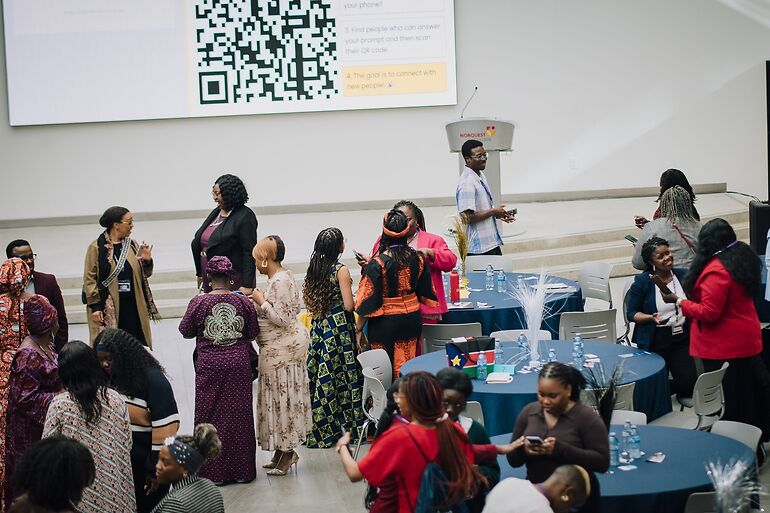
- For groups over 30, a digital human bingo card shared via QR code saves the printing and distribution overhead.
If you want to go digital, Jam Bingo is a great interactive networking tool to get started with.
5. Create themed networking zones.
Open floor plans scatter people randomly. Themed zones give attendees a reason to drift toward a space where they are more likely to find someone with shared interests — which means conversations in those spaces have a natural foundation before anyone says a word.
- Pick three to five themes that reflect your audience — for a tech conference this might be 'Founder Stories,' 'Career Pivots,' and 'Tools and Automation.'
- Mark each zone with clear signage and post one or two conversation starter questions visibly in the space.
- For social events, interest-based themes work well — 'Foodies,' 'Travellers,' 'Side Hustlers.'
- Keep zones open throughout rather than scheduling them — people drift naturally and cross-zone introductions often produce the best conversations.
6. Design virtual networking deliberately.
Virtual and hybrid events lose the hallway conversations that in-person events depend on. Those moments do not happen by accident online — you have to build them in explicitly.
- Use breakout rooms for structured small-group conversations — 4 to 6 people with a guided prompt works far better than open rooms.
- Build transition time between sessions specifically for networking rather than moving immediately from one talk to the next.
- For hybrid events, pair in-person and virtual attendees in breakout sessions so remote guests are not isolated in a parallel experience.
- Use collaborative tools like Miro or Jamboard for shared activities — something to do together is always more engaging than just looking at each other on a call.
7. Let attendees shape the agenda.
People engage more with activities they helped create. Giving attendees even a small amount of input increases buy-in and makes sure the conversation topics actually reflect what they care about — not what you assumed they cared about.
- Send a pre-event survey asking each person to submit one question they want answered by peers at the event.
- Use tools like Slido or Mentimeter during the event to collect real-time topic suggestions.
- Compile the most common themes into conversation prompt cards placed on tables.
- At the close of the event, ask attendees to write one thing they learned from a person they met — compile and share it as a post-event takeaway.
8. Offer networking incentives.
Incentives work when they reward the behavior you actually want — a conversation started, a connection made — rather than just showing up. A prize for attendance does nothing. A prize for completing a networking challenge moves people.
- Reward specific actions: completing a bingo card, exchanging contacts with five new people, or introducing two attendees who did not know each other.
- Keep prizes modest and social — a free ticket to the next event, a gift card for two, or a VIP seat at the closing session.
- Public acknowledgement often works as well as a prize — calling out the first person to complete a challenge creates a moment everyone remembers.
- Frame incentives as fun recognition rather than compensation — the moment it feels transactional, it loses the energy.
9. Extend networking after the event.
Most event connections fade within 48 hours without a prompt to follow up. The best networking experiences build a bridge from the event to an ongoing relationship — and that bridge has to be built while the memory is still fresh.
- Send a follow-up email within 24 hours with one specific prompt — 'Connect with one person you met yesterday before Friday.'
- Share a curated opt-in list of attendees with a one-line bio so people can find the person they spoke with.
- Create a post-event LinkedIn group or community and seed it with a discussion prompt tied to a theme from the event.
- For recurring events, host a smaller informal follow-up gathering two to four weeks later — attendance is lower but connection quality is higher.
- Reference connections made at the event in your next event's marketing — 'attendees told us the networking was the highlight' is more persuasive than almost any other copy.
10. Measure whether it worked.
Most event planners measure satisfaction but not connection. If you are not tracking networking outcomes specifically, you have no basis for improving them — and you are probably optimizing for the wrong things.
- Add two questions to your post-event survey: 'How many new people did you meet?' and 'Did you make at least one connection you plan to follow up with?'
- Track repeat attendance year over year — attendees who made real connections return at a significantly higher rate.
- Monitor social mentions in the 48 hours after the event — posts that tag other attendees signal that genuine connections were made.
- For digital networking activities, review participation data — completion rates and number of interactions are measurable proxies for engagement.
- Compare results across event formats to see which strategies produced the most reported connections, then cut what did not move the number.
How to Choose the Right Strategies for Your Event
Pick two or three. Do them well.
You do not need all ten. A single well-executed speed networking session will outperform five poorly planned activities every time. The goal is to match the strategy to your event type, your audience, and your available bandwidth on the day.
- For conferences and professional events:
- Pre-event networking hub to build familiarity before the day.
- Speed networking during a dedicated 20-minute session.
- Themed zones for organic connection throughout.
- Post-event follow-up to preserve the relationships made.
- For social and community events:
- Human bingo during the opening to get energy up fast.
- Attendee-driven prompts to make the activity feel personal.
- Incentives to sustain momentum through the middle of the evening.
- For virtual or hybrid events:
- Breakout rooms with guided prompts as the primary structure.
- Pre-event hub to compensate for the lack of hallway conversation.
- Post-event follow-up because virtual connections fade faster without reinforcement.
A few things that consistently trip planners up:
- Scheduling networking at the end of the program when energy is lowest — put it at the start or during a natural break.
- Writing icebreaker prompts that can be answered without a real conversation — every prompt should require at least 30 seconds of dialogue.
- Forgetting to brief staff on their role in the networking activity — a volunteer whose only job is to introduce shy attendees to others is one of the most underrated moves you can make.
- Measuring attendance instead of connection — showing up is not networking.