
Why do large workshops go sideways?
It usually has nothing to do with the content.
The slides are good. The speaker knows their stuff. The room is set up perfectly. And then 60 people sit down, and for the next two hours, half of them check their phones while the other half try to look engaged.
The problem is almost always structure — or the lack of it. Running engagement activities for 50+ participants is a completely different animal than running a workshop for 10. What works in a small room fails at scale, and most facilitators learn that the hard way.
Here is what actually works.

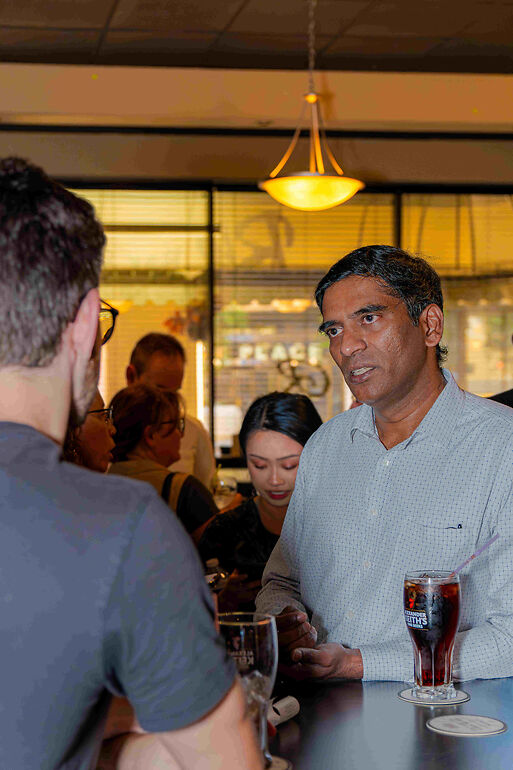
What changes when your group hits 50 people?
Scale breaks the tools that work in small groups
In a group of 10, you can do a round of introductions. In a group of 60, that same activity takes 45 minutes and everyone loses the thread after person four.
In a small room, you can call on people and get conversation going naturally. In a large room, calling on people feels like being put on the spot in front of an audience.
The shift you need to make is from facilitating the group to facilitating subgroups. Your job at 50+ people is not to talk to everyone. It is to design a structure that lets everyone talk to each other.
What should you do before the workshop even starts?
The pre-session window is your biggest opportunity
Most facilitators treat the 15 minutes before a workshop as dead time. That is a mistake.
When 50 people arrive and stand around waiting, two things happen. Cliques form. And the energy in the room flatlines before the program even begins.
If you can get people talking to strangers before the session starts, you have already won half the battle. The room is warmer, the energy is higher, and people are genuinely present when you kick things off.
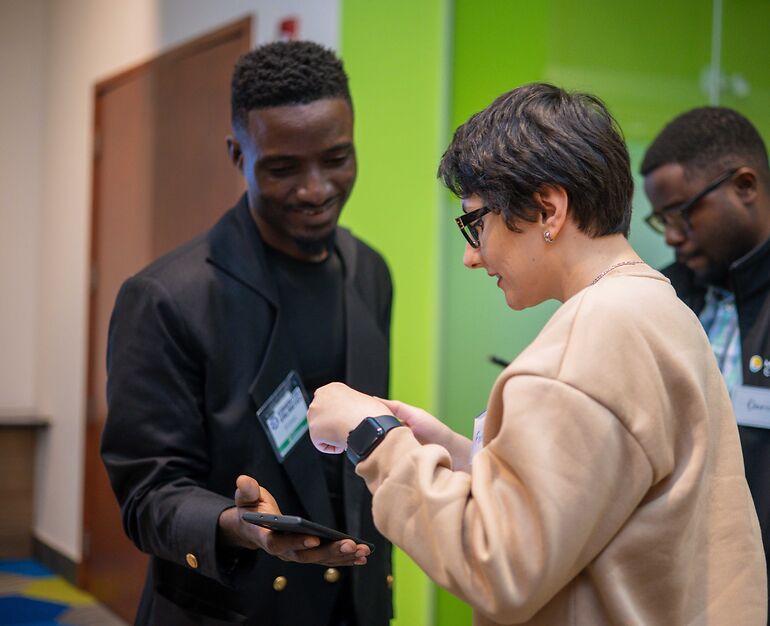
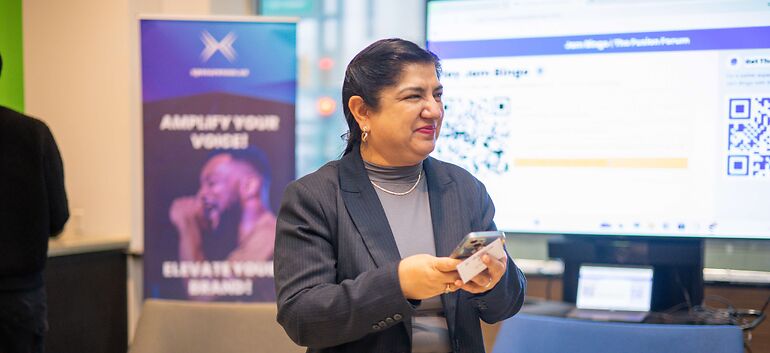
One way to do that: run a structured interactive activity during the pre-session window instead of letting people mill around. Jam Bingo is built for exactly this. Guests scan a QR code when they arrive, get a conversation prompt on their phone, and go find someone in the room who fits it. No awkward standing around. No clumping with the people they already know.
What are the best interactive activities for large workshops?
Small groups inside the large group — that is the key
The most effective interactive activities for large workshops work by breaking the room into smaller units. Not permanently — just for the activity.
Here are a few formats that hold up at 50+ people:
- Think-pair-share: Give participants 90 seconds to think about a question on their own, then two minutes to discuss with the person next to them, then open it up to the room. The sharing step works because people have already processed their thoughts — they are not being put on the spot.
- Rotating table discussions: Assign a question or prompt to each table. After 10 minutes, one person stays and the rest rotate. The person who stayed briefs the newcomers on what their table covered. Keeps energy moving and mixes up who talks to whom.
- Structured peer reflection: Give everyone a prompt card and pair them with someone they have not met. Five minutes, then switch. This works especially well as a closing activity — participants leave having had one genuinely personal conversation.
- Live polling with follow-up: Use a tool like Slido to ask the room a question, show the results on screen, then ask a follow-up question out loud. The poll gives people something to react to together — it turns a passive audience into a group with shared context.
What makes engagement activities work for 50+ participants?
Low barrier to entry, clear instruction, and a reason to move
The worst icebreakers for large groups are the ones that require bravery to participate. Standing up in front of 60 people to share a fun fact is not fun for most people. It is terrifying.
Good engagement activities for 50+ participants have three things in common. They have a low barrier to join. They give people a reason to move around the room. And they create a natural conversation starter without anyone having to come up with one on their own.
Human Bingo — or its digital version, Jam Bingo — checks all three boxes. Participants get a set of prompts like 'find someone who has lived in more than one country' or 'find someone who started their career in a completely different field.' They move around the room completing the prompts, and every prompt is an opening line built in.
The digital version works especially well for groups over 50 because there is nothing to print, nothing to distribute, and nothing to collect. Guests scan a QR code and they are in.
How do you keep energy up through a long workshop?
Alternate between input and output — never run either for too long
Energy drops in large workshops when people are passive for too long. The human brain stops absorbing information after about 20 minutes of one-way input.
The fix is simple: alternate. Every 20 minutes of content should be followed by a few minutes of something active — a quick pair discussion, a poll, a reflection prompt. Not a full activity. Just enough to shift the room from receiving mode to processing mode.
Plan your energy rhythm before the day. Map out every moment where the room will be passive for more than 15 minutes and build an activation point in.
Physical breaks matter too. A five-minute stand-and-stretch break does more for workshop engagement than any slideshow transition. It sounds obvious. Most facilitators skip it anyway.
What about the logistics side?
Chaotic transitions kill momentum — plan for them
Here is what nobody talks about when it comes to interactive activities for large workshops: the transitions.
Moving 60 people from a plenary session into small groups and back again sounds easy. It takes six minutes and half the room ends up confused about where to go. Multiply that by four activity transitions and you have lost 25 minutes of workshop time to logistics.
A few things that help:
- Pre-assign groups before the day and display them on a slide or printed sheet at the entrance. People do not need to figure out where to go — they arrive already knowing.
- Use a visible timer on screen during activities. When people know how much time they have, they use it. When they do not, they wrap up early or run over.
- Give clear verbal and visual cues for transitions. 'In 60 seconds we are going to...' is more effective than a sudden instruction. Large groups need lead time to shift gears.
- Assign one room helper per 20 participants if you can. Their only job is to help people who look lost during transitions.
What is the best tool stack for large interactive workshops?
You need one tool for networking, one for real-time engagement, and one to keep things organized
You do not need a dozen tools. You need the right three.
For the networking layer — the part where participants meet each other — Jam Bingo handles it without printing anything or adding friction. One QR code, guests join on their phone, prompts are tailored to your audience.
For real-time engagement during the session itself — polls, Q&A, word clouds — Slido works well for large rooms. It keeps the audience connected to what is happening on stage and gives you live feedback on what is landing.
For planning and logistics — keeping your run of show, activity instructions, and group assignments organized — Notion is the clearest option. Build one event doc and share it with your co-facilitators. No version confusion, no email chains.
What is one thing most facilitators get wrong?
They plan the content but not the participation
Most workshop facilitators spend 80% of their prep time on the content and almost no time on how the room will actually participate in that content.
Content is important. But in a room of 50 or more people, the experience is the thing people remember. They forget the slides. They remember whether they felt engaged, whether they talked to interesting people, whether they left with something useful.
The facilitators who run workshops people rave about are not always the ones with the best material. They are the ones who thought hard about every moment in the room — the arrival, the transitions, the energy dips, the close.
That is the work. And it is worth doing.