Networking Games for a Non-Profit Social Club Mixer
Get members and guests talking
You've booked the room, ordered the snacks, and sent the invites. Now you're wondering what happens after people walk in.
Because at most club mixers, it goes like this: longtime members find each other, new members hover by the drinks, and guests leave early.
A good networking game fixes that. It gives everyone a reason to walk up to someone new.
Here are 7 networking games that work well for non-profit and social club mixers, plus how to pick the right one.
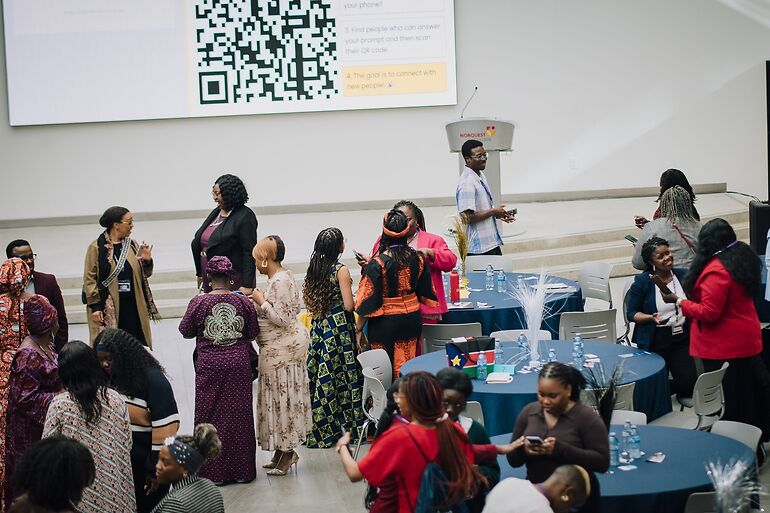

What Makes a Good Mixer Game
Easy to explain, easy to join
Your members didn't come for a workshop. They came to catch up, meet people, and feel part of something.
So the best networking games for events like yours have a few things in common:
- You can explain them in one sentence.
- People can join late and still play.
- They push people toward someone new, not their usual circle.
- They connect back to your cause or your club.
- Nobody has to perform in front of the whole room.
1. Digital Networking Bingo
One prompt at a time, scan to connect
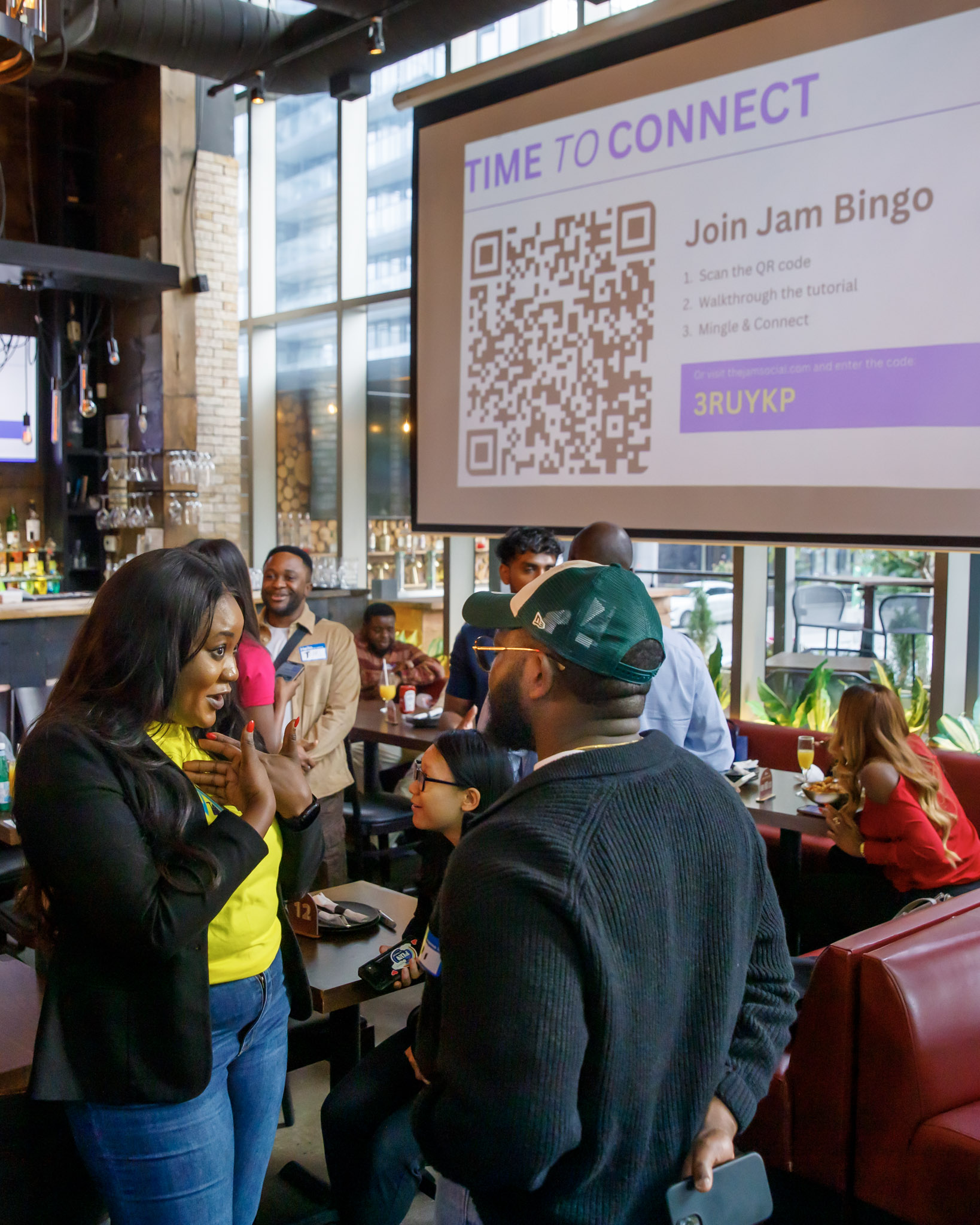
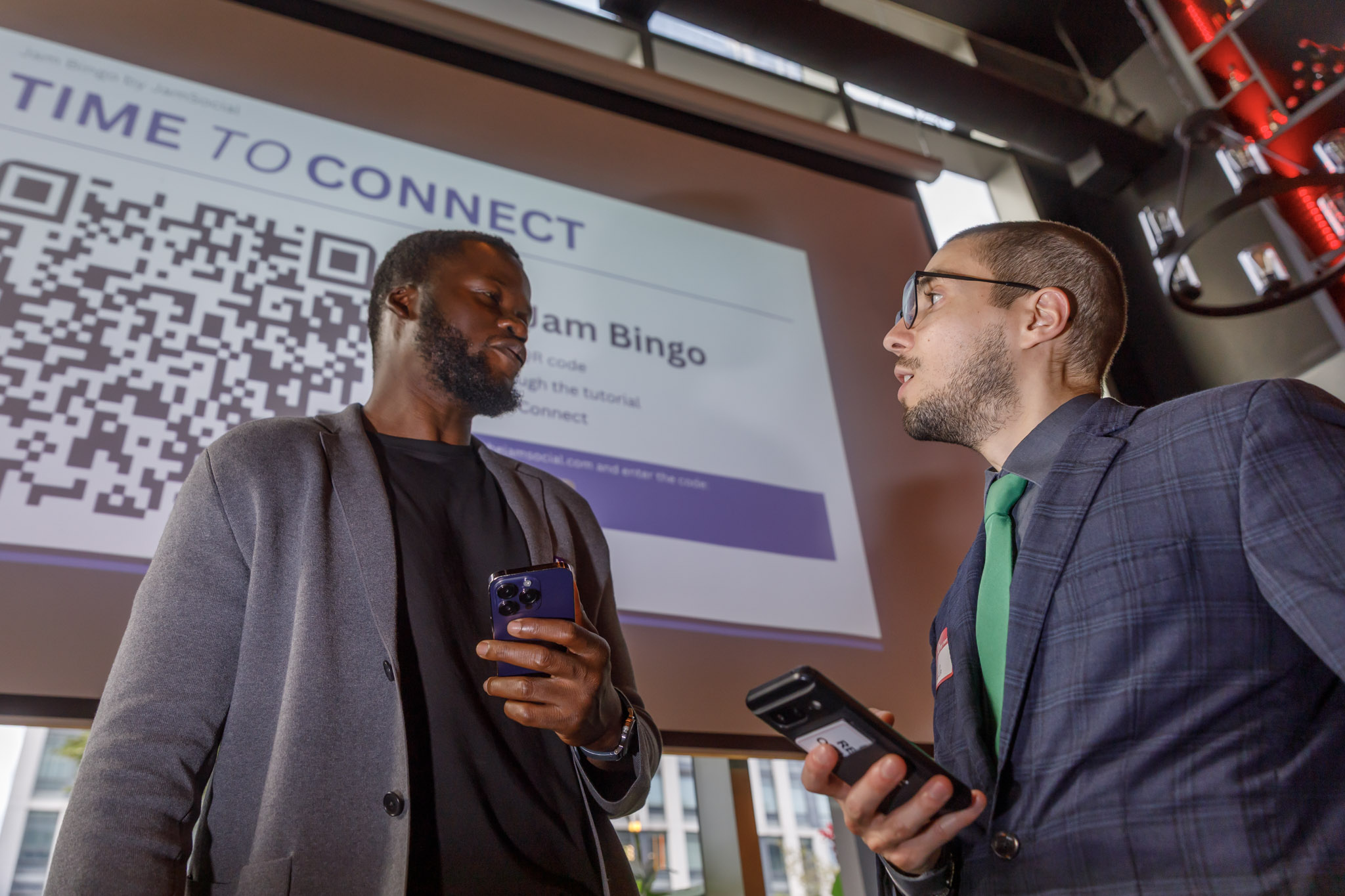
Jam Bingo is a digital version of networking bingo that runs on guests' phones.
Instead of a card full of squares, each person gets one prompt at a time, like "Find someone who has volunteered with us for 5+ years."
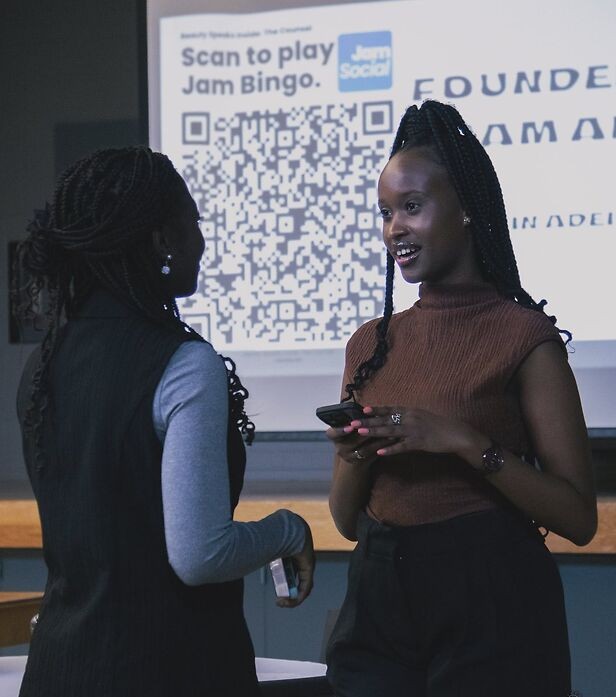
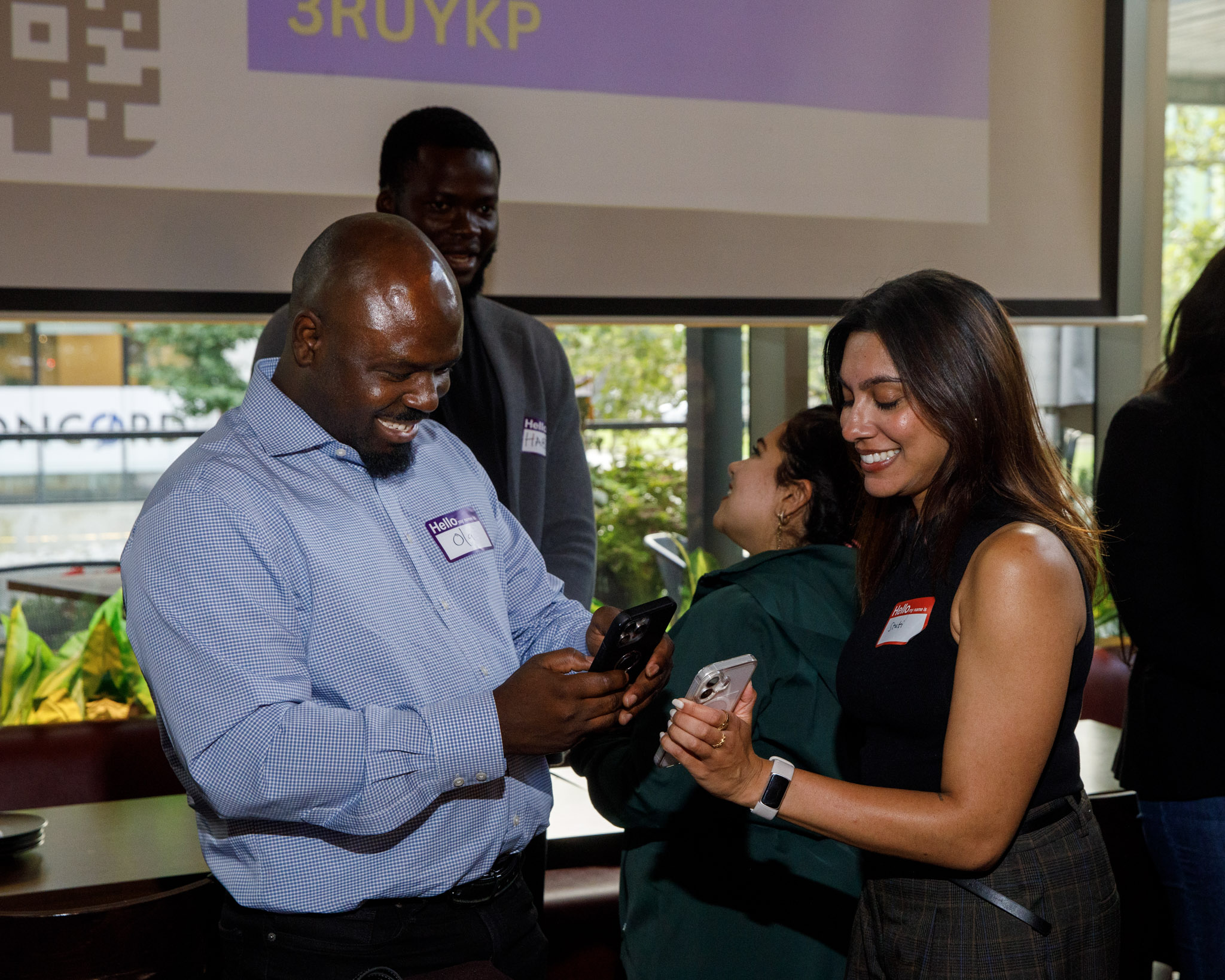
They find a match, talk, and scan that person's QR code. Then the next prompt unlocks.
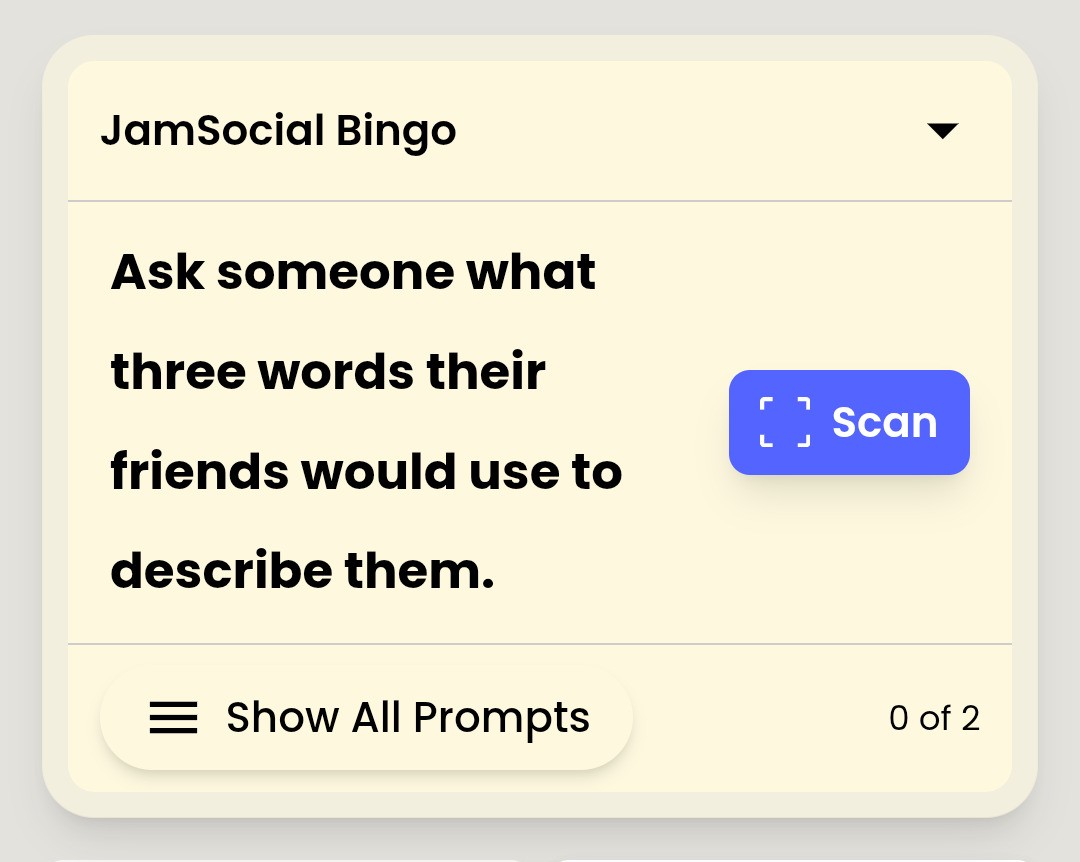
It's a great fit for non-profit mixers because you can write prompts around your mission, your programs, and your members.
And every connection is saved with contact info, so members can follow up after the mixer.
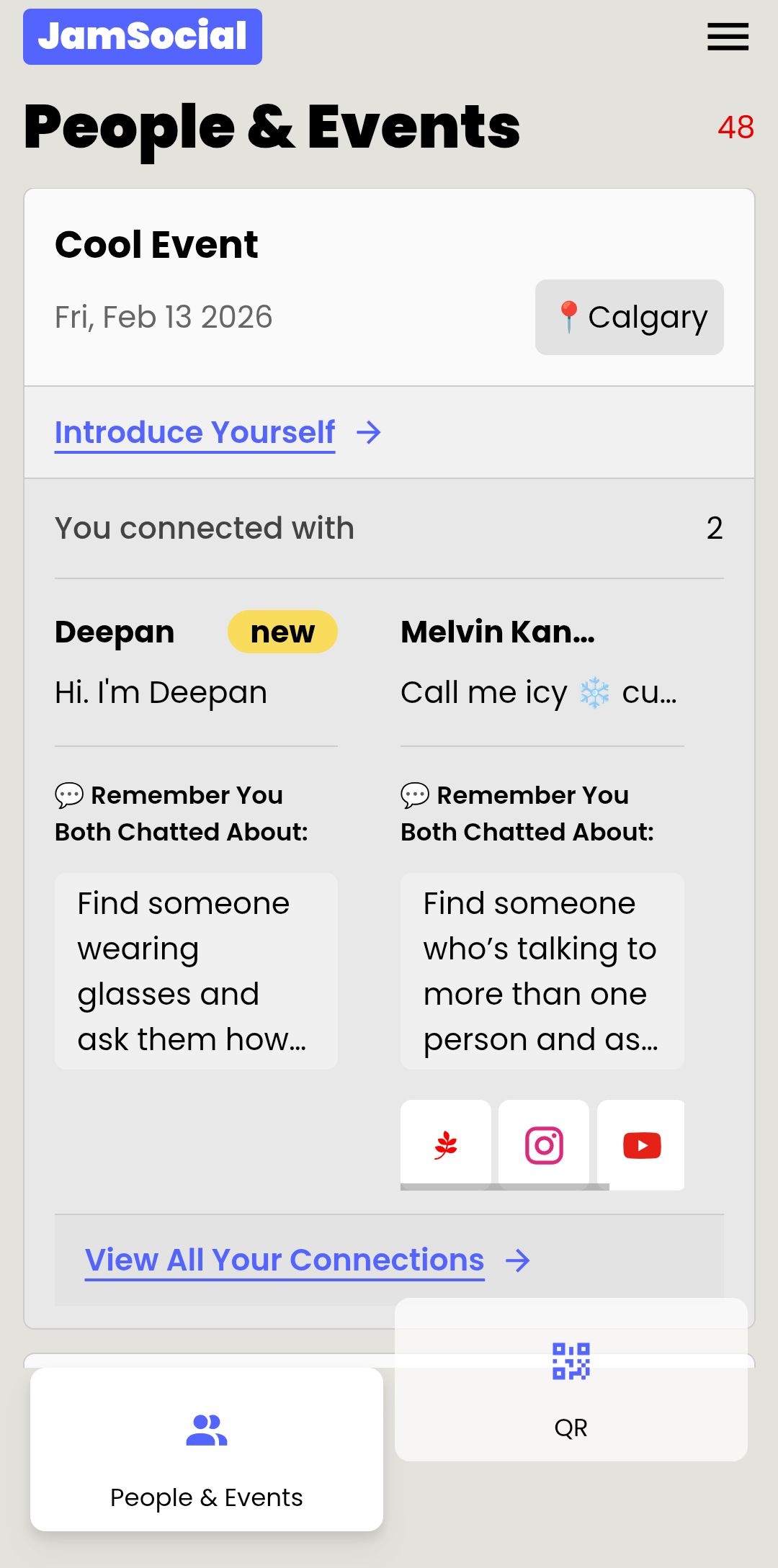
Best for: 30 to 300 people.
2. "Why I Joined" Circles
Connect people through your cause
Put people in groups of 4 or 5, mixing new and longtime members.
Each person gets one minute to share why they joined, or why they care about the cause.
It's simple, and it gets people past small talk fast. Shared values make for much better conversations than the weather.
Best for: 10 to 40 people, or as a short opener before a bigger game.

3. Skills Swap Name Tags
One skill to give, one to get
At check-in, everyone writes two things on their name tag: one skill they can offer and one thing they need help with.
For example: "Can offer: grant writing. Need: a web designer."
Then the goal is simple. Find someone who can help you, and someone you can help.
This one works especially well for non-profits, where volunteers often have skills nobody knows about.
Best for: any size.
4. Speed Networking Rounds
Short, timed, one-on-one chats
Set up two lines facing each other. Give pairs 3 minutes to chat, then one line shifts down.
Add a question for each round to keep things moving, like "What's one event we've run that you loved?"
It's structured, so it helps quieter members. Just keep it to 4 or 5 rounds so it doesn't drag.
Best for: 20 to 60 people with a host keeping time.
5. Common Ground Challenge
Find 3 things in common
Put people in pairs or trios who don't know each other.
Their job is to find three things they have in common that aren't obvious. "We're both here" doesn't count.
Groups usually land on surprising stuff, and it's a good laugh when they share it back.
Best for: 10 to 50 people.

6. Mission Trivia Teams
Mixed teams, fun facts about your club
Build teams with a mix of new members, longtime members, and guests.
Ask 8 to 10 questions about your club's history, your impact, and your community. "How many meals did we serve last year?" is a great one.
New members learn about the club, and longtime members get to be the experts.
Best for: 20 to 80 people.
7. Committee Color Dots
Match people by interest
Give each committee or interest area a color: events, fundraising, outreach, and so on.
Guests add a sticker to their name tag for what they're into. Then challenge everyone to talk to someone with each color.
It's a quiet way to recruit volunteers, since people end up talking to the committees they're curious about.
Best for: clubs with active committees.
Which Networking Game to Pick
Match the game to your room
- Under 30 people: "Why I Joined" circles or Common Ground.
- 30 people or more: Jam Bingo, since it runs itself.
- Want more volunteers: Skills Swap or Committee Color Dots.
- Lots of first-timers: Mission Trivia Teams.
- Quiet crowd: Speed Networking, because the structure does the work.
You can also combine them. Start Jam Bingo as people arrive, then do a short trivia round before announcements.
Networking Bingo Prompts for Non-Profits
Ready to copy and tweak
If you go with Jam Bingo, here are some prompts that work well at a club mixer:
- Find someone who joined this year.
- Find someone who has volunteered here for 5+ years.
- Find someone who brought a guest tonight.
- Find someone who serves on a committee you've never been part of.
- Find someone who can tell you about a program you didn't know we ran.
- Find someone who volunteers for another cause too.
- Find someone whose skills could help our next fundraiser.
- Find someone you've seen at events but never talked to.
Need more? Start from our club member mixer template and edit it for your members.
Mixer Game Tips
Small moves that help a lot
- Start during arrivals. The first 20 minutes are when people feel most awkward.
- Ask your board to play first. Everyone else follows the leaders.
- Pair greeters with new members. A friendly face makes the first conversation easier.
- Keep prizes on-mission. A free ticket to your next event beats a gift card.
- Follow up after. Remind people who they met, and invite them back.
Try a Networking Game at Your Next Mixer
Less standing around, more connecting
Your mixer is one of the best chances you have to turn guests into members and members into volunteers.
A simple game makes sure nobody spends the night alone by the snack table.
Want to see what your guests will see? Try the demo in under a minute.
Frequently Asked Questions
What are good networking games for a non-profit mixer?
The best ones are simple to explain and give people a reason to walk up to someone new. Digital networking bingo, a "Why I Joined" circle, a skills swap, and short speed networking rounds all work well at non-profit and social club mixers.
How do you get new members and longtime members to mix?
Use games with prompts that point people toward each other, like "Find someone who joined this year" or "Find someone who has volunteered here for 5+ years." Games that pair or group people randomly also help break up the usual circles.
How long should a networking game run at a mixer?
Around 30 to 45 minutes for your main game. Start it while guests are arriving and wrap up before any speeches, awards, or announcements.
Do networking games work for small non-profit clubs?
Yes. With 15 to 30 people, a skills swap or "Why I Joined" circle works great. For 40 or more, a game like Jam Bingo keeps everyone moving without needing a facilitator at every table.
Do we need to buy anything to run these games?
Most of them only need name tags and a few markers. Jam Bingo runs in the phone browser, so there's nothing to print and no app for guests to download.
What prizes work for a non-profit networking game?
Keep it small and on-mission. A free ticket to your next event, a branded mug, or a shout-out from the stage is plenty. Reward whoever met the most new people, not whoever finished fastest.