
Ice Breaker Activities: 15 Simple & Effective Ideas for Any Group
Ice breaker activities exist for one simple reason: people don't naturally start talking to strangers. At a company event, workshop, classroom, or conference, most people stick with who they already know. A good icebreaker removes that friction and makes it easy to start a real conversation.
This guide covers 15 ice breaker activities — how each one works, what group size and time it needs, and how to make it land — plus how to choose the right one for your group.
Quick Answer: Which Ice Breaker Should You Use?
- Under 30 people and 5 minutes: Two Truths and a Lie, One-Word Check-In, or Common Ground
- Want real conversations: Partner Introductions, Story Swap, or Question Cards
- 50+ people: pick an activity where people pair themselves and everyone talks at once — Mix & Mingle Prompts, Human Bingo, or Jam Bingo
What Makes an Ice Breaker Activity Actually Work?
The best ice breaker activities give people a reason to approach someone new. They lower the social barrier, give people something to say, and let everyone take part without overthinking it.
- Simple enough that anyone can join in seconds — rules fit in one sentence
- Gives people something specific to talk about, so it goes past small talk
- Fits the size of your group and the time you have
- Doesn't put anyone on the spot in front of everyone
- Helps people find common ground quickly
Why Most Ice Breakers Fall Flat
Most icebreakers fail for one of four reasons:
- They put people on the spot: sharing in front of the whole room makes shy people dread it
- They're too long for the group: round-the-room intros with 40 people take half an hour
- They don't get people moving: people talk to whoever is already sitting next to them
- They end in small talk: 'Say your name and a fun fact' rarely leads to a second question
Keep these in mind as you read the list below — the right activity for your group avoids all four.
15 Ice Breaker Activities You Can Use Today
Fast Ice Breakers (5 Minutes or Less)
Quick warm-ups for meetings, workshops, and the start of a session. Best for groups that are already seated together.
1. Two Truths and a Lie
Each person shares three statements about themselves — two true, one false — and the group guesses the lie. It works because the guessing naturally leads to follow-up questions ('Wait, you really lived on a boat?').
- Best for: 4–15 people (split bigger groups into tables)
- Time: 1–2 minutes per person
- Tip: Share yours first to show how light it should be
2. One-Word Check-In
Everyone shares one word for how they're feeling or what they want from the session. It's fast, low-pressure, and gives the facilitator a read on the room.
- Best for: team meetings and workshops of up to 20
- Time: 2–5 minutes
- Tip: Allow a 'pass' — it keeps it low-pressure
3. Common Ground
Pairs or small groups have two minutes to find three things they all have in common — the less obvious, the better ('We all hate cilantro' beats 'We all work here').
- Best for: any size, in pairs or groups of 3–4
- Time: 3–5 minutes
- Tip: Ask a few groups to share their most surprising one
4. Speed Chatting
Pairs get 60–90 seconds on one question, then switch partners. Three or four rounds means everyone has met a few new people in five minutes.
- Best for: 10–60 people
- Time: 5 minutes (3–4 rounds)
- Tip: Put each question on a screen so nobody has to remember it
5. Emoji Mood Check
Everyone picks the emoji that sums up their week and explains it in one sentence. It works especially well in hybrid meetings, where people can post it in the chat.
- Best for: teams and hybrid meetings
- Time: 3–5 minutes
- Tip: Great as a recurring opener for weekly meetings
Conversation Ice Breakers
These go past names and job titles. Use them when you want people to actually get to know each other.
6. Find Someone Who…
Everyone gets a list of prompts like 'Find someone who has lived in another country' and has to find a person who fits each one. It gives people a reason to walk up to someone new — and an easy first question.
- Best for: 15–100 people
- Time: 15–30 minutes
- Tip: Add a follow-up to each prompt ('…and ask what they miss most') so it doesn't turn into a signature hunt
7. Question Cards
Put a few conversation cards on each table ('What's something you're looking forward to this month?'). People take turns drawing a card and answering. It's great for dinners and seated events.
- Best for: tables of 4–10
- Time: as long as you like
- Tip: Mix light and deeper questions so every table finds its level
8. Partner Introductions
Pairs interview each other for three minutes, then introduce their partner to a small group. People listen more closely when they know they'll be introducing someone — and it's easier to talk about someone else than yourself.
- Best for: 6–30 people
- Time: 10–20 minutes
- Tip: Give pairs 2–3 questions to ask so interviews don't stall
9. Story Swap
In pairs or trios, each person tells a two-minute story on a theme: 'your first job,' 'a time something went hilariously wrong,' 'the best advice you ever got.' Stories stick in people's memory far better than facts.
- Best for: any size, in pairs or trios
- Time: 10–15 minutes
- Tip: Pick a theme everyone can answer, not just people with dramatic lives
10. Shared Interests Hunt
Everyone writes three interests on their name tag, then goes looking for people who share at least one. It's a natural way to form small groups around real common ground.
- Best for: 20–80 people
- Time: 10–20 minutes
- Tip: Ask for specific interests ('trail running', 'sourdough') rather than broad ones ('sports', 'food')
Large Group Ice Breakers (50+ People)
With a large group, people can't take turns — everyone needs to be talking at the same time, and people need to form their own pairs and groups. These activities are built for that.
11. Human Bingo
Everyone gets a bingo card of 'find someone who' squares. Guests mingle, find someone who fits a square, and write their name in it. The first to complete a row wins. Print a different card for each guest so everyone isn't chasing the same people.
- Best for: 20–150 people
- Time: 20–30 minutes
- Tip: Limit each person to one square per card so guests have to meet more people
12. Group Scavenger Hunt
Teams of 4–6 get a list of challenges to complete together — a team photo with a stranger, finding someone born in the same month as a teammate, learning a phrase in another language from another team.
- Best for: 30–300 people
- Time: 30–60 minutes
- Tip: Mix people into teams with others they don't know
13. Mix & Mingle Prompts
A facilitator puts a prompt on the screen ('Find someone who has a pet and ask for its most ridiculous habit') and everyone has 60–90 seconds to find a partner and talk. Then a new prompt, a new partner. It's simple and works with any size, but it needs a confident facilitator and a microphone.
- Best for: 30–500 people
- Time: 10–20 minutes
- Tip: Announce 'new partner every round' — otherwise people stick with the first person they meet
14. Team Challenge Stations
Set up a few stations around the room, each with a short challenge (build the tallest tower from spaghetti and tape, solve a riddle, a quick trivia round). Teams rotate every 5–10 minutes.
- Best for: 40–200 people
- Time: 30–60 minutes
- Tip: Needs setup and a volunteer at each station — plan ahead
15. Jam Bingo
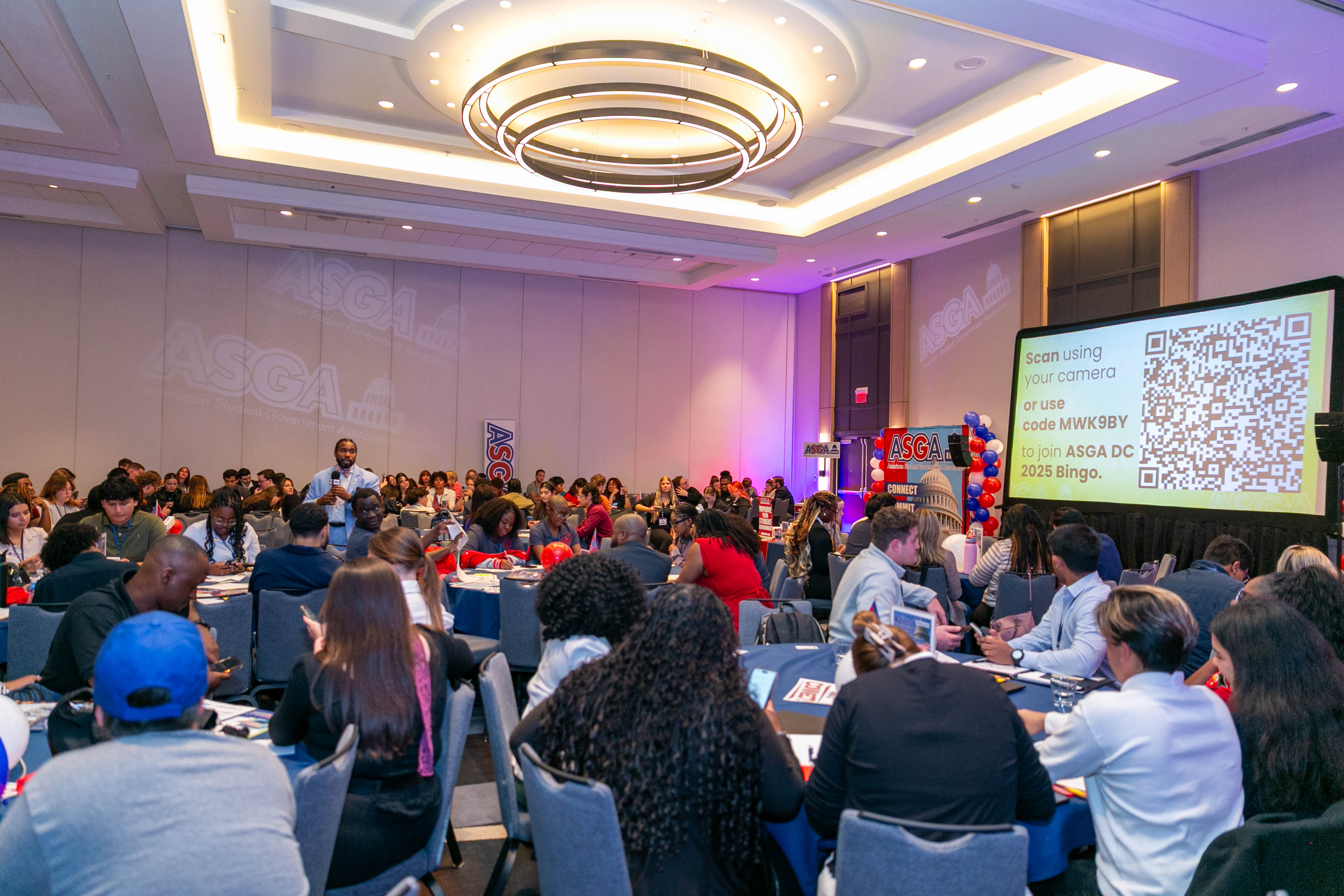
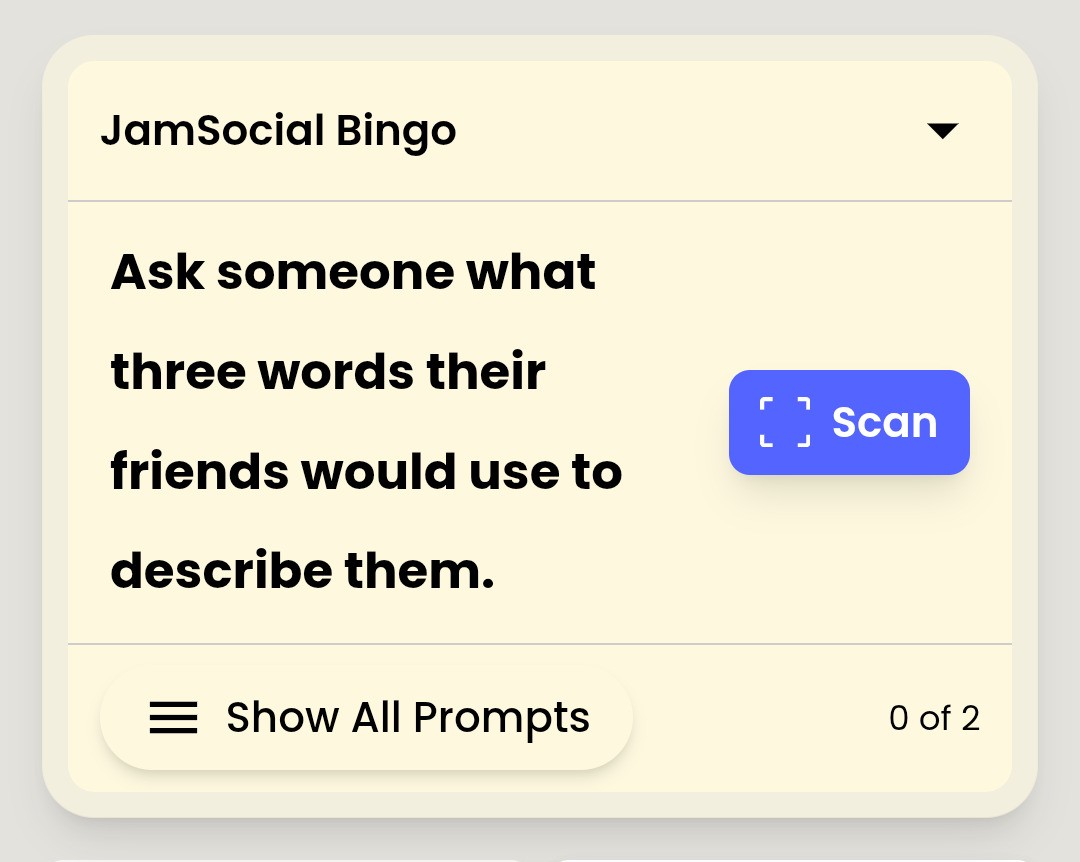
Jam Bingo is a phone-based version of Find Someone Who. Guests scan a QR code, type their name, and get a conversation prompt. They find someone who fits it, have the conversation, and scan that person's QR code to unlock their next prompt. A leaderboard shows who has met the most people.
- Best for: any group size — it's built for 100+
- Time: 20–45 minutes
- Tip: Needs guests to have a phone — pair anyone without one with a buddy
Hosting 100 or 500 People? What Changes
Most ice breaker activities are designed for a room of 10–30 people. Once you're hosting 100 or 500, a few things stop working:
- Taking turns is impossible: 500 people × 30 seconds each is over four hours
- Nobody can hear you: instructions have to be short, and people at the back will miss them
- People cluster: in a big room, colleagues and friends find each other and stay together
- Paper gets messy: printing, handing out, and collecting hundreds of cards takes staff and time
What works at that size is an activity where everyone talks at the same time, people form their own pairs, each person has a specific reason to walk up to someone new, and the instructions fit in one sentence.
Hosting 100, 500, or More? … Jam Bingo
This is the problem Jam Bingo was built for. Because each guest gets their own prompts on their own phone, there's nothing to hand out and nothing to shout over — you just put the QR code on the screen. Every prompt sends people to someone new, so the room keeps mixing instead of clustering.
- Guests join by scanning a QR code — no app to download, just their name
- Each prompt is a real conversation starter, not just a signature square
- Scanning each other's QR codes unlocks the next prompt, so every conversation counts
- It works the same for 100 people as for 500 or 5,000 — no extra setup as the group grows
How to Choose the Right Ice Breaker Activity
Match the activity to three things: your group size, the time you have, and what you want people to leave with.
- Group size: under 30, turn-based activities work. Over 50, choose activities where everyone talks at once
- Time: 5 minutes is a warm-up. Real conversations need 20–45 minutes — about 3–5 minutes each
- Goal: to energize a room, pick something fast and fun. To build relationships, pick something that leads to one-on-one conversations
- Setting: seated events suit Question Cards and Story Swap. Standing receptions suit Find Someone Who, Human Bingo, and Jam Bingo
Not sure how long to plan for? The free Icebreaker Time Calculator works out how many people each guest can meet in the time you have.
Tips for Running Any Ice Breaker
- Explain it in one sentence, then demo it with a volunteer
- Go first — your energy sets the tone
- Let people pass on anything personal
- Time-box it and give a one-minute warning
- Run it once most people have arrived, and before the meal — once people sit down to eat, they stop mingling
Need questions? The free Icebreaker Question Generator gives you ready-to-use prompts for your type of event.
Frequently Asked Questions
What is an ice breaker activity?
An ice breaker activity is a short, structured activity that helps people who don't know each other well start talking. It gives everyone a simple reason to approach someone and something to talk about, so nobody has to figure out how to start a conversation on their own.
What are the best ice breaker activities for a small group?
For groups under 30, Two Truths and a Lie, Partner Introductions, Common Ground, and Story Swap work well. Everyone gets a turn, and the group is small enough that nobody waits too long.
What is the best ice breaker for 100 or 500 people?
Choose an activity where people pair themselves and everyone talks at the same time, like Mix & Mingle Prompts, Human Bingo, or Jam Bingo. Anything where people take turns in front of the group takes far too long at that size. Jam Bingo delivers prompts to each person's phone, so it works the same for 100 or 500 people with no extra setup.
How long should an ice breaker activity be?
5 minutes or less for a quick warm-up at a meeting or workshop. For a networking icebreaker where people have real conversations, plan 20–45 minutes — about 3–5 minutes per conversation, plus a few minutes to start and wrap up.
How do you make an ice breaker less awkward?
Don't put anyone on the spot in front of the whole group, give people a clear prompt instead of 'just mingle,' keep the rules to one sentence, and let people talk in pairs or small groups.
What ice breaker activities work without any materials?
Two Truths and a Lie, One-Word Check-In, Common Ground, Speed Chatting, Partner Introductions, and Story Swap need nothing at all. Mix & Mingle Prompts only need a screen or a facilitator reading the prompts out.