Networking Icebreakers for Healthcare Professional Association Events
Your members come to the annual conference, AGM, or chapter meeting for continuing education and updates on their profession.
But ask them afterwards what made it worthwhile, and many will talk about the people they met.
The challenge for a nonprofit healthcare professional association is making those connections happen on purpose — across disciplines, care settings, and career stages.
Otherwise, it's left to chance at the coffee break.
What This Guide Covers
- What makes healthcare association events different
- How the common networking formats compare
- Icebreakers for each type of event — from chapter meetings to annual conferences
- Example prompts written for healthcare professionals
- How to run networking for 40 members or 1,000
Quick Answer
Choose a networking icebreaker that pairs people up on their own, mixes disciplines and care settings, and doesn't put anyone on the spot.
It should also let late arrivals join in. Give it 20–45 minutes before the meal or business meeting.
For 100+ members, a phone-based format like Jam Bingo lets everyone take part at once with no extra setup.
What Makes Healthcare Association Events Different
A networking activity that works at a tech meetup can fall flat at a healthcare association event.
Who's in the Room
- Mixed disciplines and hierarchy: nurses, physicians, residents, allied health, educators, and administrators — and people tend to stay with their own group
- A wide range of career stages: students and new grads alongside people with 30 years of practice
How They Arrive
- Shift schedules: members arrive straight from work, arrive late, or leave early
- Emotional load: many members are tired, so activities should energize, not add pressure
What the Agenda Looks Like
- Packed CE agendas: the program is built around accredited sessions, so networking gets squeezed into breaks
- Privacy: conversations should never drift into identifiable patient details
What a Good Icebreaker for Healthcare Professionals Looks Like
Use this as a checklist when you're choosing an activity:
- People pair up or form small groups on their own — nobody performs in front of the room
- Prompts send people across disciplines and care settings, not back to their own team
- The rules fit in one sentence, so late arrivals can join instantly
- Prompts are about work, careers, and interests — never patients
- It fits a 20–45 minute slot before the meal or business meeting
- It works for every role, including non-clinical members
Networking Formats Compared
Here's how the common options stack up for a healthcare association event.
Round-the-Room Introductions
- Works well for: committee meetings and groups under 15
- Watch out for: too slow for larger groups, and it puts people on the spot
Table Topics at Lunch or Dinner
- Works well for: seated meals, when you mix disciplines at each table
- Watch out for: people only meet their own table — rotate seats between courses if you can
Speed Networking
- Works well for: student and new-grad career events, mentorship kickoffs
- Watch out for: needs a facilitator and a timer, can feel like interviews, and late arrivals are hard to slot in
Paper Human Bingo
- Works well for: chapter meetings of 20–80 members (a printable human bingo card generator saves time)
- Watch out for: printing and pens, and it can turn into a signature hunt instead of conversations
Discipline Mixer Tables
- Works well for: interprofessional events — each table has one member from each discipline and a discussion question
- Watch out for: needs pre-assigned seating and an accurate attendee list
Phone-Based Conversation Prompts (Jam Bingo)
- Works well for: receptions, AGMs, and conferences of any size — especially 100+
- Watch out for: members need a phone and signal; pair anyone without one with a buddy
Icebreakers by Event Type
Annual Conference Welcome Reception
The welcome reception sets the tone for the whole conference.
Run 30–45 minutes of structured networking before any speeches, so first-time attendees have people to sit with — and say hi to — for the rest of the event.
For more ideas, see how to create meaningful networking at a healthcare convention welcome party.
AGM or Annual Meeting
Put 20–30 minutes of networking in the reception before the business meeting.
It gives members a reason to arrive early, and the room feels warmer when motions and elections start.
Our AGM and tradeshow mixer collection has 25 icebreakers built for association annual meetings.
Chapter Meeting or CE Evening
With 30–100 members, run a 20–30 minute icebreaker as people arrive and before the CE presentation.
Keep it flexible for members coming straight from a shift.
Student, New Grad, or New Member Orientation
Pair newcomers with experienced members, and use prompts that send long-time members to find new ones.
Programs like nursing school and medical residency orientations use the same approach.
Awards Gala or Fundraising Dinner
Use the cocktail hour: members, award recipients, sponsors, and guests meet before sitting down.
Keep prompts light and celebratory.
Writing Icebreaker Prompts for Healthcare Professionals
Good prompts send people to someone new and give them something specific to talk about.
For healthcare audiences, a few extra rules apply.

Do
- Ask about work life, career paths, care settings, projects, and interests
- Write prompts every role can answer, including non-clinical members
- Send people across disciplines ('someone from a different discipline than yours')
Don't
- Invite patient stories or case details — even anonymized ones can drift into identifiable territory
- Use 'worst day' or trauma-focused prompts
- Single out roles in a way that reinforces hierarchy ('find a doctor who…')
12 Example Prompts for Healthcare Association Events
- Find someone from a different discipline than yours and ask them what a typical shift or workday looks like
- Find someone who works in a different care setting and ask them what they wish others understood about it
- Find someone attending their first association event and ask them what they're hoping to get out of it
- Find someone who has been a member for more than five years and ask them what keeps them involved
- Find someone who mentored a student or new grad this year and ask them what they learned from it
- Find someone who changed specialties or roles and ask them what made them switch
- Find someone who works nights or rotating shifts and ask them their best tip for staying well
- Find someone working on a quality improvement or research project and ask them what problem it solves
- Find someone from a different region and ask them what's changing in healthcare there
- Find someone who volunteers on an association committee and ask them how others can get involved
- Find someone who chose healthcare as a second career and ask them what they did before
- Find someone who has a hobby that helps them recharge and ask them how they got into it
All 15 prompts are in the Healthcare Association Mixer template, ready to use or adapt.
Need more? The free Icebreaker Question Generator has prompts for many other event types.
Hosting 100, 300, or 1,000 Members? … Jam Bingo
Why Big Receptions Are Hard
At a large conference reception or AGM, most formats break down.
- You can't take turns — there are too many people
- Nobody at the back can hear the instructions
- Members cluster with colleagues from their own facility

How Jam Bingo Works
Jam Bingo was built for this.
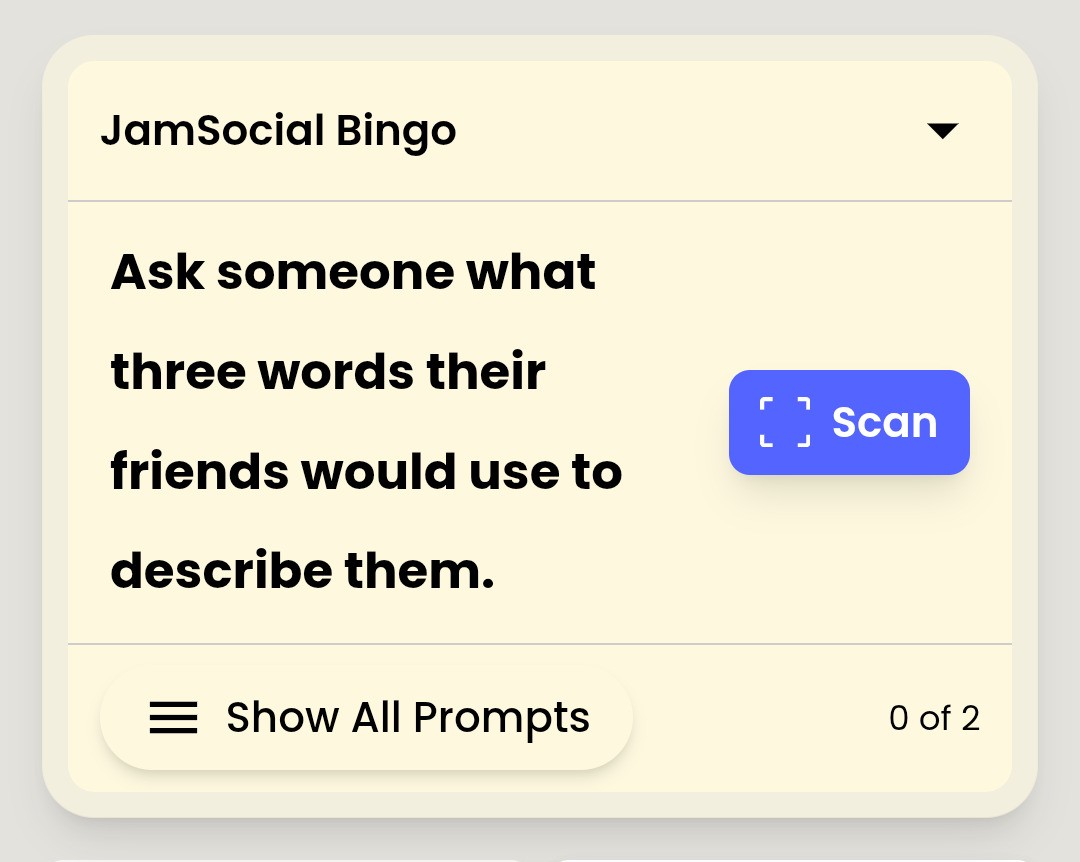
Each member scans a QR code, types their name, and gets a conversation prompt on their phone.
They find someone who fits it, talk, and scan that person's QR code to unlock the next prompt.
Why It Fits Healthcare Associations
- No app to download — members join with their phone camera and just their name
- Late arrivals scan in and start right away, so shift workers aren't left out
- You write the prompts, so they can mix disciplines and stay away from patient details
- Works the same for 100 members as for 1,000 — no extra setup as the group grows
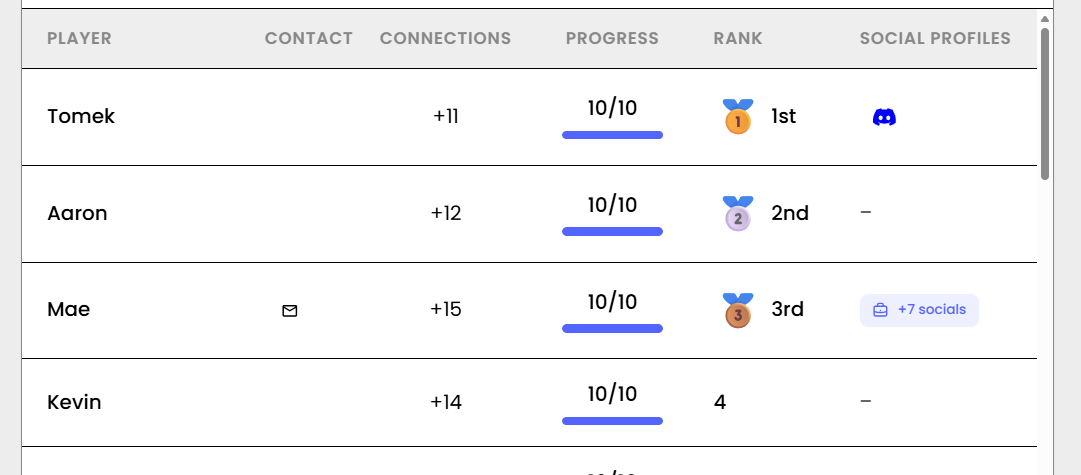
- A leaderboard adds friendly competition, and members can share contact details with the people they meet
Associations use it for member receptions, AGMs, and conferences.
A Simple Plan for Your Next Event
Before the Event
- 4–6 weeks before: choose your networking format and put it in the run of show
- 3–4 weeks before: mention the networking activity in your invitation — it reassures members who don't know anyone yet
- 2 weeks before: write your prompts and test them with a colleague from a different discipline
On the Day and After
- Day of: launch networking once most people have arrived and before the meal or business meeting
- After: thank attendees within 48 hours and remind them to follow up with the people they met
Free Tools to Help
How to Know It Worked
- First-time attendees came back to the next event
- Members mention people they met, not just sessions they attended, in your feedback survey
- Committee and volunteer sign-ups went up
- The room was noticeably louder when the formal program started
The Bottom Line
Networking is the part of your event members can't get from a webinar.
Give it a protected slot, the right format for your group size, and prompts written for healthcare professionals — and your members will have more reasons to renew.
For the bigger picture on member engagement, read why healthcare professionals drift away from their association.
Frequently Asked Questions
What is a good networking icebreaker for a healthcare association conference?
One that gets people talking across disciplines and care settings without putting anyone on the spot. Pair-based formats with specific prompts — like 'Find someone from a different discipline and ask what a typical shift looks like' — work well. For 100+ members, phone-based prompts such as Jam Bingo let everyone take part at once.
How do you run networking at an AGM?
Schedule 20–30 minutes of structured networking during the reception before the business meeting starts. It gives members a reason to arrive early, and the room is warmer and more engaged when the formal agenda begins.
What icebreaker questions should you avoid with healthcare professionals?
Avoid anything that invites sharing patient information or identifiable cases, 'worst day' or trauma-focused prompts, and questions that assume a specific role (like 'find a doctor who…'). Keep prompts about people's work, careers, interests, and ideas.
How do you include shift workers who arrive late?
Choose a format where people pair up on their own and can join at any time, rather than one where the whole room starts together. With Jam Bingo, late arrivals just scan the QR code and start with their first prompt.
How long should networking be at a CE event?
Plan 20–45 minutes. That's enough for each member to have several real conversations at about 3–5 minutes each, plus a few minutes to start and wrap up.
Does it work for large associations with hundreds of members?
Yes, if you choose a format built for size. Turn-based activities break down with large groups. Formats where each person gets their own prompts and finds their own partners — like Jam Bingo — work the same for 100 members or 1,000.