How Long Should an Interactive Icebreaker Game Last?
High school student and professionals mixer
Quick answer: An interactive icebreaker game at a high school student and professionals mixer should last about 30 to 45 minutes of play, plus about 5 minutes to explain it and 5 to 10 minutes to wrap up. That's 40 to 60 minutes in total.
That's long enough for each student to meet several professionals, and short enough that nobody checks out.
How you facilitate those minutes matters even more than the exact number. Here's how to run it.


How Should You Split the Icebreaker Time?
A simple 45 to 60 minute plan
- 5 minutes: welcome everyone and explain the game in one sentence.
- 30 to 45 minutes: students and professionals play and mingle.
- 5 to 10 minutes: wrap up, recognize top connectors, and say thanks.
If your whole event is 90 minutes, run the icebreaker first. It warms up the room for everything that follows.
For a full run of show, see How to Run a High School Student and Professionals Mixer.
Why Is 30 to 45 Minutes the Right Length?
Long enough to connect, short enough to stay fun
Under 20 minutes, students barely get past their first conversation.
Past 45 minutes, energy drops. Students start drifting back to their friends and phones.
At 30 to 45 minutes, most students have real conversations with four to eight professionals, and they finish wanting more.
How Do You Facilitate the Icebreaker Game?
Set it up so it runs itself
- Explain it in one sentence: "Find someone who matches your prompt, talk, and scan their code."
- Show it once. Play one round with a volunteer so everyone sees how it works.
- Brief the professionals first. Ask them to welcome students and to talk with students, not each other.
- Put the QR code everywhere: on the screen, at check-in, and on tables.
- Walk the room. Nudge groups that are stuck and introduce quiet students to a professional.
What Prompts Work for Students and Professionals?
Give students the first question
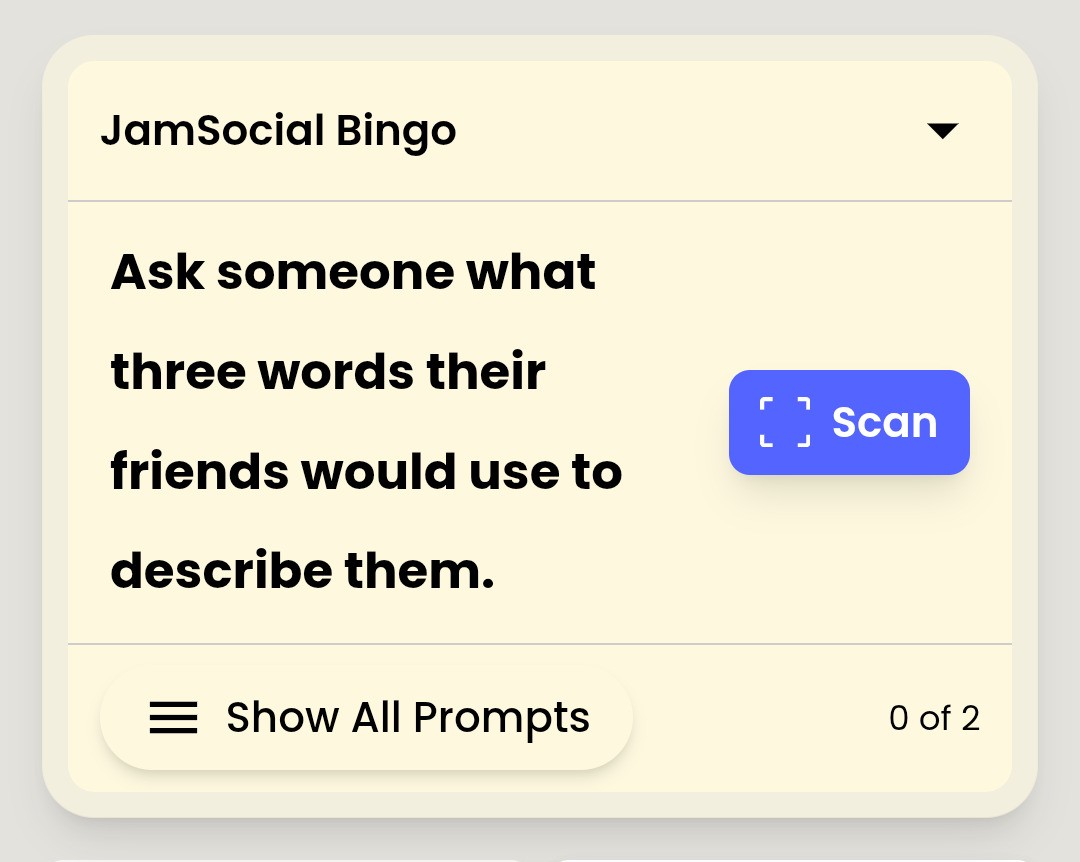
High school students often freeze because they don't know what to ask a professional. Prompts fix that:
- Ask a professional what they wish they'd known at your age.
- Find someone whose job didn't exist 20 years ago.
- Find someone who changed careers and ask why.
- Ask someone what a normal workday looks like for them.
- Find someone who studied something different from what they do now.
Browse more ideas in our Jam Bingo templates.


What Should Organizers Watch Out For?
Common problems and quick fixes
- Students sticking with friends: use prompts that point students toward professionals.
- Professionals talking to each other: brief them beforehand, and give them prompts about students too.
- Low batteries or no phone: pair students up so they can play together.
- Prompts that are too personal: keep them about school, careers, and interests.
- Energy dropping: announce a "final 10 minutes" to create a last push.
How Do You Keep Students Safe?
Plan this before the event
Most high school students are minors, so check your school's policies before the event.
Get any permissions you need, and tell students what information they'll be sharing.
With Jam Bingo, each match saves the other person's contact details, so decide which details students should add. Many schools stick to a school email or LinkedIn.
When Should You End the Icebreaker Game?
End on a high
- Conversations are getting shorter.
- Students are regrouping with friends.
- Most people have met several new people.
When you see these signs, give a 5-minute warning, then bring everyone back together.
Recognize the students who met the most professionals, and thank the professionals for their time.
Key Takeaways
Icebreaker length and facilitation at a glance
- Length: 30 to 45 minutes of play, or 40 to 60 minutes including the intro and wrap-up.
- Under 20 minutes is too short for real conversations. Past 45 minutes, energy drops.
- Run the icebreaker at the start of the event, before students settle into friend groups.
- Brief professionals first and give students a specific question to ask.
- Watch for students sticking with friends, professionals talking to each other, and dead phone batteries.
- Students are minors, so follow school policy on what contact details they share.
Run a Better Student and Professionals Mixer
30 to 45 minutes of real conversations
Give students a question to ask, give professionals a reason to lean in, and keep the game short enough to stay fun. See how Jam Bingo works.
Frequently Asked Questions
How long should an icebreaker game last at a high school student and professionals mixer?
About 30 to 45 minutes of play, plus 5 minutes to explain it and 5 to 10 minutes to wrap up. That's enough time for each student to meet several professionals before attention starts to drop.
When should the icebreaker start?
Early, ideally as people arrive or right after a short welcome. Once students settle into groups with their friends, it's much harder to get them moving.
How do you get high school students to talk to professionals?
Give students a specific question to ask. Prompts like "Ask a professional what they wish they'd known at your age" remove the fear of not knowing what to say.
What should organizers watch out for?
Students sticking with friends, professionals chatting with each other, low phone batteries, prompts that are too personal, and energy dropping after about 30 minutes.
Is it safe for students to share contact details?
Decide this before the event. Students are minors, so follow your school's policies, get any permissions you need, and tell students what information they're sharing. Many schools only let students share a school email or LinkedIn.