
What makes networking interactive?
Giving people a reason to talk, not just permission to.
You're looking for a simple way to incentivize attendees to interact with each other and get out of their bubble.
At most activations, attendees are coming from different companies, departments, cities, or friend groups. Left alone, they default to standing with whoever they arrived with.
That's where interactive networking comes in. It gives people a clear reason to approach someone they've never met.
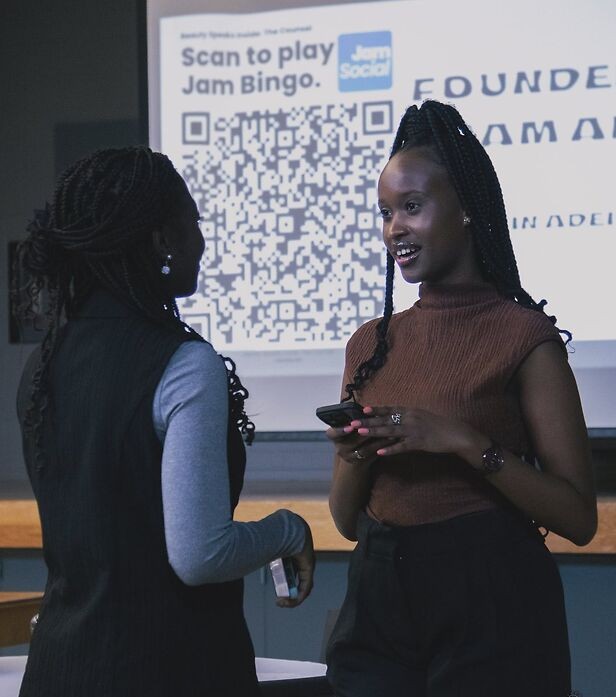

When should you run it?
Right after arrival, before people settle in.
The best window is the first 20 to 30 minutes after doors open, before food service and before the main programming starts. Attendees are standing, not yet anchored to a table or a group.
This is the easiest moment to introduce the activity, because guests haven't quietly settled into their little cliques yet. Wait too long and you're fighting an uphill battle against groups that have already formed.
What's the best networking gamification idea?
1. This game — Jam Bingo
Make networking less awkward. The problem is that people tend to stay with people they already know.
When you're bringing together attendees from different companies, cities, or backgrounds, it can get awkward fast if people never break away from the group they came with.
If your activation is pulling in 100, 300, 700, or even 1,000 people, there are very few ideas that actually hold up at that scale. Most fall apart without a facilitator or a printed handout for every guest.
This is where Jam Bingo comes in. Attendees scan a QR code, get a prompt on their own phone, and go find someone in the room who matches it. It helps people get out of their bubble and interact with someone they aren't acquainted with yet. See how Jam Bingo works!
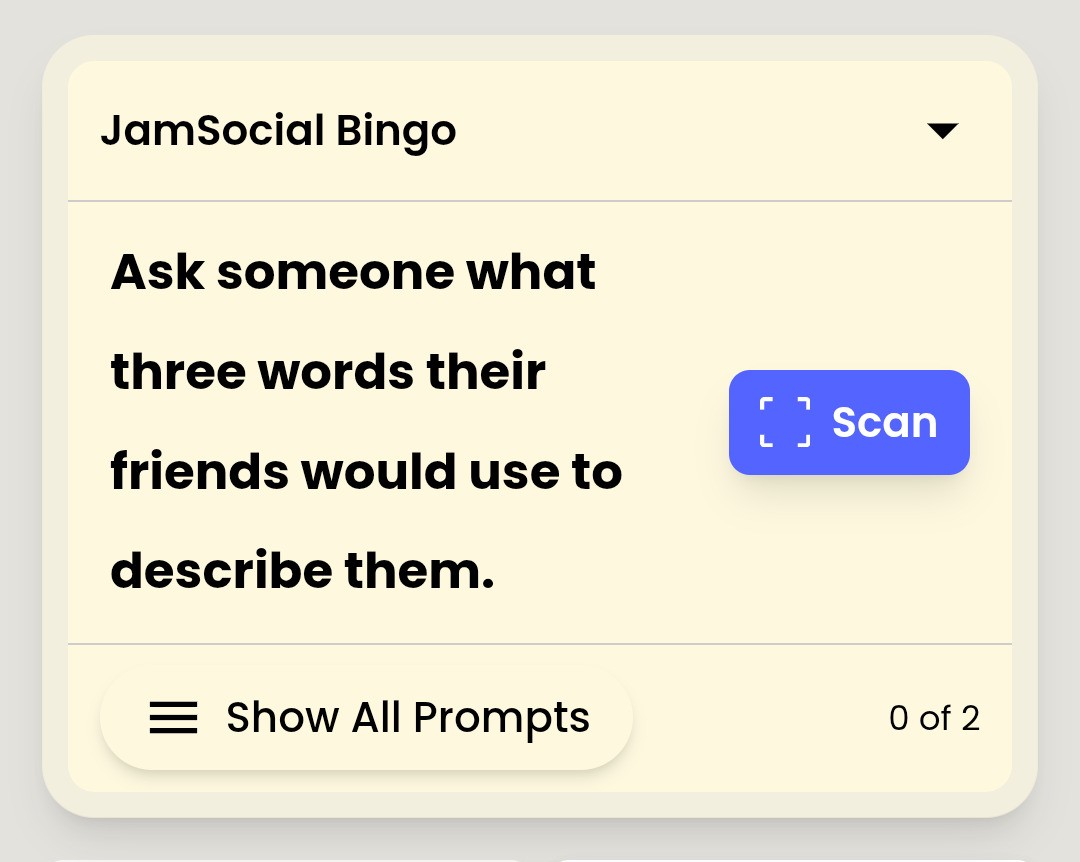
For an experiential activation specifically, prompts can be built entirely around the brand or the event theme, so it never feels like a generic icebreaker bolted onto the experience.
It also produces real data afterward, how many connections happened, which prompts sparked the most conversations, and how much of the room actually participated. That's the kind of number that makes a client recap deck stand out.
What else can round it out?
A few supporting ideas worth layering in.
Jam Bingo does the heavy lifting for large scale interactive networking, but a few smaller touches can round out the rest of the experience.
- 2. Table Topic Cards — A stack of conversation prompt cards on each table for whenever the conversation stalls. Skip 'so what do you do' and go with something like 'what's a challenge in your industry nobody's talking about?'
- 3. Speed Networking Rounds — Set a timer for 3 to 4 minutes, give each pair a prompt, then rotate. The timer removes the pressure of figuring out what to say next.
- 4. Trivia — A short 8 to 10 question round gets strangers leaning in and whispering answers together. Keep it under 10 minutes so it doesn't eat into the program.
- 5. Human Bingo — Similar mechanic to Jam Bingo but run on paper cards. Works for smaller groups, but past 100 people you'll want a digital version to manage the logistics.
- 6. A Human Map — Post a question on a screen and have guests physically stand in the zone that matches their answer. It naturally clusters people with something in common before they even start talking.
- 7. A Photo Scavenger Hunt — Find someone wearing a certain color, get a photo with someone from another city. Leans more social, so it fits a brand launch better than a formal networking session.
- 8. A Shared Build Activation — A mural, a puzzle, a large scale build. Strangers end up shoulder to shoulder working toward something visual, and conversation follows naturally.
- 9. A Points Leaderboard — Similar to what platforms like Cvent offer. Just make sure points are earned by actually talking to someone, not by scanning a badge at a booth.
How do you get people to join in?
The easier the activity, the more people will join
The goal is to make sure everyone has an excuse to connect with someone new. That being said, it is important that the activity you chose is:
- Easy to explain
- Easy to participate in
If it feels too complicated or has too many steps before someone can join, people will bounce and skip it entirely.
Give it a low friction entry point.
The easier it is to start, the more people will join. That's one of the reasons Jam Bingo works so well for large groups, one scan and attendees are in, no app download and no sign up form.
A small prize goes a long way.
You don't need anything extravagant. A gift card, branded merch, or a public shout-out at the end of the activation works. A small incentive for the first person to finish their prompts gives the competitive types a reason to dive in early, which pulls the rest of the room along with them.
Did this blog help?
Were you instead looking for:
Ice breaker for a large group (100+ people)
In summary:
The best interactive networking ideas get people saying 'I had such a great conversation with someone I never would have talked to otherwise.' That's the goal.