
Why do virtual networking sessions feel awkward?
Without structure, people don't know how to start.
You've probably seen it happen. You join the Zoom meeting and attendees sit there staring at their screens, waiting for someone else to make the first move.
There doesn't seem to be an easy or natural way to facilitate networking in a virtual meeting.
You can run a Slido poll or play Jackbox games, but those don't help people actually get to know each other. They're just activities, not real connections.
Networking is the second most popular reason people attend events, right after educational content. But most virtual events just create a space and hope connections happen on their own.
With few ways to facilitate networking over a virtual meeting, how can you actually make networking interactive? That's what we'll cover here.

The fix isn't a better platform. It's giving people an actual reason to talk to someone they've never met.
What makes a virtual experience interactive?
It removes the burden of starting a conversation.
The most successful virtual networking initiatives share a common thread: they prioritize intimate conversations over large-scale interactions. A group of more than six people makes it difficult for everyone to talk and share meaningfully.
That's why structured activities work better than open networking. When you give attendees a prompt, a game, or a clear reason to approach someone new, the awkward first step is already handled.
What virtual experiences work best?
Speed networking, games, and small groups.
Several formats consistently work well for virtual events:
- Virtual Speed Networking: Quick one-on-one video chats that rotate every few minutes. This guarantees attendees meet multiple new people in a short time.
- Virtual Coffee Chats: Small, casual breakout rooms for relaxed conversation. No pressure to pitch or perform, just genuine connection.
- Roundtable Discussions: Small groups discussing specific themes or challenges. These attract attendees with shared interests.
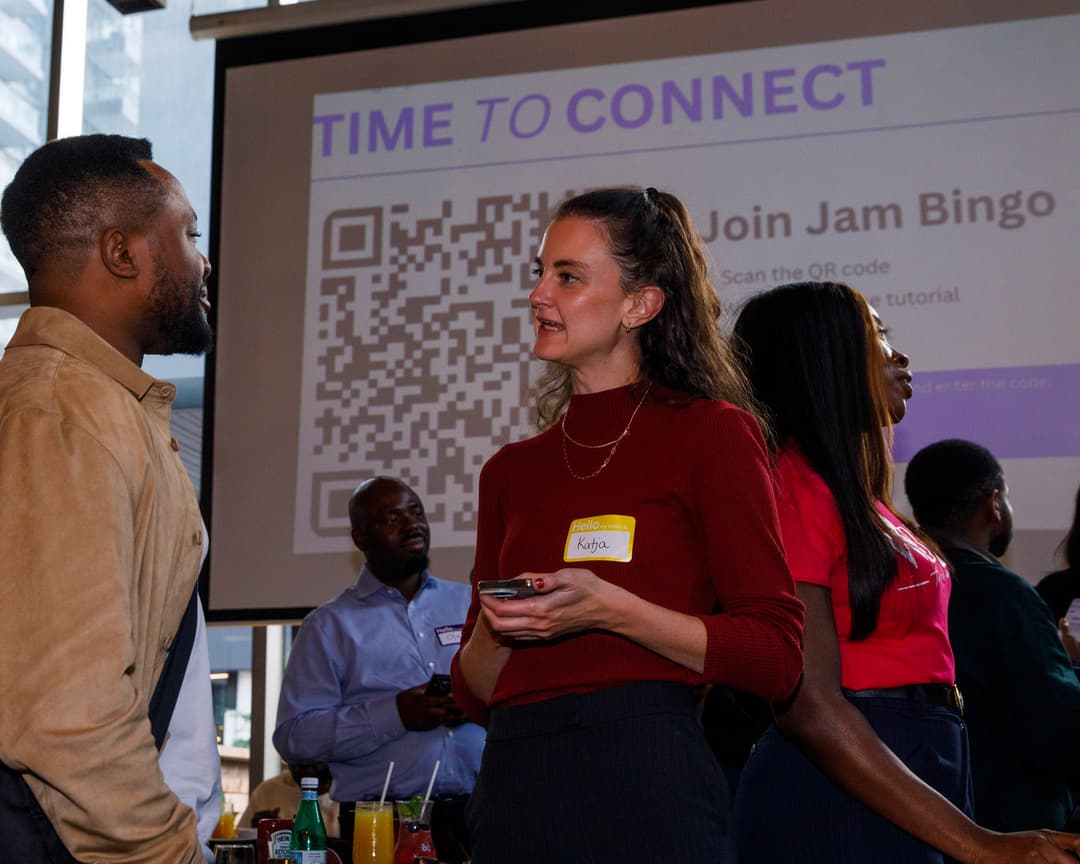
- Gamified Networking: Activities like home bingo or home scavenger hunts that give attendees a clear reason to connect.
What capacity works best?
Any size works with the right structure.
The right virtual networking activity works whether you have 30 attendees or 300. The key is choosing activities that scale without requiring more facilitation.
For large groups, activities that run on attendees' phones work best. No printed materials, no long explanations, no waiting for instructions. Everyone joins at their own pace.
What platform do you need?
Any platform that supports video and chat works.
You don't need a specialized virtual event platform to run interactive networking. Activities like Jam Bingo work on any platform that supports video conferencing and chat.
The most important platform features for virtual networking are:
- Video chat for face-to-face connections
- Breakout rooms for small group discussions
- Chat for sharing prompts and links
- Screen sharing for displaying QR codes
Any platform with these features—Zoom, Teams, Webex, or specialized event platforms—can host an interactive networking experience.
Does this help beyond the event?
Yes, if it leaves something worth following up on.
The real measure isn't whether people talked during the session. It's whether they connect afterward.
That's why specific prompts matter more than generic ones. "Find someone who works in your industry" sticks a lot better than "find someone who likes coffee." Attendees leave with a name, a face, and one specific reason to reach out again.
FAQ
What is the best virtual networking format for large groups?
For large groups, gamified activities like Jam Bingo or speed networking work best. They scale without requiring more facilitators and give everyone a clear reason to connect.
How can I make virtual networking less awkward?
Structure is the key. Give attendees conversation prompts, use breakout rooms for small groups, and keep sessions short. Activities like Jam Bingo or virtual coffee chats remove the pressure to figure out how to start a conversation.
What tools do I need for virtual networking?
Any video conferencing platform with breakout rooms and chat works. For more structured experiences, consider tools designed for virtual networking that offer matchmaking, gamification, or automated pairing.
How long should a virtual networking session last?
20-30 minutes is ideal for most networking activities. For speed networking, keep individual conversations to 3-5 minutes per round to maintain energy and momentum.
Can virtual networking replace in-person networking?
Virtual networking can be just as effective as in-person when it's well-structured. It actually has advantages like reaching wider audiences and making connections more intentional. The key is designing experiences that prioritize genuine interaction rather than passive viewing.
Did this blog help?
Were you instead looking for:
Ice breaker for a large group (100+ people)