
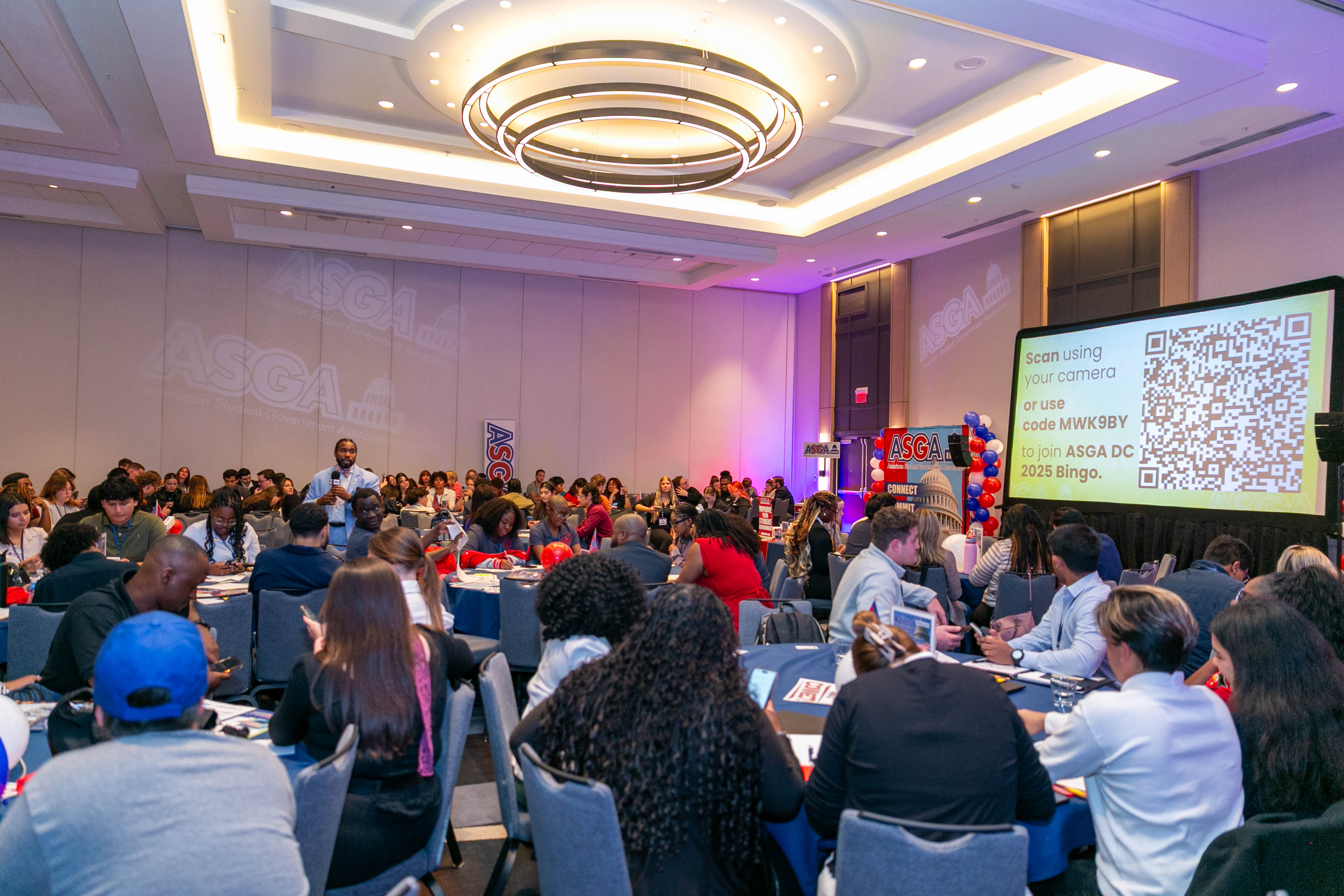
Large Group Student Orientation Networking Icebreaker Activity
Large Group Student Orientation Networking Icebreaker Activity
Student Orientation Networking Icebreaker Activity. You put a few hundred incoming students in a gym or auditorium for orientation and the room organizes itself almost instantly. The kids who carpooled together stand together. The roommates who already met online stand together. Everyone else lines the walls, waiting for something to happen, or staring at their phone so they look busy instead of alone.
That is not a discipline problem or a personality problem. It is what happens by default when you put a lot of strangers in one room with no structure pushing them to move.
The fastest way to get a large orientation group talking is a phone based icebreaker like Jam Bingo. Students scan a QR code, get a conversation prompt, and go find someone in the room who matches it. No printed handouts, no facilitator with a microphone, just dozens of small conversations happening at once.
Why Do Cliques Form So Fast?
Nobody wants to be the one who walks up to a stranger first.
Almost every student in that room wants to make friends. That is the whole reason they showed up early instead of skipping the icebreaker session. But wanting to meet people and being willing to walk up to a total stranger and say hello are two different things.
Without something pushing that first move along, most students take the safer option, which is standing near whoever they already recognize. Multiply that by a few hundred people and you get a room that looks busy but is really just a handful of tiny, closed off groups.

What Breaks At This Size?
The stuff that works for 20 people falls apart at 200.
A name game or a paper worksheet can work fine in a small orientation group. A staff member can watch the room, notice who is left out, and nudge things along. None of that is possible once you are dealing with a few hundred students spread across a gym floor.
At that size, printed materials run out, verbal instructions from a stage only reach the front rows, and a single facilitator physically cannot get around to every student standing quietly by the door.

What is the Student Orientation Networking Icebreaker Activity?
Jam Bingo
IF your orientation group is a mix of students from different years, hometowns, majors, or dorms who do not already know each other, and you are looking for an easy, quick way to get them out of their small groups instead of feeling awkward or weird, then:.
- JamBingo: A large group interactive networking tool built to get students having conversations instead of surface level small talk.
Many students want to connect, but it can often feel awkward or uncomfortable.
Jam Bingo gives each student an incentive to meet someone new in a way that feels fun and interactive. Students leave orientation knowing more names and faces beyond the group they arrived with.
If that sounds like your goal see how JamBingo works.
What Does A Big Icebreaker Need?
Something self guided that runs on a device students already have.
The activity has to start itself. That means no waiting in a line for instructions, no handouts running out halfway through the room, and no rules that only make sense if you heard them explained once from a podium.
Nearly every student walking into orientation already has a phone in their pocket. An activity that starts the second they scan a code removes the biggest bottleneck at this scale, which is simply getting instructions to everyone in the room at the same time.
Frequently Asked Questions
How many students can this work for?
Because every student starts and moves at their own pace scanning a code on their own phone, the activity scales from a small classroom up to an auditorium of several hundred without needing extra staff to manage it.
Do we need any equipment or printed materials?
No. Students only need a phone, which almost everyone already has in their pocket at orientation. Putting the QR code on a screen or on entrance signage is usually enough to get the whole room started.
How long should we set aside for it?
Fifteen to twenty minutes is usually enough, especially if it runs during the natural mingling time before the program officially starts rather than being squeezed between other sessions.
Will shy or introverted students actually take part?
The prompt does most of the work for them. Because the activity hands students a specific reason to approach someone, it removes the awkward part of walking up with no context, which tends to make it easier for quieter students to join in.
Can the prompts be customized to our school?
Yes. Prompts work best when they are built around your actual campus, like specific dorms, majors, or hometowns, rather than generic icebreaker questions that could apply anywhere.